Get all your news in one place.
100's of premium titles.
One app.
Start reading
The Times of India
The Times of India
World
Prisha Patnaik

Putin tightens grip on Russian elections with anti-war opposition squeezed out

Russia’s first parliamentary election since the full-scale invasion of Ukraine has begun with voters facing a sharply narrowed political field: the country’s only openly anti-war party has been barred from running a national list, while pro-Kremlin parties and war veterans dominate the ballot.

Get breaking news anytime, anywhere. Download the TOI app now!
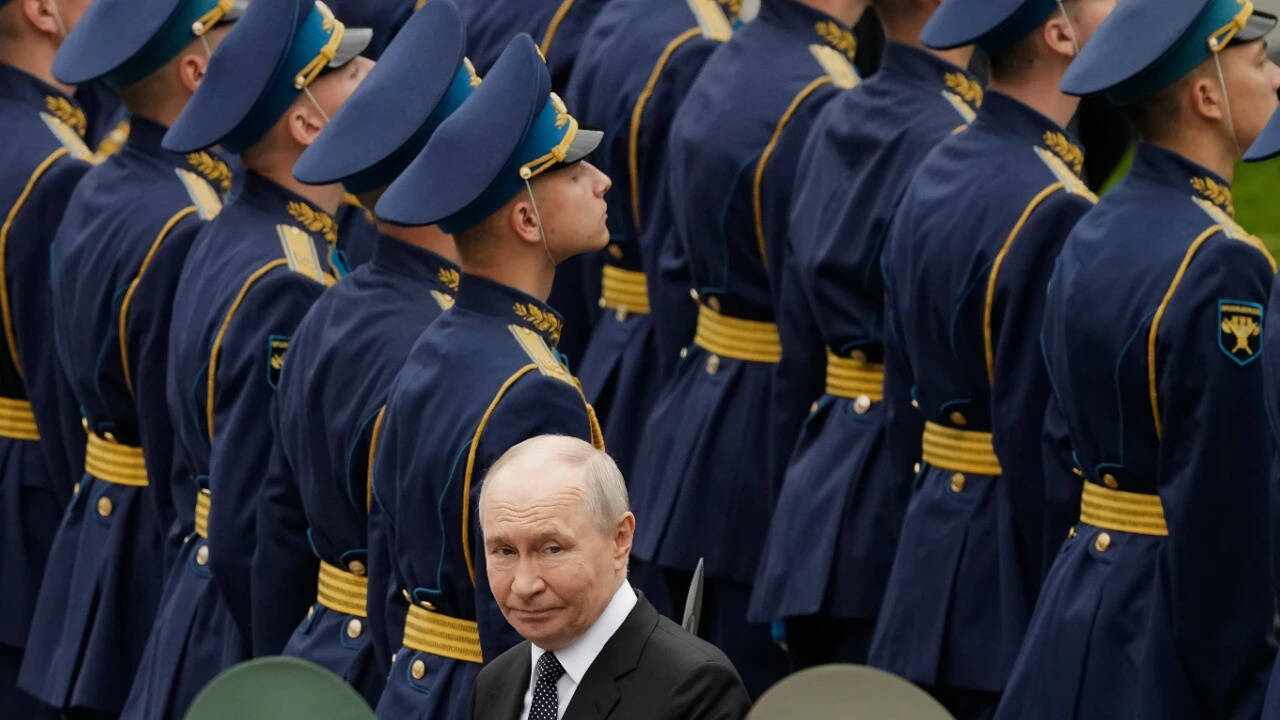
The three-day vote, which began on Friday, will determine all 450 seats in the State Duma. President Vladimir Putin has cast the election as a demonstration of national unity and support for Russia’s war in Ukraine. Most anti-war candidates have been excluded, while the ruling United Russia party is expected to retain its dominant position.

Yabloko squeezed out of national race

The biggest blow to the anti-war camp came in August, when Russia’s Supreme Court barred liberal Yabloko from fielding a national party list. Yabloko had positioned itself as the country’s only registered party openly opposing the war and calling for a ceasefire.

Some Yabloko candidates are still contesting individual constituencies, but the ruling removed the party from the nationwide contest and left voters with fewer explicitly anti-war choices.

The crackdown came after senior Yabloko figures faced prosecution and prison sentences over statements about the war. Party deputy chairman Lev Shlosberg was sentenced to 11 years in prison last month, according to the material cited by Politico.

The space left by Yabloko has instead been occupied by parties that formally oppose United Russia on some issues but have backed key Kremlin policies, including the annexation of Ukrainian territories.

From war veterans to Putin allies

The ballot also features more than 1,000 veterans of Russia’s war in Ukraine. Their presence reflects the Kremlin’s effort to elevate military veterans as a new political constituency.

United Russia's campaign has also brought prominent pro-Kremlin figures into the spotlight. Foreign minister Sergei Lavrov appeared in a campaign advertisement alongside NHL star Alexander Ovechkin and RT chief Margarita Simonyan. Reuters separately reported that Ovechkin appeared in the video after being asked to participate.

For the Kremlin, the election is not only about choosing lawmakers but also about demonstrating public support for the war. Putin has urged Russians to vote, saying the result would show that millions stand behind Russian troops and the country's stated wartime goals.

Opposition split over ‘smart voting’

With anti-war candidates largely squeezed out, parts of the Russian opposition are backing a strategy known as “smart voting” — supporting whichever candidate in a constituency is considered most capable of challenging United Russia, even if that candidate belongs to another established party.

Yulia Navalnaya, widow of late opposition leader Alexey Navalny, has backed the approach, as has opposition campaigner Maxim Katz. Their argument is that the ballot remains one of the few relatively safe ways for Russians to express dissatisfaction with the Kremlin.

But the strategy has divided the opposition itself. Yabloko leader Nikolay Rybakov has argued that voting for parties already represented in parliament amounts to supporting forces that have backed the crackdown on his party.

Sign up to read this article
Read news from 100's of titles, curated specifically for you.
Already a member? Sign in here
Related Stories
Top stories on inkl right now
One subscription that gives you access to news from hundreds of sites
Already a member? Sign in here
Our Picks
Fourteen days free
Download the app
One app. One membership.
100+ trusted global sources.