Get all your news in one place.
100's of premium titles.
One app.
Start reading
Medical Daily
Medical Daily
Health
Dorothy Brooks

Public Health Officials Say Measles Poses a Bigger World Cup Threat Than Ebola

When millions of soccer fans from 48 countries began filling stadiums, Fan Fests, and airports across 16 cities this month, public health departments across the United States were already on high alert. But not for the disease making international headlines.

"Measles is probably our top worry," James Garrow, communications director for Philadelphia's Department of Public Health, told CIDRAP News. "We've already put out communications to our regional healthcare providers about what to look for."
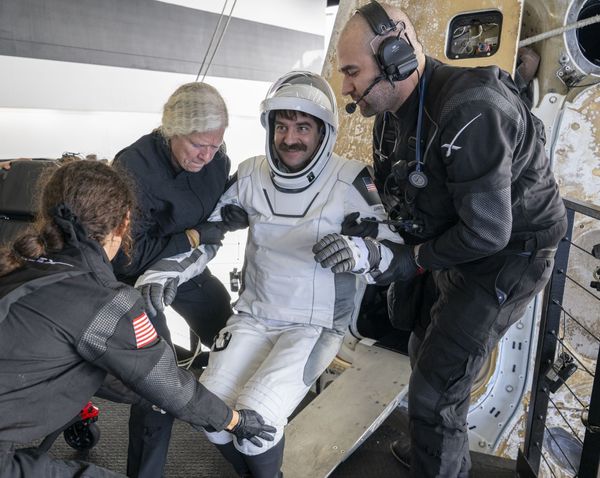
Garrow made similar remarks to CNBC: "We're seeing outbreaks throughout the U.S. and overseas, and when you have a disease that's as infectious as this, people just have to be in the same plane for an hour or two and all of a sudden you have an outbreak that's transferred to somewhere else."

Ebola is getting the headlines. Measles is the disease on every host-city health official's mind.


Why This Matters

The mathematics of measles in a crowd are stark. The disease has an R0 — the number of new people one infected person will infect — of 12 to 18. For comparison, COVID-19's R0 is roughly 2 to 3. One unvaccinated person in a packed stadium can expose dozens within minutes. The virus stays infectious in the air for up to two hours after the infected person leaves the room.

Andrew Pekosz, a virologist at the Johns Hopkins Bloomberg School of Public Health, said, "I would not be surprised if we saw a measles outbreak linked to the World Cup. Crowds are an ideal place for measles virus to spread."

The World Cup is not a one-day event. It runs 39 days — through July 19. Fans will travel repeatedly between host cities, carrying any infections they acquire across borders and into their home communities.


What We Know So Far

The United States entered the tournament with an already-serious measles problem. As of June 18, 2026, the CDC has confirmed 2,104 measles cases in 41 U.S. jurisdictions, with 30 active outbreaks. The country is on track to surpass its 2025 full-year total of 2,288 cases before summer ends and may lose its measles elimination status — earned in 2000 — when officials assess the data in November.

The international picture is even more concerning. According to the Pan American Health Organization, measles is also spreading in Canada, and Mexico has exceeded 11,000 cases. Globally, outbreaks are active in every region of the world. The 48 national teams and their traveling fan bases represent a comprehensive sampling of that global exposure map.

The Pan American Health Organization is urging health officials in host cities to boost surveillance, and the organization launched a public health campaign specifically urging fans to confirm their vaccination status before attending matches.


Where the Risk Is Highest

The 11 U.S. host cities — New York, Los Angeles, San Francisco, Dallas, Houston, Atlanta, Philadelphia, Seattle, Boston, Kansas City, and Miami — will each host multiple matches over several weeks. Every one of these cities is a major international airport hub, meaning any measles case generated at or around World Cup events can rapidly disperse to other cities and countries.

The Philadelphia Inquirer reported that health officials found the Philadelphia region is "pockmarked with vulnerable communities, where vaccination rates have fallen below the rate scientists say is necessary to prevent widespread illness." Jessica Caum, director of disease control for Philadelphia's Department of Public Health, noted: "We're in a different place now with measles. More cases, increases in vaccine hesitancy, decreases in vaccination rates — all of these things are important to keep in mind."

Atlanta's Fulton County Health Director Dr. Marcus Plescia added a realistic note: "It's possible people might come here for the World Cup and get exposed, but they might not actually go back to their home countries before they get sick. Measles is tricky."


What Doctors and Experts Say

Dr. Syra Madad, infectious disease epidemiologist at Harvard University's Belfer Center, emphasized the tournament's unique structural risk: "What's different about the World Cup is this is not a one-day thing. It's spanning over six weeks and bringing in millions of additional visitors to U.S. cities."

Dr. Craig Spencer of Brown University's Pandemic Center — who survived Ebola while working in West Africa — said he is repeatedly asked about Ebola risks during the World Cup but places measles far higher on his concern list: "I am concerned about importation of measles, I am much more concerned about the importation of other infectious threats that may not seem as scary to us as Ebola. The transmissibility being airborne makes them so much more likely to cause a public health threat than Ebola."

Host city health departments have conducted preparedness drills, increased wastewater surveillance for measles — which can appear in wastewater days before the first ER patient — and coordinated with regional hospital systems on rapid case identification and isolation protocols.


What the Evidence Shows — and What It Does Not

The risk assessment from public health officials is based on current epidemiology, not speculation. The U.S. already has more than 2,100 cases in 2026, concentrated in communities with below-threshold vaccination rates. Introducing millions of international visitors from countries with active outbreaks into those communities over six weeks represents a measurable amplification of the existing spread.

What is not known is whether a World Cup-linked measles outbreak will materialize and how large it would be. Public health officials are not predicting an outbreak — they are preparing for one and urging the public to remove themselves from the risk by being vaccinated.


Who Faces the Greatest Risk?

  • Unvaccinated adults and children attending matches, fan zones, or any crowded venue associated with the tournament
  • Infants under 12 months who cannot yet receive the MMR vaccine
  • Immunocompromised individuals for whom the MMR vaccine is contraindicated or less effective
  • Adults born between 1957 and 1989 who may have received only one dose of measles vaccine — before two-dose schedules became standard — and who lack documented second-dose protection
  • Residents of communities in or near host cities with vaccination coverage below the 95 percent threshold needed to prevent spread

Symptoms and Warning Signs to Watch For

Measles follows a predictable clinical course. Symptoms appear 7 to 14 days after exposure and begin with:

  • High fever (often above 104°F)
  • Cough, runny nose, and red, watery eyes (conjunctivitis)
  • Small white spots inside the cheeks (Koplik spots — an early diagnostic sign)

Three to five days after initial symptoms, a red blotchy rash begins on the face and spreads downward to the neck, trunk, arms, and legs.

Infected people are contagious from four days before the rash appears through four days after it begins. If you develop these symptoms after attending a World Cup event or being in a crowd with international visitors, contact a health care provider before going to a medical facility — call ahead to avoid exposing others in a waiting room.


What You Can Do Now

  • Confirm your MMR vaccination status before attending any World Cup events. Two doses of MMR are required for full protection. Adults who have only one documented dose should get a second.
  • If you have children under 12 months who cannot yet receive MMR, consider limiting their attendance at large, densely crowded events during the tournament.
  • Adults born between 1957 and 1989 who are unsure of their vaccination history may want to receive a dose of MMR — it is safe to receive the vaccine even if you may already be immune.
  • If you develop fever and rash after World Cup attendance or exposure, call your doctor or an urgent care center before arriving. Do not go to an emergency waiting room without calling ahead.
  • If you are a health care provider in a host city, familiarize yourself with current measles case guidance from the CDC and your state health department. Many clinicians have never seen a case.

Cost and Access: What Patients Should Know

MMR vaccine is covered at no cost under the Affordable Care Act for commercially insured patients. For uninsured adults, local health departments offer the vaccine at low or no cost. The VFC program covers MMR for eligible uninsured children. Confirming vaccination status before the tournament ends is a practical step that takes one appointment.


What Happens Next

The World Cup runs through July 19, 2026, followed by events in Philadelphia and other cities connected to the U.S. Semiquincentennial. The CDC and host-city health departments will be actively tracking measles and other infectious disease events through surveillance systems, wastewater monitoring, and direct clinical reporting throughout the tournament. MedicalDaily will report on any World Cup-linked measles cases or outbreaks as they are confirmed.


The Bottom Line

Public health officials are not worried about Ebola at the 2026 FIFA World Cup. They are worried about measles. The virus is already spreading across the United States, Mexico, and Canada — all three host countries. One infected person in a packed stadium can expose dozens within minutes. The protection is a simple as checking your vaccination record and, if needed, getting an MMR shot before you attend a match or Fan Fest. Do it now.

References

Sign up to read this article
Read news from 100's of titles, curated specifically for you.
Already a member? Sign in here
Related Stories
Top stories on inkl right now
One subscription that gives you access to news from hundreds of sites
Already a member? Sign in here
Our Picks
Fourteen days free
Download the app
One app. One membership.
100+ trusted global sources.