
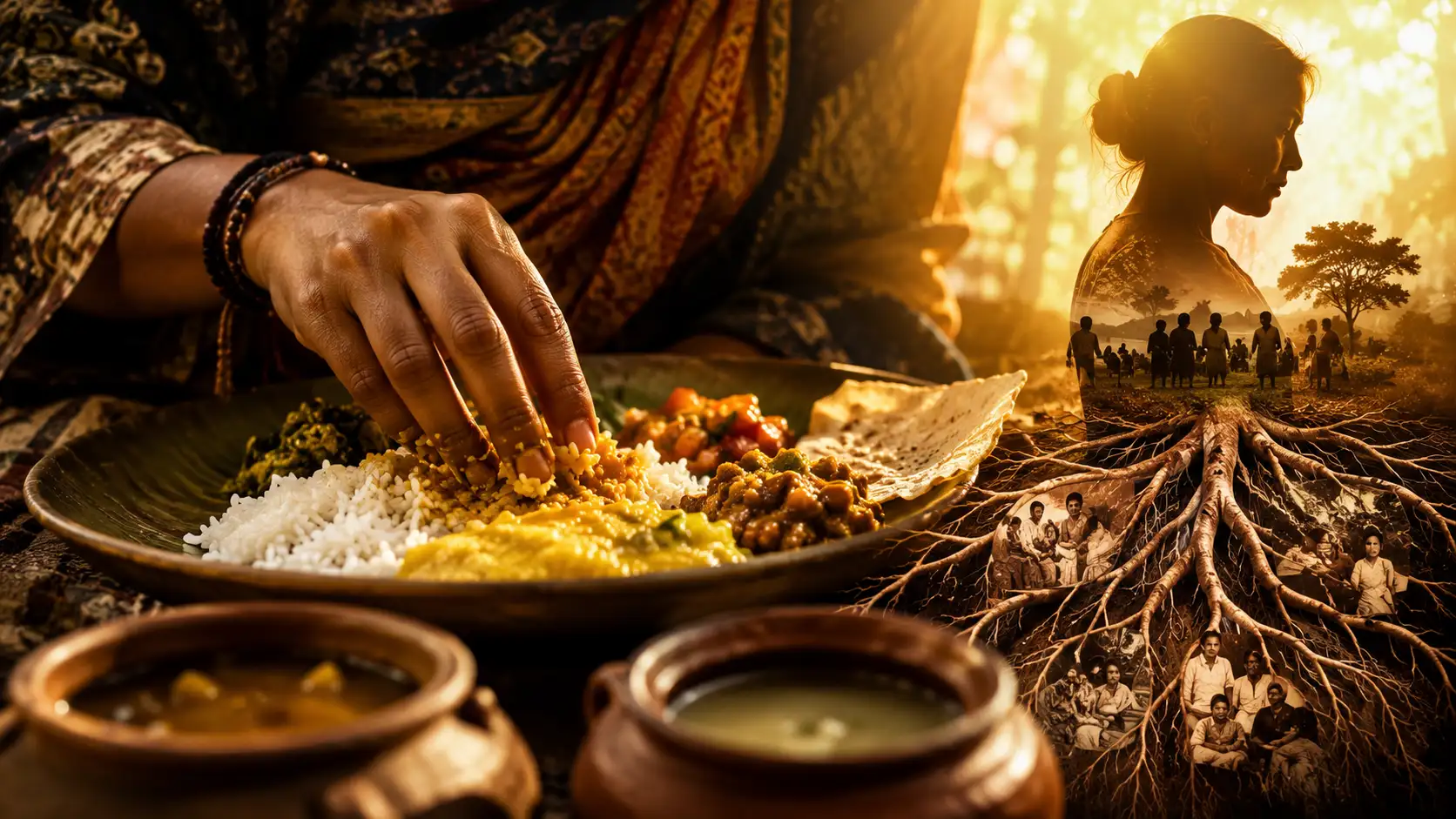
In many parts of the world, eating with your hands is often misunderstood. Some people see it as old-fashioned. Others assume it is a lack of table manners. But psychology suggests the behavior often has very little to do with etiquette and much more to do with identity, sensory connection and cultural belonging. Long before forks and spoons became everyday tools, humans used their hands to eat. For billions of people across countries such as India, Ethiopia and parts of the Middle East, eating with their hands remains an important cultural practice. What appears to be a simple habit is often a ritual that strengthens the relationship between people, food and family traditions. Psychology suggests this behavior may reveal something deeper about how humans experience comfort, identity and emotional connection.
Here is what psychology says may actually be happening.













