
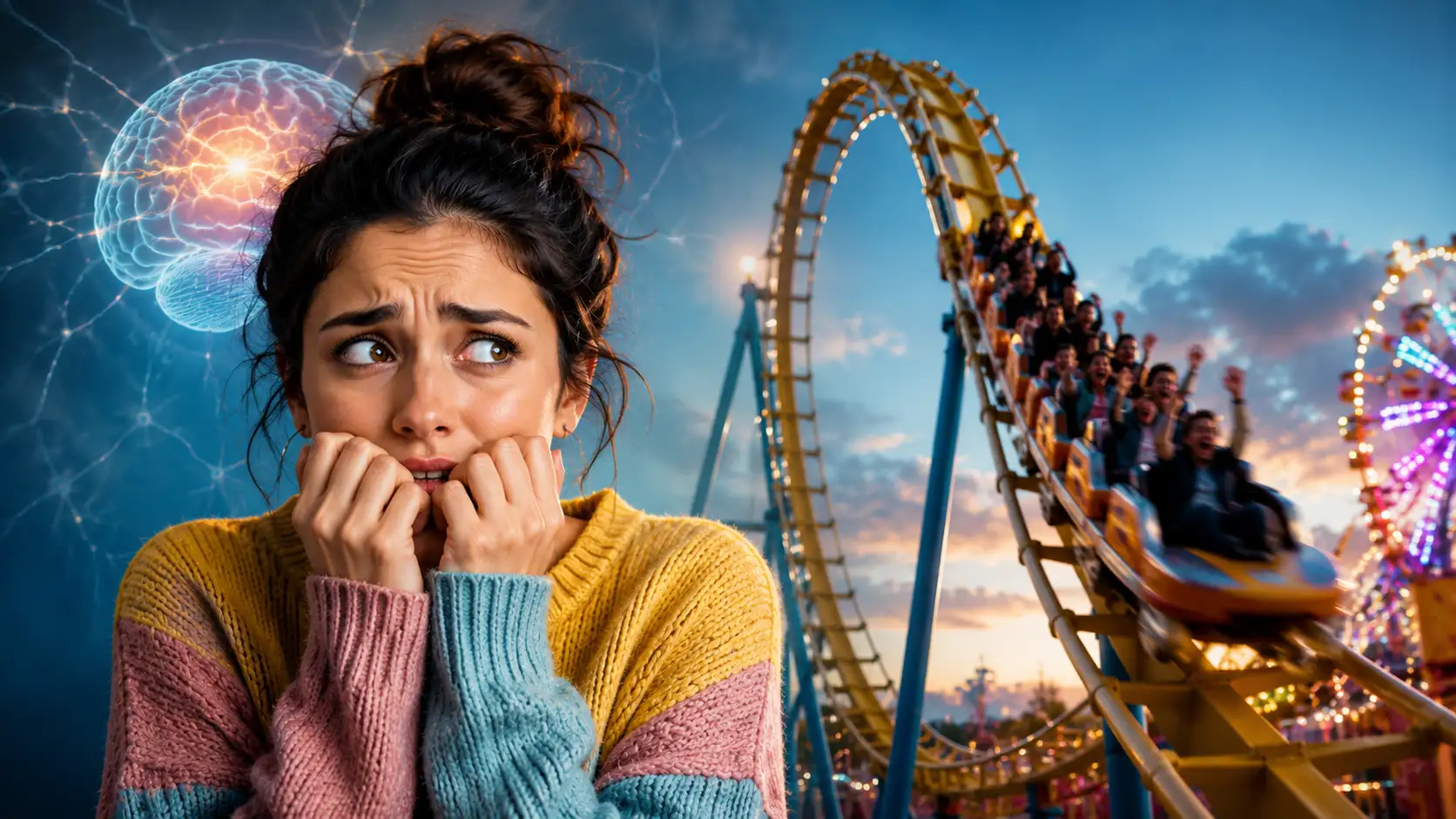
For some people, a college fair or amusement park is all about excitement. They eagerly line up for roller coasters, giant swings and spinning rides, looking for the next adrenaline rush. Others have a very different reaction. Just watching the rides can make their palms sweat, their heart race or their stomach tighten. They happily hold everyone's bags while friends enjoy the attractions. Psychology says this fear is far more common than many people realize. It does not automatically mean someone is weak, overly cautious or incapable of having fun. Instead, research suggests that fear of rides often reflects the way the brain processes risk, uncertainty, physical sensations and previous experiences. Several well-established psychological theories help explain why some people step onto thrill rides with excitement while others prefer to stay firmly on the ground.














