Get all your news in one place.
100's of premium titles.
One app.
Start reading
The Economic Times
The Economic Times
Mukesh Thapliyal

Psychology explains why you may still want your ex back after divorce - even when you know it's over

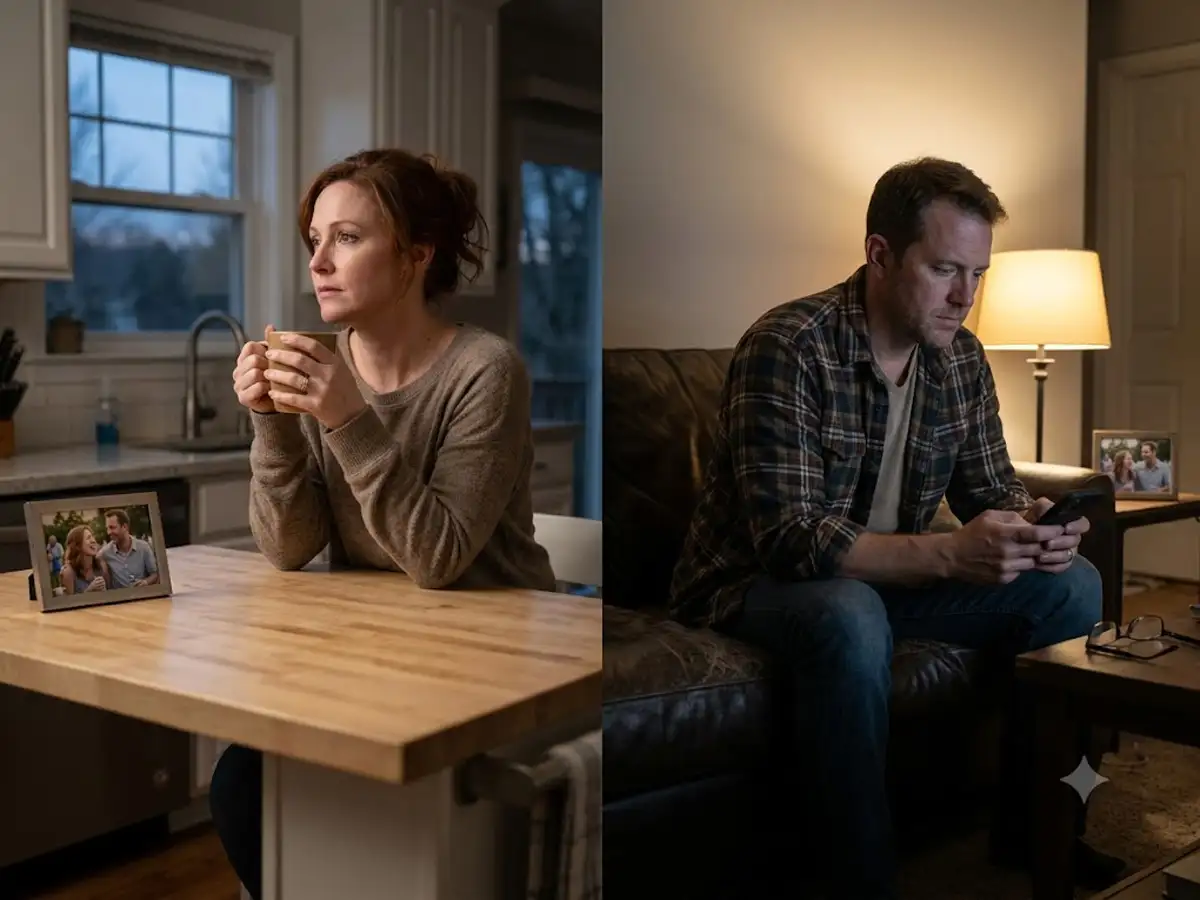
While divorce officially terminates a marriage, this does not necessarily mean that the feelings created during those years will just disappear. You can fully understand that there were problems in the marriage, agree with the fact that the marriage has come to an end, yet feel nostalgic for your ex-partner and contemplate what would happen if you came back together. Such conflicting emotions can be quite confusing, but there are some psychological explanations which imply that feeling nostalgia is not necessarily an indication that the divorce was wrong. Researchers have found that attachment, identity and loneliness can all influence how people respond to the end of a relationship. For some people, longing for reconnection is not about restoring the old marriage, but rather about seeking something familiar and secure.

YOUR ATTACHMENT MAY KEEP PULLING YOU TOWARD YOUR EX

The one study that stands out as being particularly applicable in this case has been conducted by psychologists Morgan A Cope and Brent A Mattingly. Their 2021 paper entitled 'Putting Me Back Together by Getting Back Together' focuses on exploring the motives for reunion. It has been discovered that attachment anxiety plays a key role in the decision to get back together. Those individuals who have more attachment anxiety expressed a greater tendency to desire a reconciliation with an ex-partner.

At the same time, the association between the two variables in question was partly mediated by low self-concept clarity which is the term used to refer to uncertainty of who the person is when out of the relationship. This fact makes it clear why there is a particular experience known to all of us where the person misses the loved one, but also misses himself/herself in that relationship. In a long-term marriage, all the processes of daily life are built on the assumption of 'we' where decisions, social ties and other things become shared. As soon as divorce happens, a person needs to build a separate self.

READ ALSO: Psychology says the first 10 minutes of a date can shape how attracted you feel to someone - Here’s why

DIVORCE CAN LEAVE A GAP IN YOUR SENSE OF SELF

Research by Grace M Larson and David A Sbarra provides yet another critical element to the picture. The researchers studied 210 newly separated young adults over nine weeks, focusing on changes in self-concept clarity and emotions after a breakup. The study revealed that increased self-concept clarity was associated with decreased breakup - emotional intrusion and loneliness. To put it simply, restoring clarity in one's own self-concept can help minimize some of the emotional trauma resulting from being separated. This is why desiring an ex doesn't always imply the desire to bring back the whole marriage. You might be yearning for familiarity, companionship or the self-concept you once knew.

David Sbarra and Jessica Borelli address the problem in their review of studies about separation and divorce in marriage. They consider divorce as the process of attachment reorganization. They emphasize the importance of attachment anxiety, attachment avoidance, self-concept clarity, and story coherence in adjusting to divorce. It is a gradual process. You may become officially divorced on a certain day, while emotionally your attachment will not necessarily change on the same timeline.

YEARNING CAN BECOME AN EMOTIONAL LOOP

Another scientific study provides insight into the reason why an ex-partner can still be so captivating. Among researchers who investigated the connection between ruminating on a past romantic relationship and breakup distress were Eisma, Tõnus, and de Jong who examined 62 individuals and employed an approach-avoidance task with photos of ex-partners. The results demonstrated the connection between attachment anxiety and rumination, and breakup distress, as well as a correlation between a stronger attachment desire and yearning for an ex-partner, approaching behavior and breakup distress.

The essential thing is that the research is correlational. Therefore, it cannot prove that missing your ex is what causes emotional distress. But it does show how attachment, yearning and repeated thinking about a former partner can become closely connected. That can create a cycle. This can form a vicious cycle when you think about your ex, feel lonely, recall happy moments and imagine how things could have been if... These thoughts may give temporary relief but activate the emotional bond at the same time.

The problem can become even more complex due to the time the couple spent together sharing their life experiences, establishing a common family routine, and making important decisions. You will not only be losing a romantic partner but an entire way of life. Wanting your ex-partner back does not necessarily mean that you need to do something about it. In such cases, one's feelings can be a form of information rather than instructions. The person might be trying to convey that he or she feels lonely, confused, grieves over the loss of his or her former self-image, or is still processing the situation.

READ ALSO: Psychology says people who constantly clear phone notifications may crave a sense of control - The surprising reason this tiny digital habit can feel satisfying and what it may reveal about how your brain handles uncertainty

When wanting an ex-partner back after divorce, people often find themselves caught between their minds' understanding of why they had to get divorced and the other side of them which is trying to grasp for what it is used to.

Studies by Cope and Mattingly, Larson and Sbarra, Sbarra and Borelli, and Eisma and colleagues offer different pieces of the picture. Most importantly, missing an ex does not automatically mean you should reunite. Sometimes it simply means you are still adjusting to life without a relationship that shaped a large part of who you were. Recognizing what you truly miss can help turn that emotional confusion into self-understanding - and make it easier to decide what you want next.

Sign up to read this article
Read news from 100's of titles, curated specifically for you.
Already a member? Sign in here
Related Stories
Top stories on inkl right now
One subscription that gives you access to news from hundreds of sites
Already a member? Sign in here
Our Picks
Fourteen days free
Download the app
One app. One membership.
100+ trusted global sources.