
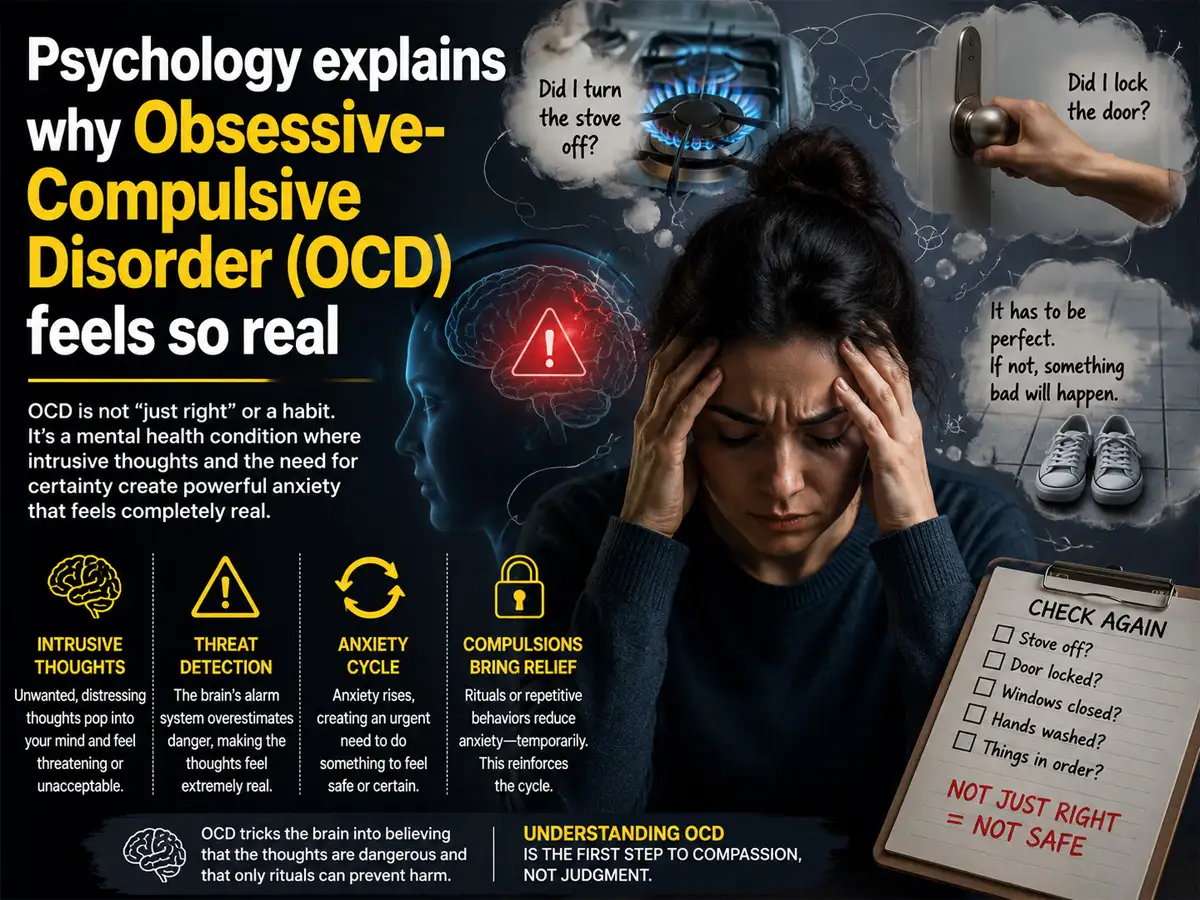
Obsessive-Compulsive Disorder (OCD) is often misunderstood as simply being extra neat or liking things to be organized. In reality, OCD is a complex mental health condition that affects millions of people worldwide. It is marked by unwanted, intrusive thoughts called obsessions and repetitive behaviors or mental rituals known as compulsions. What makes OCD especially difficult is that the fears and doubts can feel completely real, even when a person knows they may not be logical. Someone with OCD may repeatedly check if a door is locked, wash their hands dozens of times, or fear that they could accidentally harm someone despite having no desire to do so. These experiences are not a matter of choice or lack of willpower. Psychology research shows that the brain processes uncertainty and perceived threats differently in people with OCD, making their thoughts feel urgent and believable. Understanding why OCD feels so convincing can help reduce stigma and encourage compassion for those living with the condition.
THE BRAIN TREATS INTRUSIVE THOUGHTS LIKE REAL THREATS














