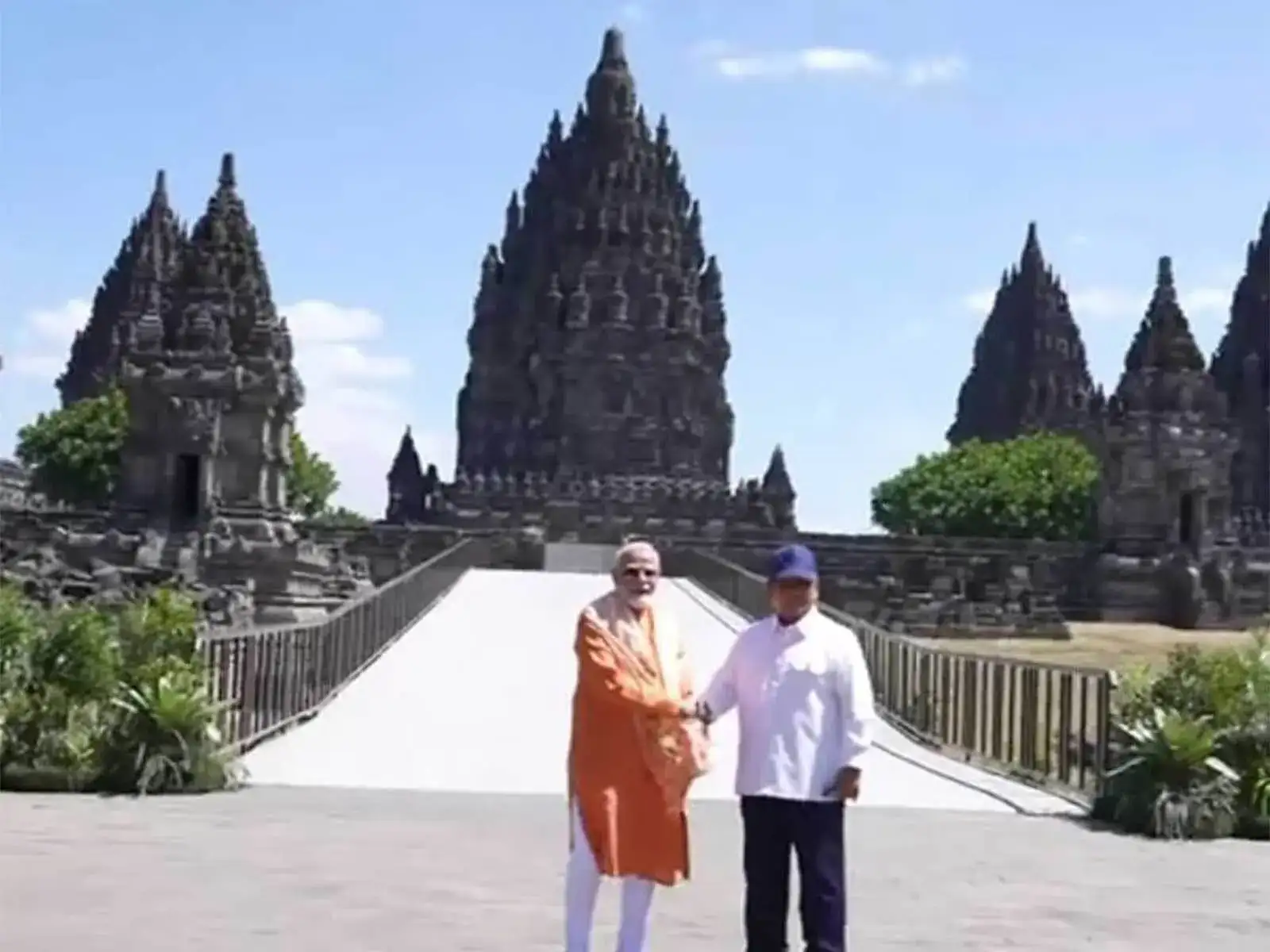
Prime Minister Narendra Modi and Indonesian President Prabowo Subianto jointly inaugurated the restoration project of the UNESCO World Heritage-listed Prambanan Temple in Yogyakarta on Wednesday, highlighting the centuries-old cultural ties between India and Indonesia. During the visit, Prime Minister Modi offered prayers at the ancient Hindu shrine and interacted with officials overseeing the restoration work.
The Prambanan Temple, constructed in the 9th century, is Indonesia's largest Hindu temple complex and one of the finest examples of Hindu architecture in Southeast Asia. Built during the reign of the Sanjaya dynasty of the ancient Mataram Kingdom, the temple has stood for nearly 1,200 years despite enduring powerful earthquakes, volcanic eruptions, and the gradual shift of political power from Central Java to eastern parts of the island.

Dedicated primarily to Lord Shiva, Prambanan is also home to grand temples devoted to Lord Vishnu and Lord Brahma, representing the Hindu Trimurti. The towering Shiva temple, rising 47 metres (154 feet) above the ground, is the tallest structure in the complex and remains one of the tallest Hindu temple towers in Southeast Asia.
Originally, the sprawling complex consisted of 240 temples arranged in a geometric layout. Although many of the smaller shrines were damaged over the centuries, extensive conservation efforts have helped restore much of the site's former glory. Today, Prambanan is recognised as one of the world's most important Hindu temple complexes and has been designated a UNESCO World Heritage Site.
One of the temple's most striking features is its intricate stone reliefs that narrate scenes from the Ramayana. Visitors can follow the epic story carved into the walls by walking around the temples in a clockwise direction, making the monument an architectural masterpiece as well as a visual retelling of one of Hinduism's greatest epics.
Prambanan is also closely associated with the famous Javanese legend of Roro Jonggrang. According to local folklore, a prince was challenged to build 1,000 temples in a single night to win the hand of Princess Roro Jonggrang. When she tricked him into believing dawn had arrived before he completed the task, the enraged prince turned her into stone. Many locals believe the statue of Goddess Durga inside the Shiva temple represents the princess.
The temple's history has been marked by resilience. It was abandoned for centuries following natural disasters and political changes before being rediscovered and restored. Even after suffering damage during the 2006 Java earthquake, conservation work has continued to preserve the monument for future generations.