
Get all your news in one place.
100's of premium titles.
One app.
Start reading
The Independent UK
The Independent UK
Steve Fowler

Porsche Cayenne Electric review: The EV SUV that feels like a proper sports car

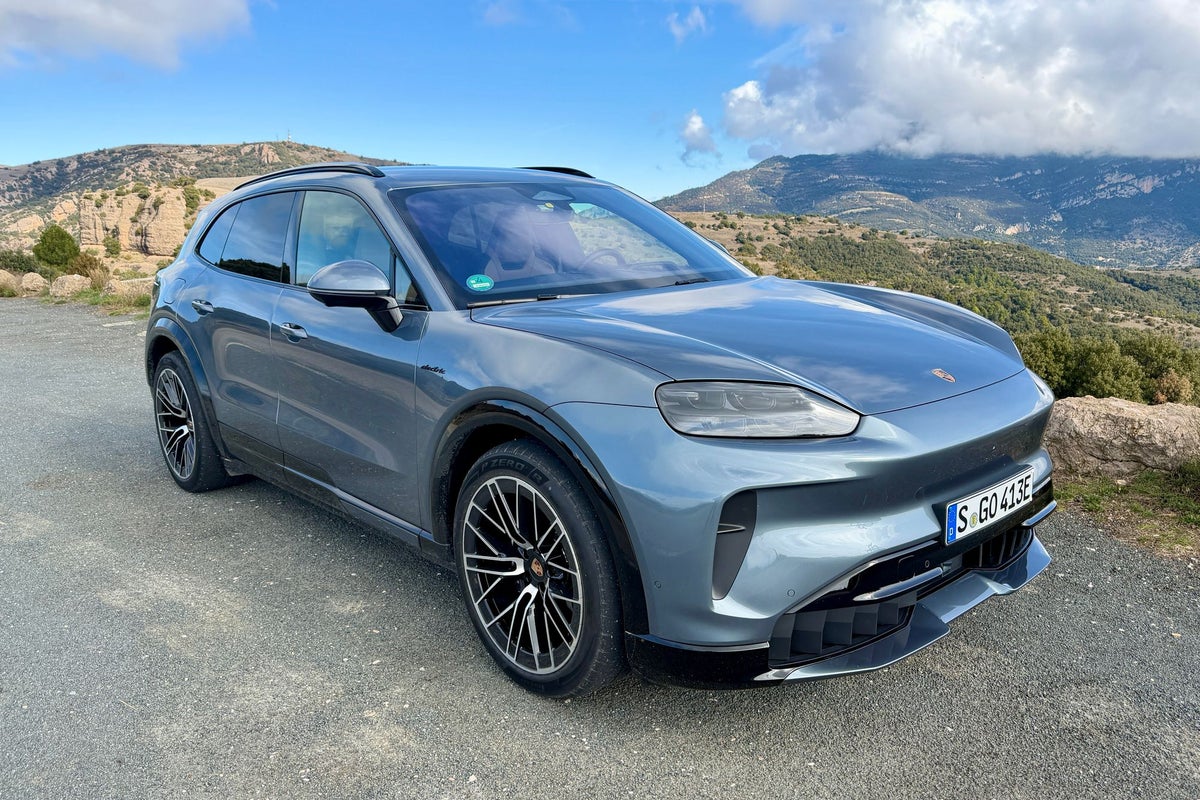
The new Cayenne Electric proves that an EV can still feel and drive like a proper Porsche - (Steve Fowler)

If you wanted assurance that electrification doesn’t have to dull the edge of a performance car, look no further than Porsche’s latest offering. The new Cayenne Electric is not only the brand’s most powerful production car ever, it’s also one of the fastest SUVs on the planet. And yet, crucially, it still feels unmistakably like a classic Porsche to drive.

The Cayenne has arguably been the most important car in Porsche’s modern history. When the first generation arrived in 2002 it transformed the company from a niche sports car maker into the hugely profitable luxury brand we know today. Now the Cayenne is entering another defining phase with the arrival of the fully-electric Cayenne Electric.

Unlike some rivals, Porsche isn’t abandoning traditional powertrains just yet. Electric, hybrid and petrol Cayenne models will all remain available well into the next decade, with the combustion versions receiving styling updates so they align visually with the EV. But it’s the electric model that clearly represents the future.

The new electric lineup launches with three models: the Cayenne Electric, the Cayenne S Electric and the flagship Cayenne Turbo Electric. Together they span a huge range of performance – from around 402bhp in the entry model to an astonishing 845bhp in the Turbo.

Design-wise, Porsche has taken its usual deliberately evolutionary approach. The new car keeps unmistakable Cayenne proportions with a low front end and muscular bolstered wheel arches that give the SUV its planted stance.

The rear design is particularly distinctive. Instead of a traditional badge, the Porsche name is illuminated across the rear light bar. It’s an elegant touch and the lighting effect is surprisingly restrained, rather than overly dramatic. Active aerodynamics help improve efficiency. An adaptive roof spoiler works alongside active aero blades that extend from the outer corners of the rear bumper on the Turbo model, helping the Cayenne Electric achieve an impressive drag coefficient of around 0.25.

Despite its performance credentials, the Cayenne Electric remains a practical SUV. Boot space ranges from 781 litres to 1,588 litres with the rear seats folded, while there’s also a 90-litre front storage compartment. And buyers who want genuine off-road ability can choose a package that improves ground clearance and approach and departure angles – while also increasing the vehicle’s wading depth.

Because this is Porsche, personalisation is taken seriously. Buyers can choose from 13 exterior colours and 11 different alloy wheel designs, while optional extras include self-closing doors and even a very nice matching Porsche Design watch. The Swiss-made timepiece mirrors details from the car including body colour accents, seat materials and even the steering wheel design. While the watch looks fantastic, it does cost from around £5,100.

How we tested

Porsche took me to Northern Spain to test the new Cayenne Electric, driving on a route up the motorways towards Andorra with spectacular scenery and dynamic driving roads. I also found some more mundane roads to drive around, including my usual supermarket car park test. Meanwhile, I put the tech and audio system to good use, too, checking on the practicality. I also considered pricing and kit levels to give my considered verdict.

Porsche Cayenne Electric: from £83,200, Porsche.com

The Cayenne Electric is as much fun as many other Porsches to drive (Porsche)

Independent rating: 9/10

  • Pros: Explosive Turbo performance; superb steering and body control; ultra-fast charging; strong practicality; excellent build quality
  • Cons: No one-pedal driving; thick A-pillars hinder visibility; fussy centre storage; noisy ventilated seats; only one wireless charger

Porsche Cayenne Electric specs

  • Price from: £83,200
  • Battery size: 113kWh
  • Maximum claimed range: 405 miles
  • Maximum charging rate: 400kW
  • Power: 1,141bhp with overboost (0-62mph in 2.5 seconds)

Battery, range, charging, performance and drive

The Cayenne Electric uses Porsche’s latest EV platform combined with a sizeable113kWh battery pack and an 800-volt electrical architecture – designed for both extreme performance and rapid charging.

DC charging speeds reach up to 400kW, allowing the battery to charge from 10 to 80 per cent in roughly 16 minutes under ideal conditions. AC charging of up to 22kW is also supported.

In true Porsche fashion, the latest Cayenne features an updated shape, not a whole new look (Porsche)

The Cayenne Electric range begins with the entry model producing around 402bhp with launch control. Above it sits the Cayenne S Electric delivering 544bhp rising to around 666bhp with overboost. Then there’s the Cayenne Turbo Electric. With up to 845bhp, it becomes the most powerful production car Porsche has ever created.

The numbers are extraordinary. The Turbo Electric can sprint from 0-60mph in just 2.4 seconds. Launch control delivers what can only be described as face-alteringly brutal acceleration. It’s almost comical just how violently the big SUV fires itself down the road, particularly in Sport Plus mode where everything is dialled up to maximum attack.

Yet despite the extreme pace the throttle response remains beautifully linear, making the power surprisingly easy to control. Much of the motor technology comes directly from Porsche’s Formula E programme, which helps explain the focus on efficiency and responsiveness.

Handling is where the Cayenne really impresses. For such a large SUV the car simply doesn’t feel like one when you’re behind the wheel. The steering is lovely – tactile, communicative and beautifully linear in a very Porsche way. It weights up progressively as you move through Normal, Sport and Sport Plus modes, while the car hunkers down more aggressively for improved cornering control.

Rear-wheel steering also plays a big role. With up to five degrees of rear steering available, the Cayenne feels far more manoeuvrable around town than you’d expect. Ride quality is another highlight. The standard Cayenne Electric rides beautifully, thanks to air suspension combined with Porsche Active Suspension Management.

Step up to the Turbo with optional super-advanced Porsche Active Ride suspension and the body control becomes even more impressive. It’s not quite the magic-carpet ride isolation of something like the Nio ET9 – nor should it be – but the Cayenne still manages to feel extremely comfortable while communicating the road surface clearly to the driver.

The Turbo model is particularly entertaining. In Sport Plus mode the performance feels outrageous, and the push-to-pass button adds another layer of drama when overtaking. Porsche has also added an artificial soundtrack designed to mimic the character of a V8 engine and there’s even what sounds suspiciously like a faint turbo whistle mixed into the sound effect.

Regenerative braking is one area that feels less impressive. Even in its ‘on’ setting the system delivers relatively little extra braking effect and there’s no one-pedal driving mode. It’s a bit disappointing compared with some other EVs. Braking performance itself is immense though. The Turbo’s brakes have huge stopping power, although the pedal feels slightly soft right at the very top of its travel.

Visibility can also be slightly compromised by the large A-pillars which restrict the view through tighter corners. If you prefer sitting low it can be difficult to judge exactly where the front of the car ends. On the off-road course the camera system becomes particularly useful.

There's no Porsche badge on the back of the Cayenne Electric, just an illuminated strip with the logo lit up (Steve Fowler)

Interestingly, the Cayenne Electric is surprisingly capable off road. The EV powertrain makes it easy to control the car’s huge torque while downhill control systems work effectively – even if the interface isn’t the simplest.

And despite the enormous tyres fitted to the car, road noise is impressively well isolated – the Cayenne is a relaxing and comfortable cruiser that can change character with just a twitch of the right foot.

Interior, practicality and boot space

The Cayenne Electric feels every inch a modern Porsche inside, but crucially it hasn’t sacrificed usability in the pursuit of performance or technology.

Build quality is immediately impressive. Everything feels solid, tightly assembled and properly premium, with materials that look and feel built to last rather than just to impress in a showroom.

There's plenty of space in the back of the Porsche Cayenne Electric, with a usefully flat floor (Porsche)

Space is a real highlight. There’s huge rear passenger room with plenty of legroom and headroom for adults, making this a genuinely comfortable long-distance family car. The sense of space in the back underlines just how large the Cayenne is, even if it shrinks around you on the move.

Boot space is equally strong. You get between 781 litres and 1,588 litres depending on the position of the rear seats, putting it right up there with the most practical cars in the class. The 90-litre front boot is genuinely useful too, especially for keeping charging cables separate from luggage.

That said, a few details aren’t quite as slick as the overall finish. The central storage area feels fussy and over-complicated, with removable cupholders and a layout that looks clever but isn’t always that practical. There’s also just a single wireless charging pad and, during more enthusiastic driving, the phone can easily slide out of position – in my case it fell out completely.

The driving position is typically Porsche. Sitting low helps you feel more connected to the car, but it does come with compromises. The thick A-pillars restrict your view through tighter corners and, if you sit low, it can be difficult to judge exactly where the front of the car ends. On tighter manoeuvres or off-road sections, the camera system quickly becomes essential.

The Porsche Cayenne Electric offers 781 litres or 1,588 litres boot room, plus a 90-litre front boot (Porsche)

One unexpected downside is the ventilated seats. They work well enough, but they’re probably the noisiest I’ve come across, which feels slightly out of character in an otherwise refined cabin. On the flip side, despite those huge tyres, road noise is very well suppressed, adding to refinement on longer journeys.

Overall, though, the Cayenne Electric blends Porsche’s driver-focused approach with the space and practicality expected of a large luxury SUV – even if a few usability details could be simplified.

Technology, stereo and infotainment

Technology is centred around Porsche’s curved OLED Flow Display infotainment system. The screen has a shape reminiscent of a foldable smartphone and actually works extremely well in practice. Drivers can display the navigation map across the full screen – or split it so the map sits in the upper section while shortcut controls sit underneath. The user interface is excellent and feels intuitive to use.

The highlight of the Porsche Cayenne Electric's tech roster is the curved OLED infotainment screen (Steve Fowler)

The 14.25-inch driver display is arranged in three circular sections in typical Porsche fashion, while an optional 14.9-inch passenger display is invisible to the driver so the passenger can watch content without distraction.

Porsche has wisely retained physical heating and ventilation controls beneath the touchscreen with a handrest positioned below, so drivers can steady their hand while using the screen. The power button and gear selectors are hidden on the dash behind the steering wheel on stalks – something that takes a little getting used to.

Sound quality comes from a Bose system which, as is often the case, is rather bass heavy and tends to overshadow some of the mid-range detail.

The cabin is typically Porsche, with three digital dials in front of the driver and impressive build quality. The front passenger can get a touchscreen, too (Steve Fowler)

The Cayenne Electric also introduces several configurable “Mood Modes”. Dynamic mode tightens the seat bolsters slightly while there are other settings include Journey, Relaxation, Entertainment, Urban and Focus. They can adjust everything from the seat position and heating to display settings, interior lighting, the Bose system’s sound mode – and even the panoramic roof shades.

Prices and running costs

Prices for the Cayenne Electric start from £83,200, rising to £130,900 for the Cayenne Turbo Electric. The Cayenne S Electric sits between the two, offering a clear step up in performance over the entry model and a price increase to £99,900.

The Porsche Cayenne Electric has two, electrically-opening charging points: AC and DC on one side, and just AC on the other (Steve Fowler)

As ever with Porsche, options will have a big impact on the final price. Buyers can choose from 13 exterior colours and 11 alloy wheel designs, while extras such as self-closing doors add further cost.

Running costs should benefit from the Cayenne’s efficiency and rapid charging capability. Thanks to its 800-volt electrical architecture, the car supports DC charging at up to 400kW, enabling a 10-80 per cent charge in roughly 16 minutes under ideal conditions.

In the UK, Porsche is also offering a useful incentive. Buyers receive a free three-year subscription to Porsche Charging Service (PCS) Plus, reducing charging costs to 59p per kWh across supported networks, or 39p per kWh when using IONITY chargers or Porsche Centres. After the initial period, the service costs £13.99 per month. That could make a meaningful difference to real-world running costs, particularly for drivers relying on rapid public charging.

Aerodynamic efficiency also plays its part. With a drag coefficient of around 0.25, the Cayenne Electric is impressively slippery for a car of its size, which should help with motorway efficiency.

Taken together, the Cayenne Electric combines strong efficiency, ultra-fast charging and a premium ownership experience – with the PCS Plus offer acting as a useful sweetener for UK buyers.

The verdict: Porsche Cayenne Electric

The Cayenne Electric proves that going electric doesn’t mean losing what makes a Porsche feel special.

The Turbo Electric delivers outrageous performance, while the other models strike a superb balance between pace and range – and the whole car still manages to feel engaging from behind the wheel.

Add in excellent build quality, rapid charging, genuine practicality and comfortable cruising and it’s hard to escape one conclusion: right now, this looks like the premium performance electric SUV everyone else has to beat.

Porsche Cayenne Electric rivals

FAQs

How long does it take to charge?

With its 800-volt architecture, the Cayenne Electric supports DC charging of up to 400kW – allowing a 10-80 per cent charge in roughly 16 minutes.

How much does it cost – is it worth it?

Prices for the Porsche Cayenne Electric start from £83,200 for the entry model, rising to approximately £130,900 for the Cayenne Turbo Electric. The Cayenne S Electric sits between the two, with prices starting at just under £100,000 (depending on specification). If you want a large electric SUV that prioritises performance and driver engagement, the Cayenne Electric makes a very strong case. It combines supercar-rivalling acceleration, sharp steering and excellent body control with strong practicality and ultra-fast charging.

Does Porsche replace batteries for free?

Porsche typically offers an eight-year or 100,000-mile warranty for the high-voltage battery, alongside the typical three-year manufacturer warranty for the rest of the vehicle.

Why trust us

Our team of motoring experts have decades of experience driving, reviewing and reporting on the latest EV cars, and our verdicts are reached with every kind of driver in mind. We thoroughly test drive every car we recommend, so you can be sure our verdicts are honest, unbiased and authentic.

With more than 30 years of experience, Steve Fowler is one of the UK’s best-known automative journalists. Steve has interviewed key industry figures, from Tesla’s Elon Musk to Ford’s Jim Farley, and is a judge for both Germany’s and India’s Car of the Year Awards, as well as being a director of World Car of the Year. When it comes to electric vehicles, Steve reviews all the latest models for The Independent as they launch, from Abarth to Zeekr, and he uses his expert knowledge of car buyers' needs to provide a comprehensive verdict.

Sign up to read this article
Read news from 100's of titles, curated specifically for you.
Already a member? Sign in here
Related Stories
Top stories on inkl right now
Our Picks
Fourteen days free
Download the app
One app. One membership.
100+ trusted global sources.







