Get all your news in one place.
100’s of premium titles.
One app.
Start reading
MarketBeat
MarketBeat
MarketBeat Staff

Poll Reveals: Most Popular Fast-Food Restaurants for Valentine’s Day on a Budget (2026)

We surveyed 3,004 couples to get a clearer picture of how they plan to spend Valentine’s Day - a useful annual snapshot of consumer confidence, discretionary habits, and small-scale economic decision-making.

Our findings revealed a standout trend: a surprisingly large share of couples plan to celebrate the day at fast-food restaurants rather than traditional sit-down venues.
Looked at from a financial point of view, the brand choices people make - from Chick-fil-A to Taco Bell - reveal a lot about how consumers are adapting when prices remain high and disposable income feels tighter than usual.

Key Findings

Chick-fil-A’s highest ranking suggests “premium restraint” spending.

As the clear favorite, Chick-fil-A sits in a sweet spot: it is affordable, but not perceived as cheap. This reflects that consumers are content to trade down from full-service restaurants, so long as the alternatives offer quality, consistency, and a sense of occasion.

McDonald’s and Burger King reflect familiar spending habits.

These brands typically appeal when value and predictability matter most. Their high ranking suggests a segment of consumers actively minimizing discretionary spending. 

Dairy Queen’s popularity highlights comfort-driven consumption.

Sweet brands tend to perform well when consumers are financially cautious but still seeking small indulgences. 

Pizza brands are a popular Valentine’s Day option.

Pizza Hut, Domino’s, Little Caesars - Pizza consistently performs well during economic slowdowns because it stretches across two people without doubling the cost. 

The popularity of these pizza brands, led by Pizza Hut, reinforces that couples are optimizing for maximum experience per unit.

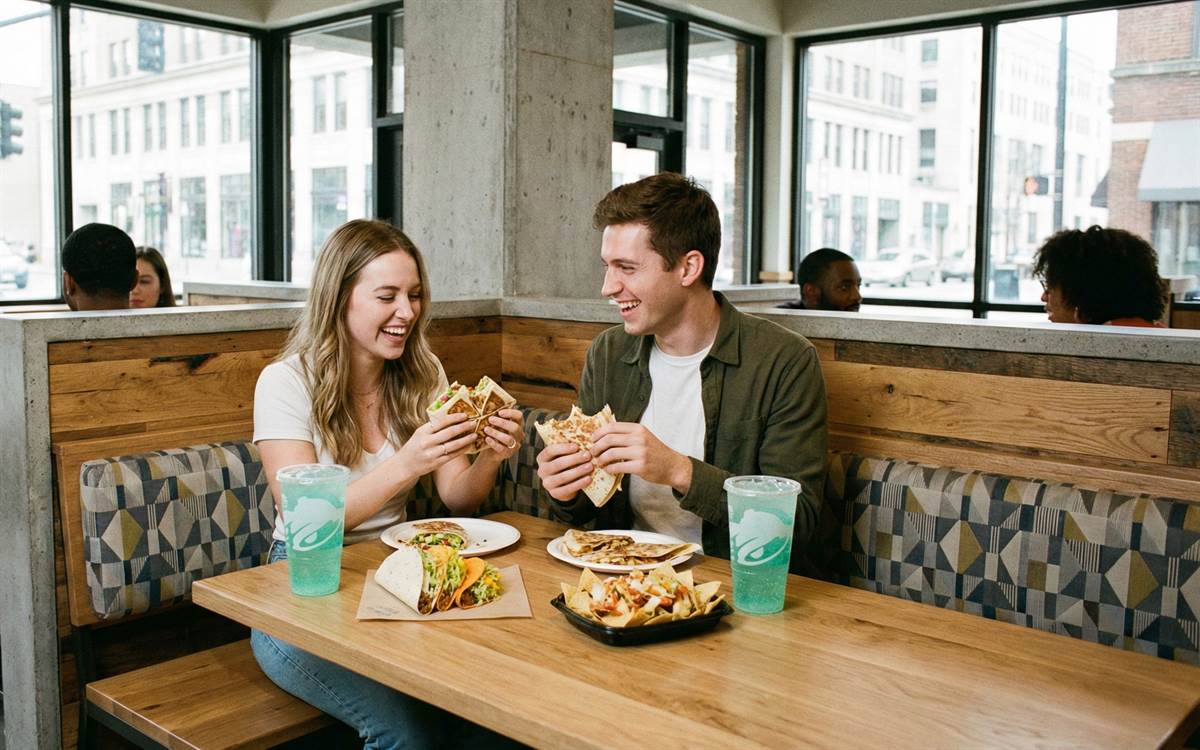
Taco Bell, Sonic, and Jack in the Box indicate flexible, mix-and-match budgeting.

These chains allow customers to control spend precisely - adding or subtracting items as needed. That kind of granular budgeting tends to show up when consumers are cost-aware but not fully pulling back.

Wendy’s and Subway sit in the middle as “balanced spend” options.

These brands appeal to consumers trying to maintain moderation - not splurging, but not fully cutting back either. Subway’s customization also mirrors a desire for control over both calories and cost.

Carl’s Jr./Hardee’s stands out as a higher-calorie, higher-satisfaction choice.

These brands often win when consumers want fewer purchases that feel more substantial - another sign of spending consolidation rather than expansion.

How the Survey Data Reinforces the Financial Story

68% said limited-edition Valentine’s menus would influence their choice.

From a consumer-economics standpoint, this suggests people still respond to scarcity and seasonal framing - even when budgets are tight. Special marketing can justify discretionary spending without increasing actual spending much.

Lower cost (28%) and comfort (38%) dominate decision-making.

Together, these indicate consumers aren’t eliminating discretionary spending – they are resizing it. This is consistent with a “trade-down, not opt-out” phase.

82% say fast food is becoming socially acceptable for special occasions.

This matters financially: normalization reduces friction. When consumers feel socially comfortable spending less, they do so more confidently and more often.

54% say inflation has changed how they plan Valentine’s Day.

This is a meaningful shift. In previous years, Valentine’s Day often escaped budget cutbacks, even during periods of broader financial pressure. 

The fact that more than half of respondents are adjusting their plans now suggests belt-tightening has moved beyond everyday spending and into traditionally “protected” occasions - a sign that cost sensitivity is becoming more deeply embedded in consumer behavior rather than a temporary reaction.

74% would be comfortable splitting the bill at a fast food.

That level of acceptance suggests declining sensitivity around cost-sharing - often seen when consumers are more price-conscious but less embarrassed about it.

Final Thoughts

This data shows how consumers behave when discretionary spending is under pressure but not collapsing. 

Rather than opting out of Valentine’s Day, people are redefining it in financially rational ways: lower cost, lower risk, and lower pressure.

For analysts watching consumer confidence, this kind of behavior typically signals caution, not crisis. People still want to celebrate. They are just doing the math more carefully - and choosing options that let them participate without overextending.

Where Should You Invest $1,000 Right Now?

Before you make your next trade, you'll want to hear this.

MarketBeat keeps track of Wall Street's top-rated and best performing research analysts and the stocks they recommend to their clients on a daily basis.

Our team has identified the five stocks that top analysts are quietly whispering to their clients to buy now before the broader market catches on... and none of the big name stocks were on the list.

They believe these five stocks are the five best companies for investors to buy now...

See The Five Stocks Here

The article "Poll Reveals: Most Popular Fast-Food Restaurants for Valentine’s Day on a Budget (2026)" first appeared on MarketBeat.

Sign up to read this article
Read news from 100’s of titles, curated specifically for you.
Already a member? Sign in here
Related Stories
Top stories on inkl right now
One subscription that gives you access to news from hundreds of sites
Already a member? Sign in here
Our Picks
Fourteen days free
Download the app
One app. One membership.
100+ trusted global sources.