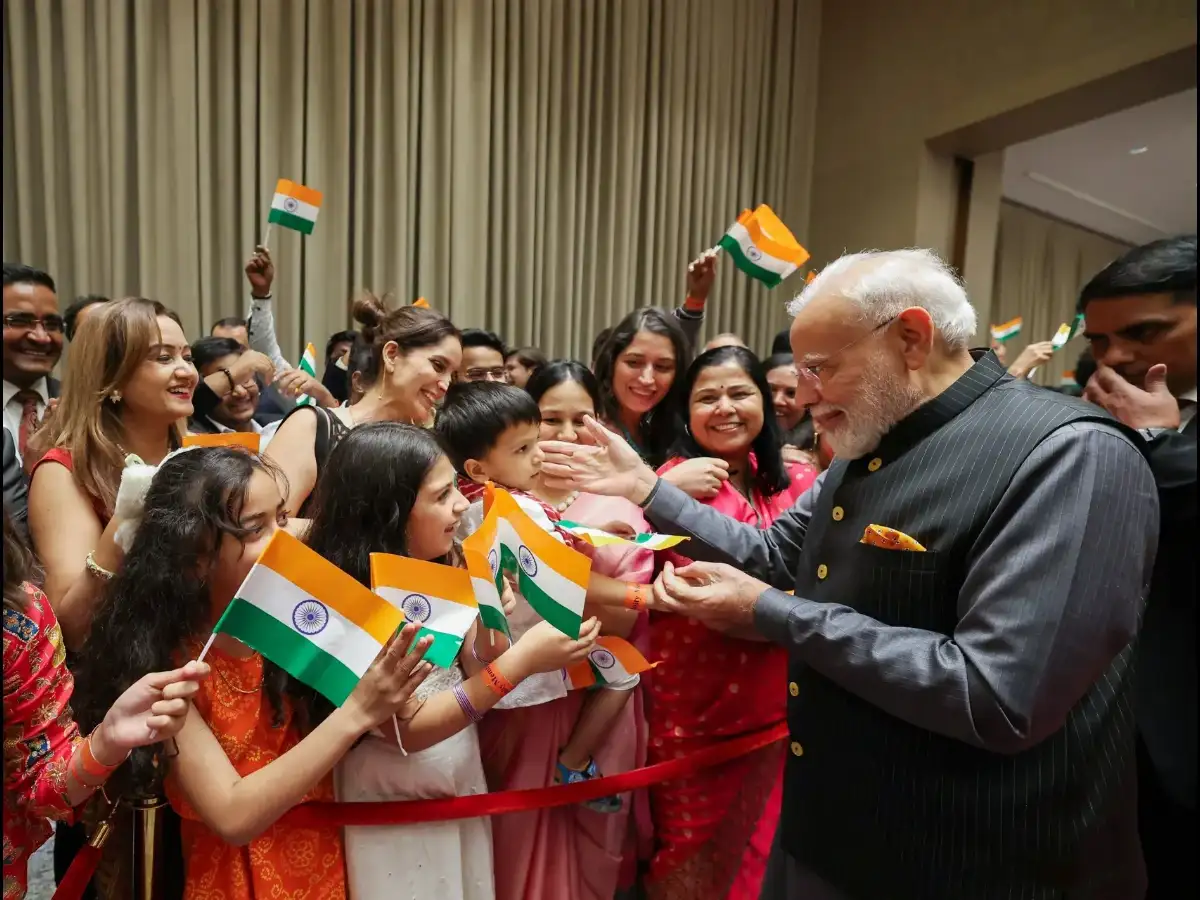
India and Uzbekistan on Sunday elevated their relationship to a Comprehensive Strategic Partnership and set an ambitious target of $5 billion in annual bilateral trade by 2030, as Prime Minister Narendra Modi and Uzbek President Shavkat Mirziyoyev agreed to deepen cooperation across a broad range of sectors.
The two sides also agreed to establish a framework for the long-term supply of uranium from Uzbekistan to India as part of their cooperation in the civil nuclear energy sector.

Also Read: PM Modi conferred the Order of 'Oliy Darajali Dustlik,' Uzbekistan's supreme state award
The decisions were taken during talks between Modi and Mirziyoyev in Tashkent, with the two leaders focusing on expanding cooperation in trade, investment, infrastructure, critical minerals, mining, defence and security, agriculture, pharmaceuticals, healthcare, information technology, digital public infrastructure, including UPI, and education.
The two countries currently have bilateral trade of more than $1 billion. Modi said the new $5 billion target by 2030 would be pursued alongside efforts to address issues related to market access, banking, payment systems and connectivity.
“Uzbekistan is at the heart of Central Asia and is at the heart of India’s engagement in the region,” Modi said in his press statement.
“A stronger India-Uzbekistan partnership will be a powerful force for peace, progress and prosperity in Central Asia,” he added.
The two leaders also witnessed the exchange of several agreements covering areas including mining, culture, education, tourism and ayurveda.
On defence cooperation, Modi said India and Uzbekistan would encourage their defence industries to explore direct linkages, co-development and co-production of military hardware.
“The close defence and security cooperation between our two countries reflects our deep mutual trust. In the future, we will promote direct linkages, co-production, and co-development between our defence industries,” Modi said.
He also stressed the shared security concerns of the two countries.
Also Read: India, Uzbekistan agree to deepen cooperation in trade, defence, energy, digital connectivity
“We believe that terrorism, extremism, and separatism pose serious challenges to the entire region,” said the prime minister. “Maintaining a policy of zero tolerance against these threats has been, and will continue to be, our shared resolve.”
The two sides also agreed to a Letter of Intent for the restoration and conservation of the ancient Buddhist sites of Fayaz Tepa and Kara Tepa in southern Uzbekistan. The sites are significant examples of the spread of Buddhism along the Silk Road and its presence in Central Asia.
The elevation of ties comes as India and Uzbekistan mark the 15th anniversary of their strategic partnership.
“We are celebrating the 15th anniversary of our strategic partnership. I am delighted that, on this special occasion, we are elevating our ties to the level of a Comprehensive Strategic Partnership,” Modi said in his opening remarks at the bilateral talks.
“We will move forward by setting concrete goals within this framework,” he said in Hindi.
Modi said the two leaders had also held “productive talks” over dinner on Saturday and taken several important decisions.
“We had a productive discussion over dinner last night and took several important decisions.”
As part of the upgraded partnership, the two countries will establish a Coordination Council at the level of foreign ministers to provide direction to their cooperation.
“We will establish a Coordination Council at the level of foreign ministers to provide direction to all aspects of our cooperation through close coordination,” Modi said.
The existing joint commission between the two countries will also be elevated from the secretary level to the ministerial level. The two sides will jointly organise a business summit bringing together business leaders from India and Uzbekistan.
“We will also establish a long-term arrangement for the supply of uranium,” Modi said, without providing further details.
Mirziyoyev said Uzbekistan was committed to expanding cooperation with India across several sectors.
“We are aiming to advance cooperation in sectors such as energy, culture, critical minerals, pharmaceuticals, jewellery and agriculture,” the Uzbek president said.
“We will prepare roadmaps for each of these sectors; specific teams from India will visit here, and our teams will travel to India, enabling us to clearly define our objectives in these fields,” he added.
Modi arrived in Tashkent on Saturday for a two-day visit aimed at strengthening India's engagement with Uzbekistan and the wider Central Asian region.