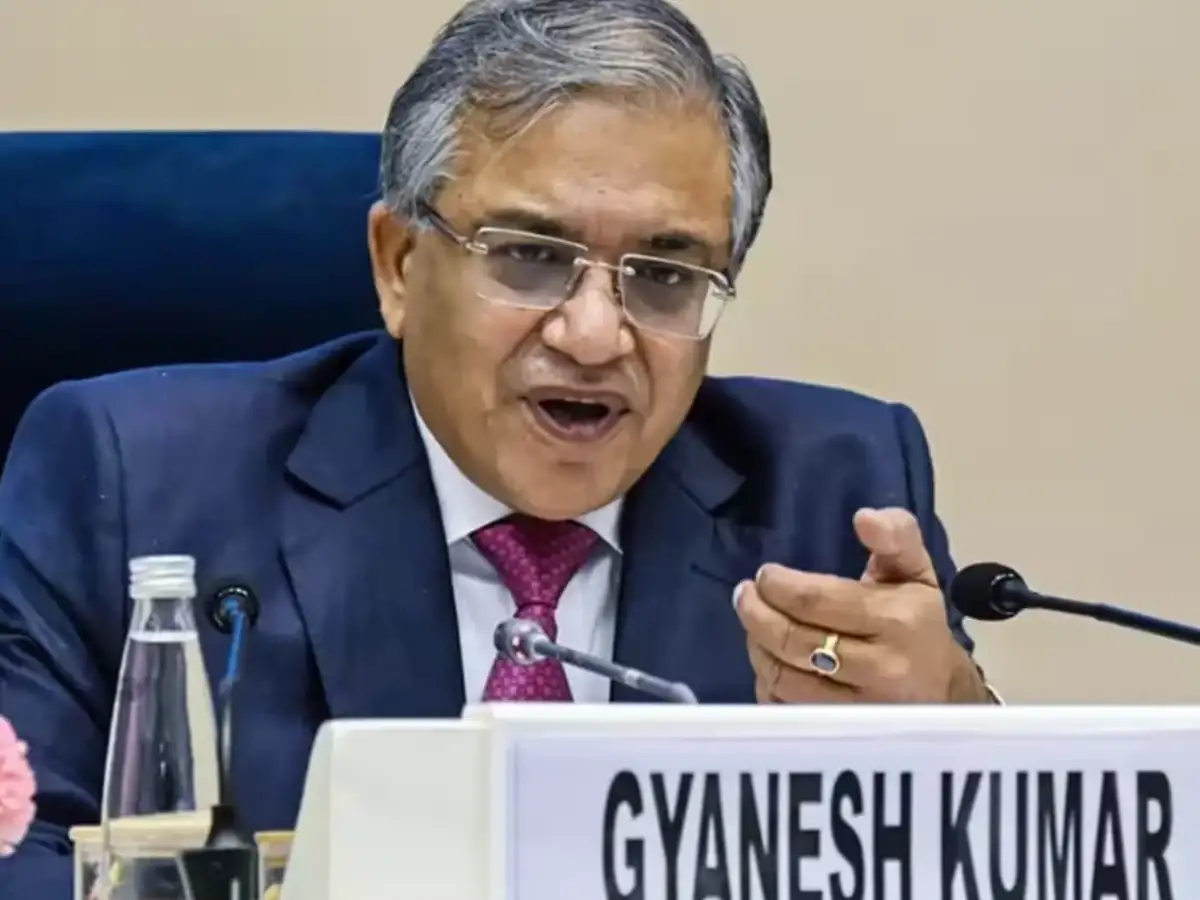
A plea has been filed in the Supreme Court seeking prosecution of Chief Election Commissioner (CEC) Gyanesh Kumar for allegedly taking unilateral decisions in the Election Commission of India (ECI), including changes to Form 6, centralisation of electoral roll data and other decisions despite objections from the other two Election Commissioners.
The plea alleges that these actions led to the exclusion of eligible voters and seeks prosecution of Gyanesh Kumar under Section 32 of the Representation of the People Act.

The plea, filed by advocate Shailendra Mani Tripathi through advocate Chand Qureshi, seeks that decisions, guidelines and software modifications allegedly undertaken by Kumar without the concurrence of the two Election Commissioners be declared unconstitutional and void.
It also seeks a declaration that all such decisions relating to the Special Intensive Revision (SIR) of electoral rolls are illegal and calls for restoration of the original Form 6.
The petitioner has further sought an inquiry by a Special Investigation Team (SIT) into the alleged deletion of around 13 crore voters from electoral rolls during the revision exercise.
The plea has also sought criminal prosecution of Kumar, Deputy Election Commissioner Maneesh Garg and Seema Khanna, IT head of the Election Commission, alleging violation of their statutory duties under the Representation of the People Act.
The plea comes amid a controversy over alleged differences within the Election Commission during the SIR exercise. An investigation published by The Indian Express on September 23 reported that Election Commissioners Sukhbir Singh Sandhu and Vivek Joshi had formally raised objections at least 14 times over a 10-month period on decisions and orders concerning electoral rolls. The objections covered voter registration, deletion and restoration of names, changes to Form 6 and the handling of electoral-roll data.
One of the issues concerned Form 6, the application used by citizens seeking registration as voters. The report said a new question was added to the form on the ECI’s ECINet portal, asking new applicants whether their own name or that of a parent or grandparent appeared in an electoral roll from the previous SIR exercise. Sandhu had described the change as “unauthorised and illegal” and called for its removal, according to the report.
The report also said the two Election Commissioners had raised concerns over the centralisation of access to electoral-roll databases. Joshi had flagged what he described as the “gradual centralisation” of the electoral-roll database, while Sandhu subsequently raised concerns over access to the system by state-level election officials.
Also Read: 'CEC should resign on his own': Akhilesh Yadav demands Gyanesh Kumar's resignation
The reported objections have also brought attention to Section 18 of the Chief Election Commissioner and Other Election Commissioners (Appointment, Conditions of Service and Term of Office) Act, 2023. The provision says the business of the Commission should, as far as possible, be transacted unanimously. Where the commissioners differ, the matter is to be decided according to the majority view.
The Election Commission, however, has said differing views, written notes and observations are part of institutional deliberations. In its response to the Indian Express report, the ECI said the final decisions during the period were unanimous and described internal observations as part of the checks and balances within a multi-member constitutional body.
The SIR exercise has been at the centre of the controversy. The Indian Express report said the exercise, which began in Bihar in June 2025, had struck more than 13 crore names off draft electoral rolls across 30 states and Union territories at the time of its report.
The controversy has also triggered political reactions, with Opposition parties questioning the functioning of the poll panel and demanding action against Gyanesh Kumar. The BJP, meanwhile, has said that differences during deliberations are part of the decision-making process and that the SIR was an exercise approved unanimously by the Commission.