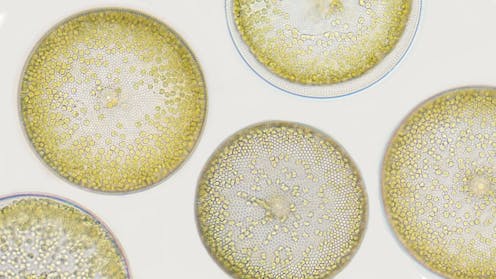
Britain’s seas are rich in wildlife, but many of its species can only be seen with a microscope. These are the plankton – tiny algae and animals found throughout the ocean that are the foundation of the entire marine food web.
As UK seas warm and cool with the seasons, the composition and abundance of these plankton communities naturally change. Like plants and animals on land, marine plankton undergo annual cycles that are dictated by seasonal patterns of light, temperature, and settled or unsettled weather. But unlike seasonal patterns on land, the ways plankton shift with the seasons – by migrating, eating, mating, blooming, reproducing or dying – are mostly invisible to the naked eye.