
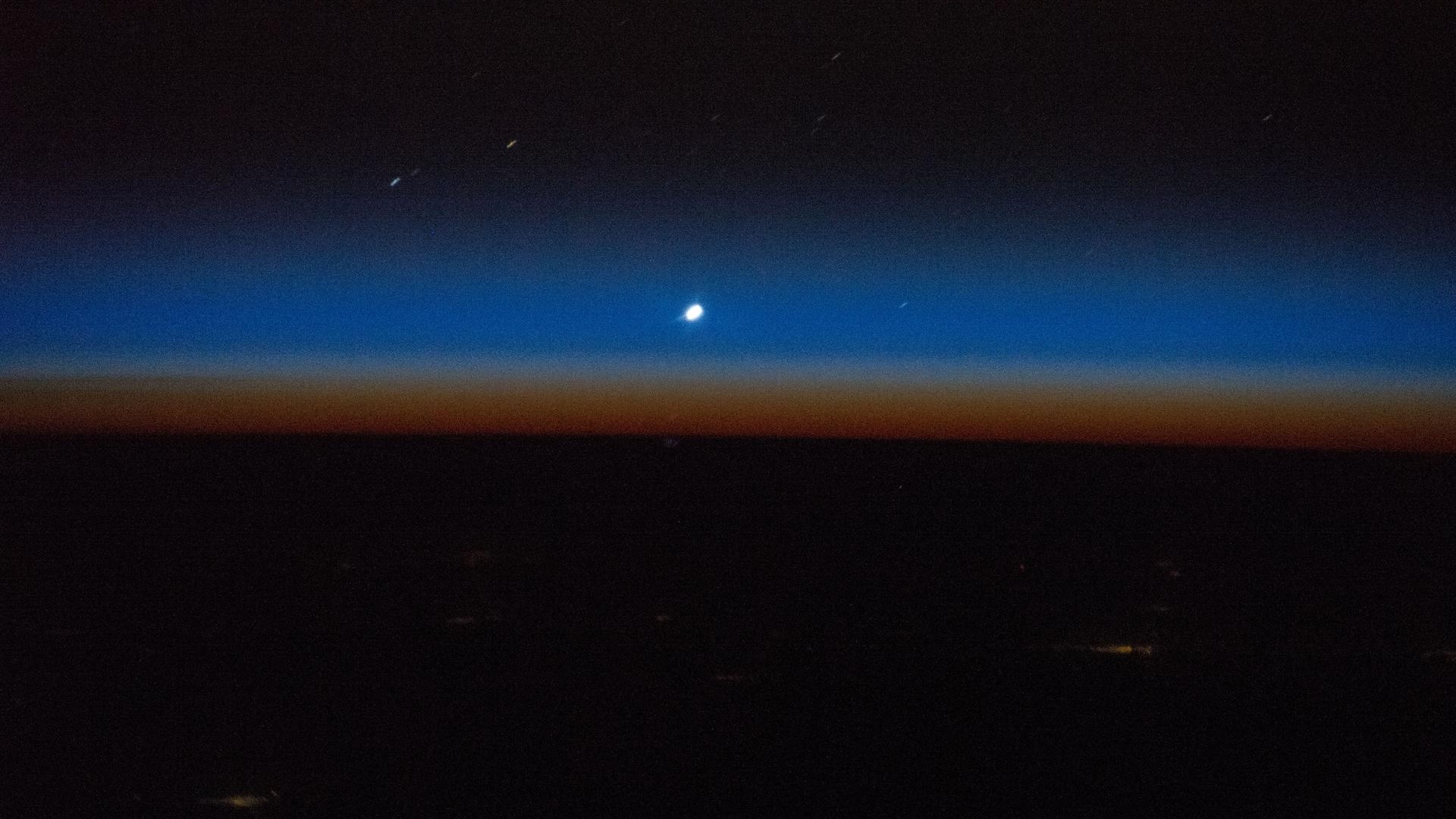
The rare planetary parade that brought all seven of Earth's neighboring worlds into the night sky is finally breaking up — but not before a final curtain call from the two planets closest to the sun. If you can find a view low to the western horizon on Monday, March 10, you may see a rare conjunction between Venus and Mercury — the two planets interior to Earth in the solar system — before they fully disappear in the sun's glare over the following nights.
Although Venus and Mercury will be visible only briefly after sunset, the sight of these two planets close to each other is quite rare. When two objects appear close to each other in the sky, it's called a conjunction. This one will take place over several nights, but the best time to see it will be on March 10, when Venus and Mercury will be visible about half an hour after sunset and remain in view for around 45 minutes.