
Get all your news in one place.
100's of premium titles.
One app.
Start reading
InsideEVs
InsideEVs
Technology
Andrei Nedelea

PHEV Batteries Take A Beating If Used Right. But They Still Last

Plug-in hybrids are often described as the best of both worlds. They offer a lot of pure electric driving—over 100 miles in some Chinese models—while also providing the safety net of a conventional combustion engine. PHEVs have a lot going for them, and buying one can certainly stave off the range anxiety of a pure EV. But how much should you worry about its battery?

After all, to make the most of such a powertrain, you need to plug it in a lot. All EV batteries lose capacity over time as drivers charge and discharge them over and over again. And because PHEVs have a fraction of a pure EV’s battery capacity, they can go through a lot more charging cycles.

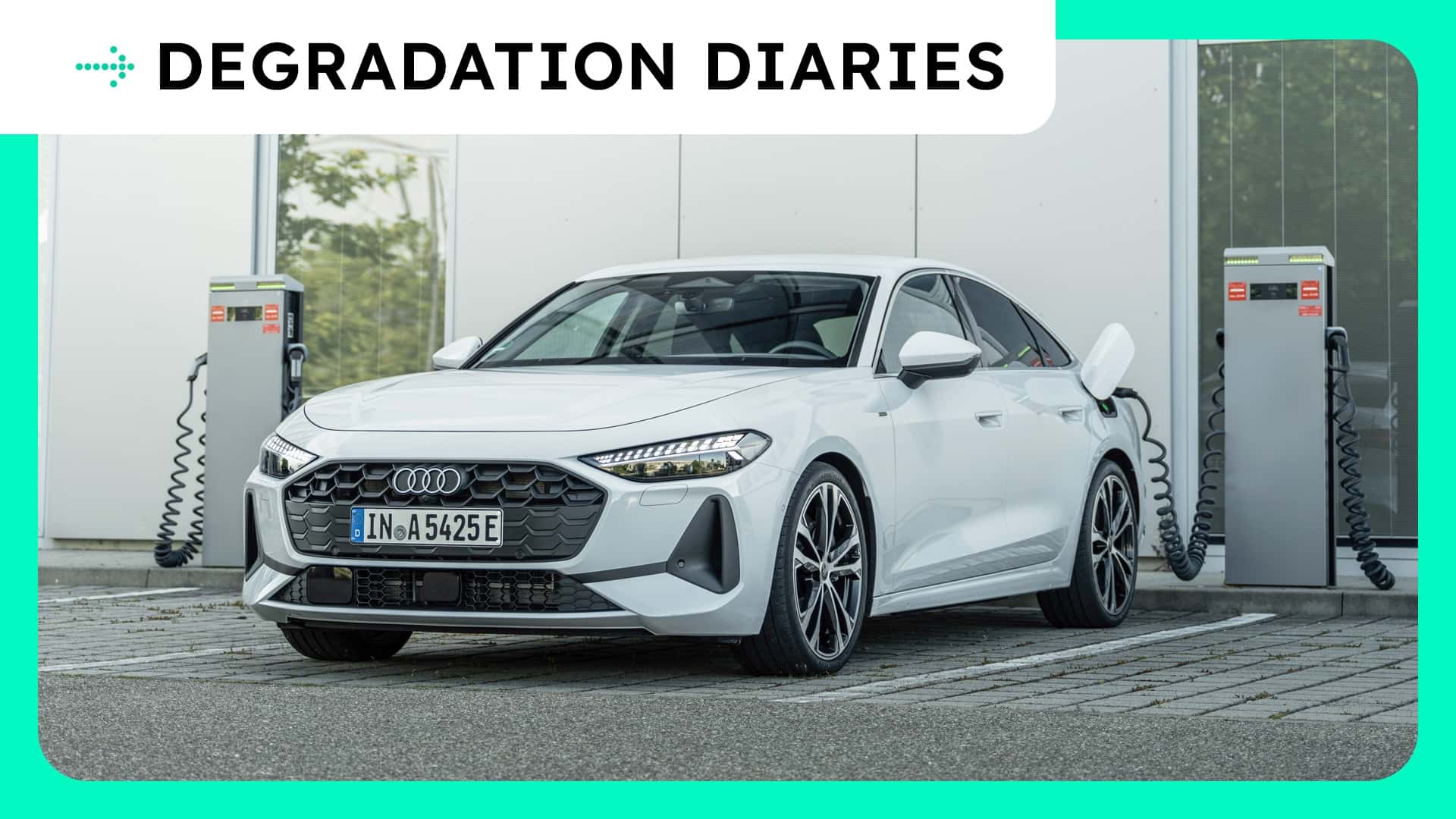
Welcome to Degradation Diaries, my column that breaks down everything you need to know about how EVs age.

The difference can be significant. Over 100,000 miles of electric driving, a 300-mile EV would theoretically complete around 333 full-equivalent cycles, while a PHEV with 40 miles of electric range would need roughly 2,500.

Those cycles can also frequently take PHEV batteries from nearly empty to full, which we know can harm EV batteries. Driving 30 or 40 all-electric miles daily might require topping up an EV once per week or less, whereas a PHEV might get fully recharged and depleted every day.

On top of that, most PHEVs use nickel-based lithium-ion batteries, typically nickel manganese cobalt (NMC), because they deliver higher energy and power density in a compact pack. These high-nickel battery packs will experience accelerated capacity loss if they spend a lot of time at very low or very high states of charge. And that could be more common among PHEVs.

So, is it all a cause for worry? Maybe not, at least according to one large study. Germany's ADAC published the largest real-world look at plug-in hybrid battery degradation in late 2025, in collaboration with battery testing specialist Aviloo. They analyzed around 28,500 battery health measurements from BMW, Ford, Mercedes-Benz, Mitsubishi, Volkswagen Group, and Volvo PHEVs. They confirmed that the small-battery issue contributes to battery aging.

“Especially when PHEVs are used intensively in electric mode, their batteries quickly go through a high number of charging cycles,” the study said.

ADAC divided the cars into groups according to how much of their driving was electric and found that “vehicles with high proportions of electric driving have, on average, noticeably lower battery health values than vehicles with low proportions of electric driving.”

According to the study, at 100,000 km, the least used batteries averaged roughly 94% state of health, compared with about 85% for the most heavily used group. By 200,000 km, the respective trend lines were at roughly 91% and 82%.

Notably, battery aging also depended heavily on the manufacturer. Mercedes PHEVs aged well even at high mileage, while Volkswagen Group and Volvo also mostly appeared trouble-free. BMW’s results were all over the place, showing a visible link between electric use and degradation. Ford batteries lost capacity earlier than the others, while Mitsubishi performed worse, coming in last by a large margin.

Even so, ADAC concluded that most batteries should last an average vehicle’s lifetime and set longevity benchmarks owners can keep in mind. It suggested that a healthy PHEV pack should retain at least 92% of its original capacity at 31,000 miles (50,000 km), 88% at 62,000 miles (100,000 km), 84% at 93,000 miles (150,000 km), and 80% at 124,000 miles (200,000 km).

A growing body of research shows that you don’t have to worry much about EV batteries failing fast. It doesn’t look like PHEV batteries deteriorate too differently—even though they take a serious beating.

ADAC’s data suggests manufacturers have largely engineered these packs to withstand the workload of lots of electric driving, with most retaining plenty of useful capacity even after high mileage. So while frequent electric driving does appear to accelerate degradation, that’s no reason to avoid using a PHEV as intended.

Sign up to read this article
Read news from 100's of titles, curated specifically for you.
Already a member? Sign in here
Related Stories
Top stories on inkl right now
One subscription that gives you access to news from hundreds of sites
Already a member? Sign in here
Our Picks
Fourteen days free
Download the app
One app. One membership.
100+ trusted global sources.