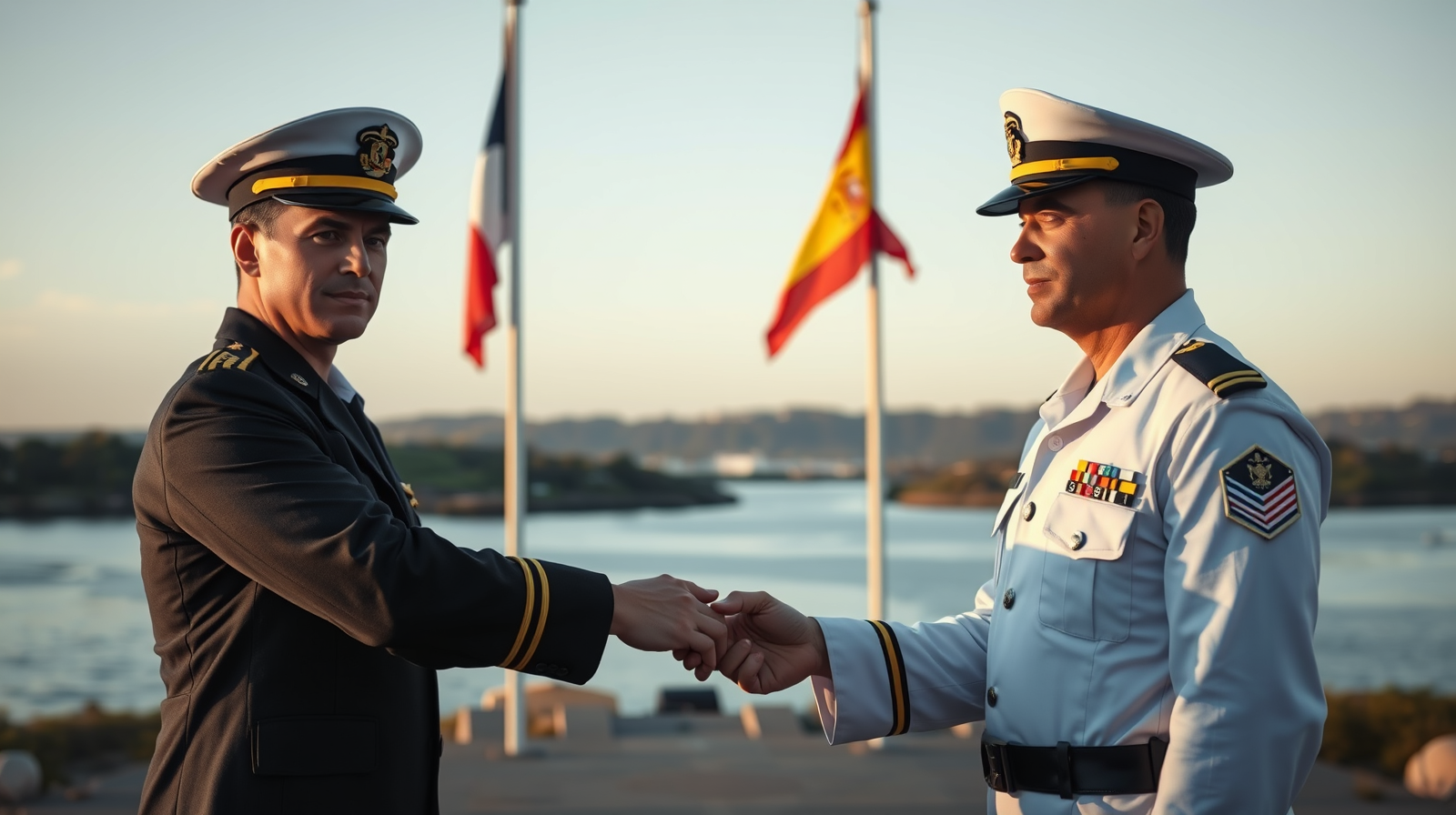
In the middle of the Bidasoa River, exactly on the border between France and Spain, sits a small strip of land called Pheasant Island that belongs to both countries at once, just never at the same time. Twice a year, on February 1 and August 1, naval officers from both nations meet on the island to formally exchange control in a solemn ceremony involving flags, a wreath laying and short speeches. For the following six months, the island falls fully under the authority of whichever country just took charge, before the process repeats itself all over again. This unusual arrangement, known in international law as a condominium, traces all the way back to a peace treaty signed on the very same island in 1659. What's remarkable isn't just the arrangement's age, but how effortlessly it has survived wars, revolutions and centuries of shifting politics simply because nobody actually lives there to disrupt it, or to have any real reason to break the pattern.
Get breaking news anytime, anywhere. Download the TOI app now!
How a 17th-century peace treaty created a shared island
Pheasant Island's strange status began with the Treaty of the Pyrenees, signed there on November 7, 1659, ending decades of conflict between the Bourbon and Habsburg dynasties that had continued even after the wider Thirty Years War officially ended in 1648. Since the island sat precisely between French and Spanish territory in the middle of the Bidasoa River, both sides agreed it made a fittingly neutral location to formalise peace. The treaty also arranged the marriage of Louis XIV of France to Maria Theresa of Spain, tying the political settlement to a royal alliance in the years that followed.
The alternating six-month arrangement itself was formalised later, through the Treaty of Bayonne in 1856, according to the town council of Hendaye , the French town facing the island across the river. Since then, authority over the roughly 200-metre-long island has passed back and forth between France and Spain, uninterrupted through wars, revolutions and changes of government on both sides of the border.
What happens during the handover ceremony
Every February and August, representatives from the French and Spanish navies gather on the island to carry out the formal transfer of authority. According to Hendaye's town council, the ceremony held on July 31, 2024, saw powers pass to France for the following six months, in the presence of French and Spanish civil and military officials. The event typically includes the swapping of flags and a wreath laying at a commemorative stone honouring sailors who died from both nations, followed by short remarks from the outgoing and incoming naval commanders.
The officials chosen to oversee the island each carry an honorary title tied to this long tradition. On the French side, the maritime delegate for the Landes and Pyrénées-Atlantiques regions is named viceroy of the island, while on the Spanish side, the naval commander based in San Sebastian receives the same honorary role. Despite the formality of the ceremony, the island itself remains uninhabited and closed to the public for the rest of the year, with the handover day being one of the rare occasions when visitors are permitted onto it.
Why the island still matters today
Pheasant Island's ongoing dual governance is often described as the world's oldest continuously operating territorial condominium, an arrangement in which two sovereign states formally share authority over the same piece of land. Unlike shared territories such as Antarctica, where multiple nations exercise overlapping authority simultaneously, Pheasant Island is unusual in that only one country holds full authority at any given time, alternating cleanly every half year rather than sharing power continuously.
Beyond its role in the 1659 treaty, the island also became a symbolic meeting point for French and Spanish royalty in the centuries that followed, hosting several dynastic marriage negotiations between the two courts. Today, its main significance is largely ceremonial and diplomatic, but the twice-yearly handover continues to be treated with genuine seriousness by both governments, a small but enduring reminder of how a centuries-old peace agreement still shapes a tiny stretch of riverbank in the Basque Country.
Why this arrangement has survived so long
What makes Pheasant Island particularly notable is not just its size, but its endurance. Few territorial arrangements from the 17th century have survived largely unchanged into the present day, let alone one requiring two governments to formally exchange sovereignty twice every year without fail. The island's small size and lack of permanent residents have likely helped keep the arrangement simple, since there is no local population whose daily life is disrupted by the change in governance.
For visitors walking along the riverside paths of Hendaye in France or Irun in Spain, Pheasant Island is easy to overlook entirely, a narrow strip of greenery in the middle of the water. Yet for those familiar with its history, it stands as a rare living link to a 17th-century peace settlement, still marked twice a year with the same quiet formality that has defined it for more than three and a half centuries.