Peugeot is planning a host of new models, with a new electric compact SUV at the top of the agenda, to take on Skoda’s big-selling Elroq. It’s part of a much wider shake-up that will bring new all-electric generations of the 208 and 2008, keep today’s petrol and hybrid models on sale alongside them, and add larger Peugeots developed with Chinese partner Dongfeng – although those won’t be heading for Europe.
Speaking exclusively to The Independent, Peugeot CEO Alain Favey confirmed plans for “a new, a bit smaller C-SUV” to expand the brand’s family SUV range. The newcomer would sit below the 3008, rather than replace it, with the 5008 continuing to cater for buyers who need something larger.

The proposed positioning for the new model points towards a rival for Skoda’s compact electric SUV, which is the second biggest-selling electric car in Europe behind the Tesla Model Y. Favey sees this part of the market as a better immediate opportunity than adding a bigger European flagship, saying it “has more potential in terms of volume and profit”.
It’s competition Favey knows well. He was Skoda’s board member for sales and marketing from 2017 to 2021 before moving to Bentley, while he also knows the UK market well from his time running Citroën UK. Now he wants Peugeot to offer more choice in a market where rivals already have several SUVs competing for customers.
There is, however, a small snag with slotting another SUV between the 2008 and 3008: what do you call it? When I asked whether Peugeot had found a number to fill the gap, Favey said, “I leave it to your imagination.” A name, price and launch date for the new model are still to be confirmed.
While Europe gets a smaller SUV, Peugeot’s partnership with Dongfeng will take the brand in the opposite direction elsewhere. Work is underway on a first model larger than the 5008, due to launch in 2027, with a second car being discussed.
The Concept 6 and Concept 8 shown in Beijing offer an indication of what the partnership could produce. The second model’s format remains undecided as Peugeot and Dongfeng work out how best to serve both China and export markets, including South America, the Middle East and Asia Pacific.
“And to be very honest, we haven't decided yet what this car will be,” Favey said of that second model. He explained that Dongfeng’s priorities in China and Peugeot’s ambitions elsewhere don’t necessarily point towards the same car, although Peugeot’s own designers will shape the result.
The appeal of the partnership is access to Chinese technology and lower costs, combined with Peugeot’s exterior and interior design, and work on how the cars drive to give them a ‘Peugeot feel’. Favey sees an opportunity to rebuild a business that he says currently sells around 20,000 cars a year in China, as well as reach more customers elsewhere.
Europe is a different story. Asked whether Dongfeng-developed Peugeots would stay out of European showrooms, he said, “As it stands, that's the idea.” Favey believes European customers should be able to buy a Peugeot knowing they’re supporting European industry, and doesn’t want to muddy that message by importing these models from China.
That doesn’t mean the 5008 will necessarily remain Peugeot’s largest European model forever. However, Favey pointed to the withdrawal of the 508 because demand wasn’t there, saying a return above the 5008 would require “a different kind of proposition”. For now, that’s a lower priority than filling the gap further down the SUV range.
The Dongfeng relationship could still benefit European-built Peugeots without the cars themselves coming here. Favey wants to use what his teams learn about development, purchasing and component costs in China to challenge how things are done in Europe, with potential access to additional suppliers, too.
Closer to home, Peugeot’s small-car range is set to double in an unusual way. Rather than simply replacing the 208 and 2008, Favey plans to launch new generations using Stellantis’s STLA One underpinnings, while keeping the current CMP-based cars in production. That will mean four models where there are currently two, within a wider programme of seven new Peugeots.
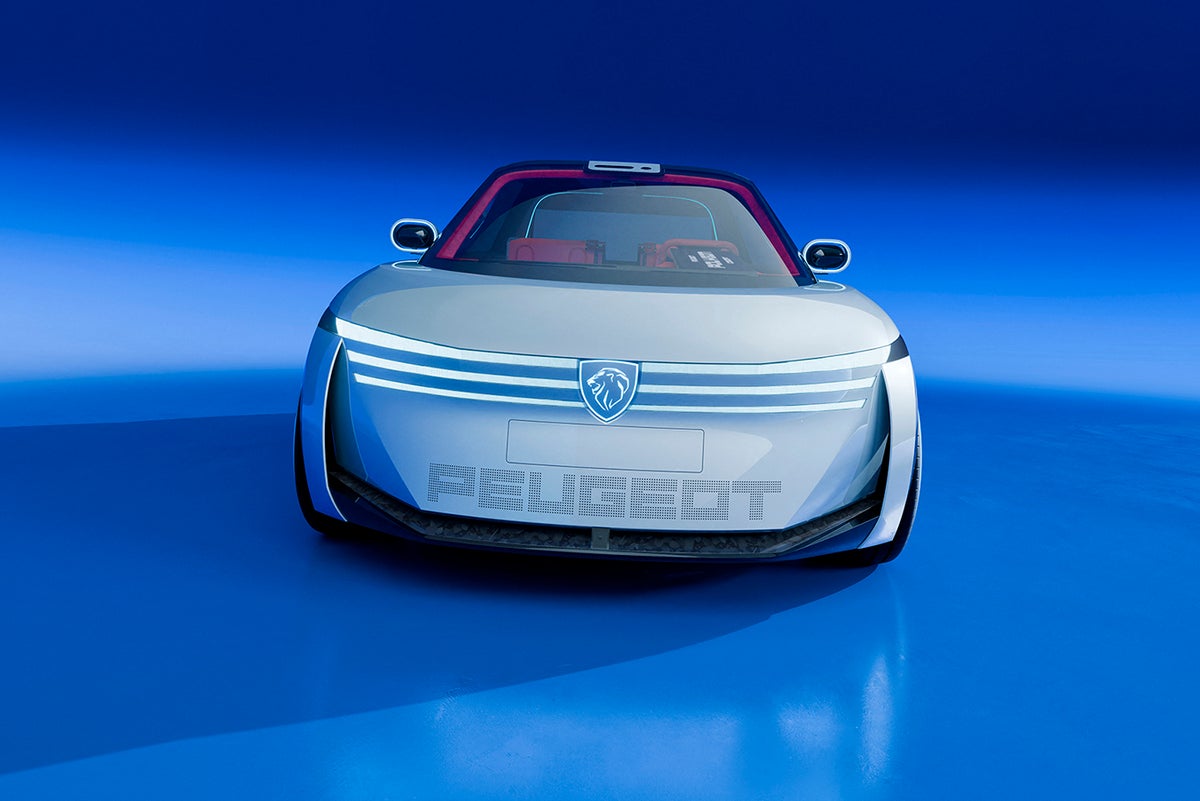
For the 208, the split will allow Peugeot to offer a more adventurous new electric car – previewed by the Polygon concept with another, bigger hint likely to turn up at the Paris Motor Show in a few weeks – while retaining familiar hybrid choices for customers who aren’t ready to make the electric jump. Asked how long the current 208 could continue, Favey said, “Until nobody wants it.” He isn’t convinced it needs a facelift, either.
The next electric 208 will put Peugeot’s Hypersquare steering control – don’t call it a wheel! – and steer-by-wire technology at the centre of its appeal. The system uses electronics instead of a mechanical connection between the steering control and front wheels, with the amount of steering movement needed changing according to speed.
But while Favey would like every new 208 to have Hypersquare, that doesn’t mean it’s confirmed as standard across the UK range – Peugeot has also developed a version without it.
“My conviction is the car is conceived with Hypersquare. It should be with Hypersquare,” he said when I asked about having two versions; one with and one without the new steering controller. His concern is that unfamiliar technology, or its cost, could put off loyal customers who simply want to replace their existing 208.
The UK team will decide whether Hypersquare is standard with the possibility of going without it, as an option, or standard on a particular trim such as GT. “Every country will do it depending on how they feel the market is ready for that technology or not,” Favey said.
For him, this is about giving Peugeot a clear identity as a technology leader, not just fitting an unusual steering wheel. He says the project has already involved eight years of work and believes steer-by-wire could become normal across the industry in 20 years’ time.
There’s more to come beyond steering, too. Favey promised further innovations on two concept cars at Paris, while making clear that he’d be quite happy for buyers to associate Peugeot with a technology that makes its cars different to drive.
The new E-208 GTi also has a job to do beyond attracting hot-hatch buyers. Favey sees it as a showcase for the whole range, demonstrating Peugeot’s approach to driving pleasure and innovation, rather than judging its importance purely by how many people buy one.
Nor does the arrival of the next electric 208 necessarily mean a short life for the current GTi. Favey envisages it staying on sale, potentially as the only remaining electric version of today’s 208, until a GTi based on the new generation arrives. Any future GTi has to earn its badge: “It needs to be the best in class,” said Favey.
One area Peugeot isn’t rushing into is a cheaper car below the 208. Favey is watching what’s happening at the smaller end of the market but doesn’t believe a cut-price model would fit the brand’s intended position towards the upper end of the mainstream market.
“For us to go for a very cheap entry model below the 208, I don't think that makes any sense,” he said. “In that sense, we're happy to start with the 208 basically in the B segment.”