
Viktor Orbán has positioned Hungary as a European centre for Chinese electric vehicle manufacturers, while disregarding the EU’s tariffs on them.
Now his political successor, Péter Magyar, appears less inclined to reverse that policy in a radical way.
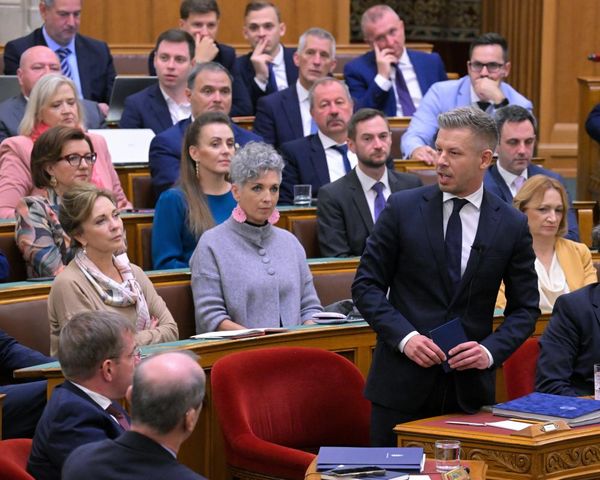
At a press conference on Monday following a landslide victory against Orbán, Magyar praised China as “one of the most important, largest, and strongest countries in the world.”
“I am very happy to travel to Beijing, and we are very happy to welcome Chinese leaders here in Hungary,” he added.
Magyar also said he would “review” Chinese investments in Hungary – particularly on electric vehicles - but “not with the aim of shutting them down or preventing them from happening.”
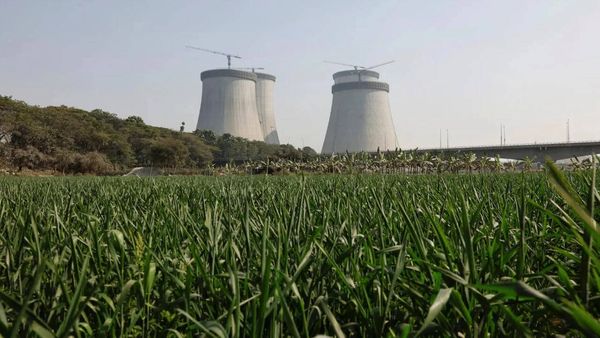
In recent years, Hungary was eager to attract Beijing’s largeness, with BYD building its first European passenger EV factory in Szeged in 2024 and major firms such as CATL, NIO and EVE Energy investing heavily in the country.
But that open-door policy has increasingly clashed with the EU’s push to tighten scrutiny of Chinese investments, as China floods Europe with low-cost imports and as many as 600,000 job losses are projected in the EU in the bloc’s auto sector this decade amid intensifying competition from Chinese manufacturers.
Magyar will also have to deal with concerns over alleged forced labour involving Chinese workers at Hungarian plants of EV giant BYD, as well as a recent European Commission probe into unfair subsidies at the same site. Those developments have tarnished the company’s reputation and raised concerns over Beijing’s investments.
Driving more value from investment in Hungary
At his press conference on Monday, the leader of Hungary’s Tisza party did not enter details. But he made clear that Hungary would align its policy more closely with Brussels.
“Rather, the goal is to ensure that those projects comply with European Union and Hungarian environmental regulations, health procedures, and labour safety standards, and contribute to the performance of the Hungarian national economy,” Magyar added.
He also appeared determine to distance himself from Orbán's wariness of a recent European Commission proposal on “Made in Europe,” which targets China.
The draft law, currently discussed by EU governments and MEPs, would impose stricter conditions on foreign direct investment above €100 million in sectors such as batteries, electric vehicles, solar panels and critical raw materials.
Under the proposal, investors from countries holding 40% of global market share in a given sector would be required to hire at least 50% of EU workers. Additional conditions could include foreign ownership caps below 49%, joint ventures with European partners and technology transfers.
“What we do not want — and will not accept — is for foreign companies to come, receive significant Hungarian state support, employ very few Hungarians, create little to no added value for the Hungarian economy, and at the same time endanger the quality of Hungary’s land, air, and water,” Magyar added, signalling his intention to align policy more closely with Brussels.