
Get all your news in one place.
100's of premium titles.
One app.
Start reading
Homes & Gardens
Homes & Gardens
Edward Bowring

Perennials to Cut Back in June – For a Second Flush of Glorious Flowers That Will Last Until the Fall

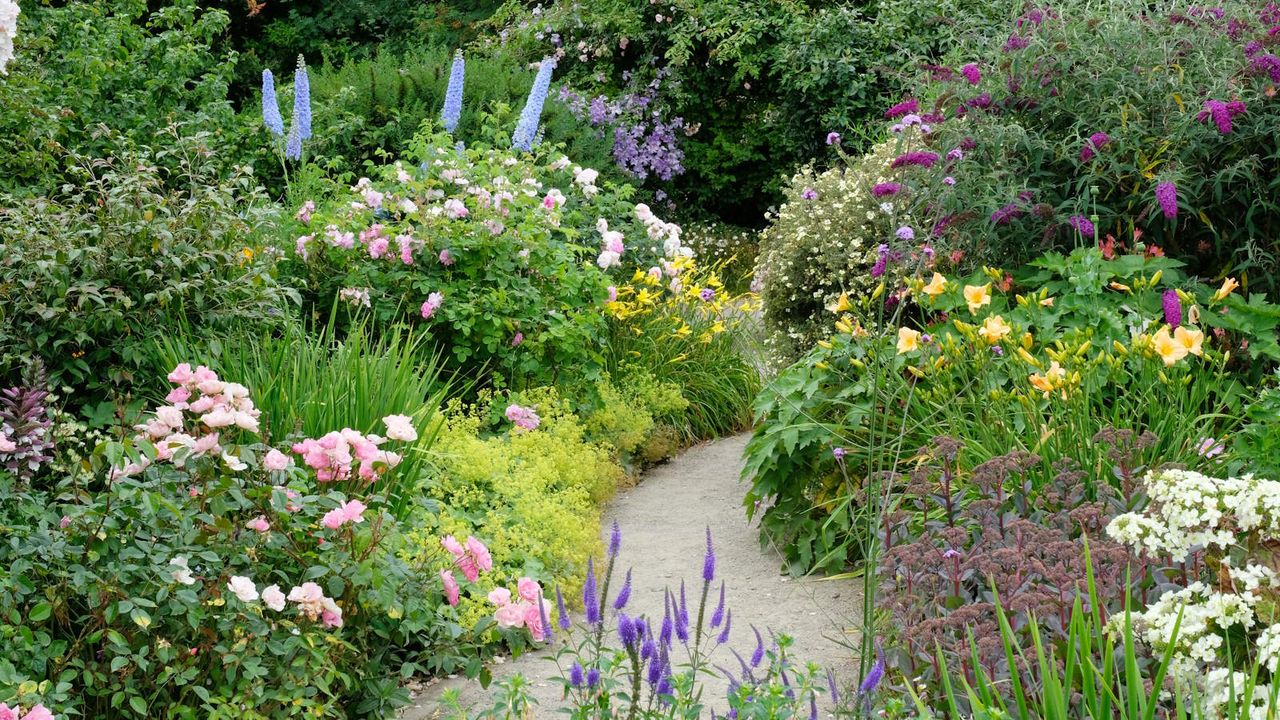
A flower border filled with colorful perennial plants.

If you live in an area that has a warm spring, June can seem as though you are halfway through summer already and our garden plants can feel the same. Perennial plants can flower early, mid, or late in the season, and those that bloom earlier in the year can look way past their best by the time June is over.

Deadheading is an important part of plant care and is key to keeping plants looking tidy and encouraging new buds and blooms, extending their season. Over my career as a professional gardener, I have spent many hours cutting back and pruning and share my top seven perennials to cut back in June for a glorious second flush of blooms.

The main sowing time of the year is generally during the spring. However, for a continuous supply of flowers and produce, you can stagger your seed sowing or discover what you can plant in June.

Hardy Geranium

(Image credit: Jacky Parker Photography / Getty)

Providing months and months of color, interest, and ground cover, hardy geraniums, or cranesbills, are valuable garden plants and stalwarts of herbaceous borders.

Perfect for the front of a border or for planting in odd numbers in a cottage garden, hardy geraniums can flower from early spring right through to the fall.

However, by the end of a hot June, some early-blooming cranesbill varieties can have finished their first flush of flowers and be looking rather dishevelled, making them an ideal perennial to cut back.

To rejuvenate, simply cut them back to around 2-3 inches above the ground and water well. To help encourage the new growth and flowers, you can apply a seaweed fertilizer like Bloom City seaweed and kelp fertilizer available from Amazon.

Catmint

(Image credit: Getty Images/kazakovmaksim)

Low maintenance and heat-tolerant, Nepeta, or catmint as it is also called, makes a winning perennial for most gardens. Furthermore, as a pollinator-friendly perennial, you will be sure to entice lots of beneficial insects.

Producing a first flush of its lavender-blue flowers in late spring, it can soon look finished and leggy by early summer. In response, cut it back by around one-third and watch it produce new growth and subsequent flowers later on in the summer.

After many years of cutting back plants by hand, I have found that a decent pair of secateurs can make all the difference. Made in Japan, you can purchase Okatsune 103 Bypass Pruners from Amazon.

Lady's Mantle

(Image credit: Mark Turner / Photodisc / Getty Images)

A must-have perennial for your garden, Lady’s mantle, or Alchemilla mollis, is a widely grown and tough plant. Praised for its attractive fan-like foliage and lime-yellow flowers, its leaves collect raindrops and display them like jewels.

However, it is known to self-seed vigorously and for this reason, it is considered an invasive perennial in the Pacific Northwest. If you are unsure whether it is a restricted plant in your area, your local government office can advise.

Flowering from May to June, you can remove the spent blooms as soon as they fade to help prevent self-seeding. If the foliage is also looking past its best, you can cut the leaves back as well, following which lush new growth will appear.

Considered hardy in zones 3 and above, you can purchase Lady’s Mantle ‘Thriller’ from Nature Hills.

Coneflower

(Image credit: Julie Huser/Alamy Stock Photo)

Echinacea, or coneflowers as they are commonly known, are American native plants adored for their propensity to attract butterflies and as a cut flower.

Available in a wide array of colors and sizes, coneflower varieties are for every backyard and can even be grown in pots. However, to prolong the flowering season, you can ‘Chelsea chop’ coneflowers, by cutting 20-30 % of the stems back by around one-third.

Along with protecting your hands from potential cuts and insect bites, gardening gloves also provide a barrier against possibly irritating plant material and other green waste.

With a non-slip grip for holding tools securely, waterproof gardening gloves are available to purchase from Walmart.

Balkan Clary

(Image credit: Botany Vision/Alamy Stock Photo)

Also known as woodland sage or Salvia nemorosa, Balkan clary is one of my favorite Salvia varieties to grow.

Producing violet-blue spikes of color from early summer onwards, it thrives when grown in full sun and on a free-draining soil. Considered hardy in USDA zone 4 and above, Balkan Clary is known to be a magnet for pollinators, including hummingbirds.

Turning brown as they fade, cutting back the spent flower spikes will make way for new growth and more blooms later in the summer. If you have a lot of deadheading or cutting back of soft growth to do, you may find that a pair of gardening snips is more comfortable than pruning shears.

Designed for professionals, Felco F322 Pruning Snips are available to purchase from Amazon.

Columbine

(Image credit: Getty Images)

Another cottage garden favorite is Granny's bonnet or Aquilegia as it is known botanically. An elegant and whimsical perennial, it is available in a wide range of colors, from calming pastels to vibrant hues.

Cold hardy in zone 3 and above, it is a tough perennial with a tendency to self-seed. Furthermore, being resistant to both rabbits and deer makes it a great rural choice.

Flowering in late spring to early summer, if you deadhead the spent blooms and tatty foliage, new growth will take its place and, in some circumstances, produce new flowers as well.

Producing purple and white intricate blooms Aquilegia vulgaris 'Winky Purple & White' is available to purchase from Nature Hills.

Foxglove

(Image credit: itsabreeze photography / Moment / Getty Images)

Available as biennials and perennials, foxgloves (Digitalis) are perfect for an informal or wild planting scheme. Producing tall, striking spires of tubular flowers, and adored by bees, foxgloves are ideal for adding vertical impact to a border or wild area.

Known to be a prolific self-seeder, you may want to deadhead them after flowering to prevent them from colonizing an area. However, cutting back the spent stems to the base of the plant will also encourage new growth and often new spires, albeit shorter than the first flush.

Because it is a poisonous plant, gloves should be worn when handling any part of the plant to prevent accidental ingestion or skin irritation.

Producing multiple flowering spikes of soft pink, Lucas Pink Foxglove is available to purchase from Nature Hills.

June is a busy time for most gardeners, especially for anyone with a vegetable patch. Along with weeding, watering, and harvesting, you must also consider more sowing if you hope to have an ongoing supply of produce to pick in the fall.

To help you decide what to plant, have a look at our tips and advice on vegetables to sow in June for a beautiful supply later in the year.

And if you love inspiring garden ideas, outdoor advice, and the latest news, sign up for our newsletter and get the latest features delivered straight to your inbox.

Sign up to read this article
Read news from 100's of titles, curated specifically for you.
Already a member? Sign in here
Related Stories
Top stories on inkl right now
One subscription that gives you access to news from hundreds of sites
Already a member? Sign in here
Our Picks
Fourteen days free
Download the app
One app. One membership.
100+ trusted global sources.