Get all your news in one place.
100’s of premium titles.
One app.
Start reading
Guitar World
Guitar World
Entertainment
Phil Weller

“People want real experiences. There’s a backlash to this era of perfect music, and I appreciate it”: Converge’s Kurt Ballou on mixing pedals with amp modelers, guitar recording hacks and reclaiming metal’s authenticity

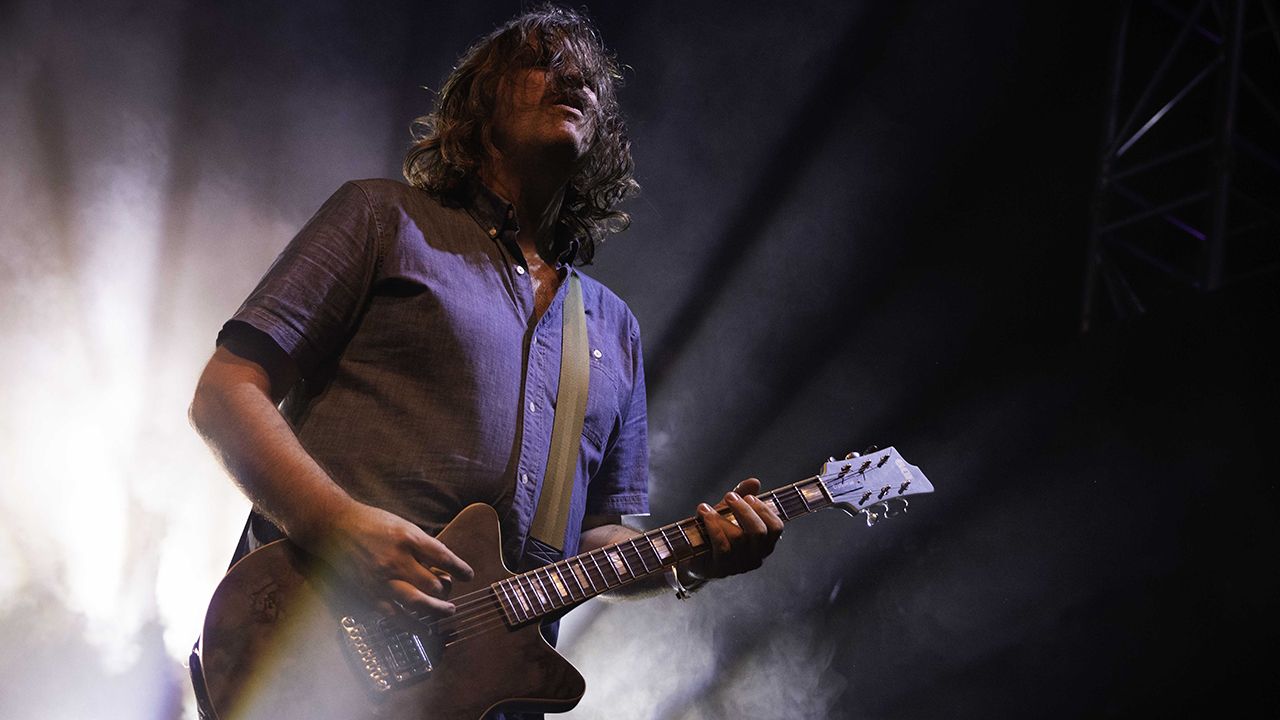
BRISTOL, ENGLAND - AUGUST 17: Kurt Ballou of Converge performs at ArcTanGent Festival 2023 at Fernhill Farm on August 17, 2023 in Bristol, England. (Photo by Aldara Zarraoa/Redferns).

Converge are as brutal, unapologetic, and sandpaper smooth as ever on 11th album Love Is Not Enough. According to guitarist Kurt Ballou, it feeds on instinct over intellect – and there’s not an apology in sight.

These days, Ballou spends a lot of time producing other artists and crafting oddball boutique gear at God City Studios. For Converge’s first record in five years he’s reconnected with his roots, broken new ground with his guitars, and blended vintage pedals with digital effects. But it also swims against the prevailing currents of modern metal production.

He’s never looking for the perfect take. In the AI age, he’s serving up a healthy dollop of humanity. “We want to enjoy the process of making music together as human beings,” he says. “I respect the modern data-entry approach to music, but I don't think it's relevant to Converge.

“Modern metal is very competitive – like, ‘Who’s got the sickest breakdown or the lowest-tuned guitars?’ It’s amazing. You can watch an Archspire video and laugh your ass off at the talent. But it’s not a competition I want to be in.”

Converge’s latest LP might not be as polished as the music of Grammy-winning, next-gen hardcore heroes Turnstile, for instance. But Ballou doesn’t want it to be; this is hardcore heritage, warts ’n’ all.

What was new with your songwriting process?

I set up a jam zone for my kids in our basement so they’d have a place to play. It’s got a bunch of Christmas lights and old Iron Maiden flags on the wall; it looked like where I played music in high school. The first night, after the kids went to bed, I went down there and got lost in writing, including Amon Amok and the slow part in Distract and Divide.

How do you approach guitar tones?

I need to be gear-agnostic. Granted, there are occasions when something’s the only piece of gear that makes a type of sound, but I don't want to be beholden to any particular equipment.

My process isn’t boilerplate; I’m always using my ears and my instincts. I love that I can use a Line 6 Helix and my collection of vintage, boutique tube amps while recording. They’re all tools to get us over the finish line.

(Image credit: Olly Curtis/Future)

What does matter?

The sound a guitarist hears through the speakers as they’re playing has a really strong influence on how the song takes shape. So I like to have the final sound there as I’m tracking – and ideally, as I’m writing as well.

What were some standout tone moments with this record?

The Helix’s shimmer ’verb is really cool; you’re hearing that on the intro to Beyond Repair. I think there's also an EHX C9 organ pedal on there. I like to use that in lieu of a POG for the octave up and down stuff. It has different resonances that mimic the drawbars of an organ.

There’s also a technique I picked up from Stephen Brodsky: you tune to an open tuning in the key of the song, then get a slide and kind of mill about at the 12th fret, doing circular patterns to create an ambient pad.

When it comes to dirt pedals, what are you looking for?

I’m looking to match the guitar to the amp. Maybe we need more or less output, more compression, or a midrange bump going into the front end of this older, mid-gain tube amp. It’s all about creating a connector piece that goes between the guitar and the amp.

In terms of getting a metal guitar sound, the idea of starving the bottom-end to tighten up the chugginess, then starving a little of the top-end to avoid any chirping from pick attacks is good. After your gain staging, you need to bring some of the high and low-end back to compensate.

Were there any new guitars used for tracking?

I used a baritone on a recording for the first time. It’s one of my God City Instruments baritones with a shorter 27.5” scale, and it’s mostly in D standard, but with the sixth string tuned to A. It makes it a little snappier. Sometimes that pitch wobble is the sound, but I like a little more tuning stability. I’m also diehard about playing an unwound G string; a wound G can get the fuck out!

Bands would write songs as a unit in their practice space, then come in and record them that way. I miss the immediacy

What are your go-to pedals when recording other bands?

I use a Klon KTR quite a bit, and I’ve got a correct Tube Screamer with all the right diodes and ICs. If someone’s trying to go chug-chug they’ll want a 5150 or a JCM800 with a Tube Screamer in front, depending on the era they’re going for.

My GCI Onslaught distortion gets used a lot, and the Jugendstil fuzz is like a sneerier Boss HM-2. There’s one pedal that I haven’t done many runs of called the Crimson Cock – a Rangemaster-inspired pedal that has an input cap blend and a lot of natural compression.

(Image credit: Olly Curtis/Future)

By controlling how much low-end you let into the circuit, you can really tighten things or blow things out. You can make any amp sound, anything from clanky to full-on saturated doom tone, just by turning a couple of knobs.

Have you noticed any commonalities when recording other guitarists?

Very few bands I record these days practice every week. Most are people who’ve been playing for a long time, and they get together a few times a year to do tours or writing sessions.

So when they come to record, they’re not well rehearsed – they’re leaning on their talent and experience more than their preparation. I don’t see many artists walk into the studio with their stuff dialed anymore, so I find myself leaning on recording technologies.

Technology is now participating in the creative process much more than it did when I was starting out. Bands would write songs as a unit in their practice space, then come in and record them that way. I miss the immediacy of that, where you can hear all the final tones at the same time.

Is that why this album is so raw?

In the ’90s, I felt like we were one of the more techie bands in our sub-genre. Then bands like the Dillinger Escape Plan came along and did it better than us. That was tough for me for a little while. So I made up my own game where I didn’t have to compete with other people – “I’m just gonna try to write good songs and enjoy this process.”

But there’s another side where people are craving authenticity. You see kids these days walking around with their point-and-shoot camcorders; many of them aren’t on social media.

People want real experiences. Young people ask about recording on tape way more than older people. There’s definitely a backlash to this era of digitally perfect music, and I appreciate it.

Sign up to read this article
Read news from 100’s of titles, curated specifically for you.
Already a member? Sign in here
Related Stories
Top stories on inkl right now
One subscription that gives you access to news from hundreds of sites
Already a member? Sign in here
Our Picks
Fourteen days free
Download the app
One app. One membership.
100+ trusted global sources.