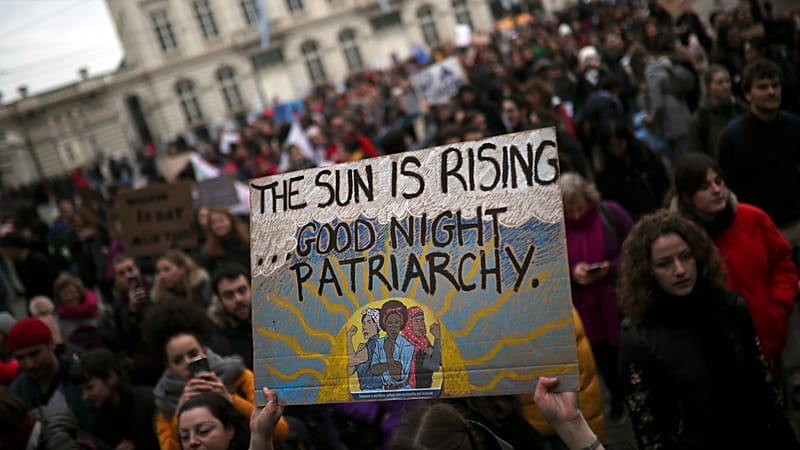
Women in the EU earn €89 for every €100 earned by men, meaning they earn on average 11% less as of 2024 according to Eurostat.
The EU aims to strengthen the principle of equal pay for equal work between men and women through the new Pay Transparency Directive. The Member States must incorporate the directive into their national laws by 7 June 2026.

As of January 2026, nine out of 27 countries have not yet taken any action toward implementing the directive, according to Addleshaw Goddard’s implementation tracker.
Mercer’s 2026 Global Pay Transparency Survey revealed that only 9% of Europe‑based employers have a full transparency strategy as the EU Pay Transparency Directive approaches.
The survey gathers insights from over 1,600 multinational organizations across 60 markets. It was conducted from September through October 2025 with HR, rewards and business leaders from organizations around the globe.
So which countries are better prepared to implement pay transparency across Europe? And what are the main drivers and challenges?
In Europe, almost half (49%) of respondents agreed or strongly agreed that their company is "prepared for the impact of global pay transparency requirements".
Among 11 European countries, pay transparency preparedness ranged from 36% in France and Belgium to 63% in Spain, followed by 60% in Switzerland and 59% in the Netherlands.
Turkey (46%) and Italy (41%) were also below the European average. The figure stood at 54% in Germany and 51% in the UK. For comparison, the global average was 50%, while the US recorded 51%.
Readiness is high in Nordic countries
The report emphasised that within Europe, the Nordic countries (Denmark, Finland, Norway, Sweden) stand out for their relatively high levels of readiness.
“Country-level differences are influenced by organizational size, strategic approach, and regional operational scope,” Lucye Provera, Mercer’s Europe and UK Pay Equity Leader, told Euronews Business.
For example, she noted thatFrance reports a relatively low preparedness level of 36%.
Larger organizations are more common in France, with 29% having 50,000 or more employees compared to 21% across the EU.
“This greater organizational scale adds complexity to implementing global policies, which may slow readiness,” she said.
In contrast, Spain shows higher preparedness at 55%. Spanish companies tend to be smaller, with 23% having fewer than 1,000 employees and just 18% exceeding 50,000 employees, which may enable faster adaptation.
Provera attributed the higher preparedness of the Netherlands to "high proportion of multinational companies (84.8%) and strong HR leadership involvement (89.1% participation), which support effective implementation".
When respondents were asked, “where are you in the process of developing an enterprise strategy and approach with regards to pay transparency?”, more detailed results emerge.
Only 9% in Europe reported that they have already developed and implemented a strategy and approach, while 46% said that they are currently developing their strategy and approach.
A further 24% stated that they have aligned on strategy but are still in the process of implementing an approach.
When looking at the combined share of "developed and implemented" and "currently developing", Poland (65%) and Germany (64%) are above the European average of 55% while Switzerland records the lowest level at 39%.
Switzerland (16%) also closely follows Turkey (17%) in the share of respondents who “have not yet started and do not plan to start in the next 12 months”. This share is significantly lower in the EU countries included in the list.
“Variation among EU member states is influenced by institutional frameworks, economic conditions, and governance models,” Lucye Provera said.
What are the challenges?
Globally, the top challenge to implementing pay transparency is aligning or educating leaders (53%). This is followed by maintaining understanding of global legislation (45%) and a lack of employee understanding of compensation programmes and practices (38%).
Compliance with laws remains the primary driver for providing pay transparency, with nearly 90% of organisations in Europe and the UK citing it as a key motivator.
Just over half of respondents identified employee engagement (56%) and market competitiveness (55%) as important factors influencing pay transparency.
“While many organizations are focusing on meeting legal requirements, a growing number are embracing pay transparency as a catalyst for meaningful change [and] as a means to rethink pay design, build clearer pay structures and foster greater trust with employees and candidates,” Gordon Frost, Mercer’s Global Rewards Solution Leader, said.
Transparency in job postings
Data from global hiring platform Indeed shows that the UK leads among six European countries in salary transparency, with 70% of job postings listing pay information at the start of 2025.
France follows with 51%, with just above half of postings disclosing salaries. In the Netherlands and Ireland, the share ranges between 40% and 45%.
By contrast, Germany (16%) and Italy (19%) trail far behind, with fewer than one in five job ads including salary details.