Get all your news in one place.
100's of premium titles.
One app.
Start reading
MusicRadar
MusicRadar
Entertainment
Roland Schmidt

“It was time to put all that behind us. Then he played me this one part for this new song and I was like, ‘Oh yeah’”: How Calvin Harris and Katy Perry buried the hatchet and crafted their groovetastic 2017 hit Feels

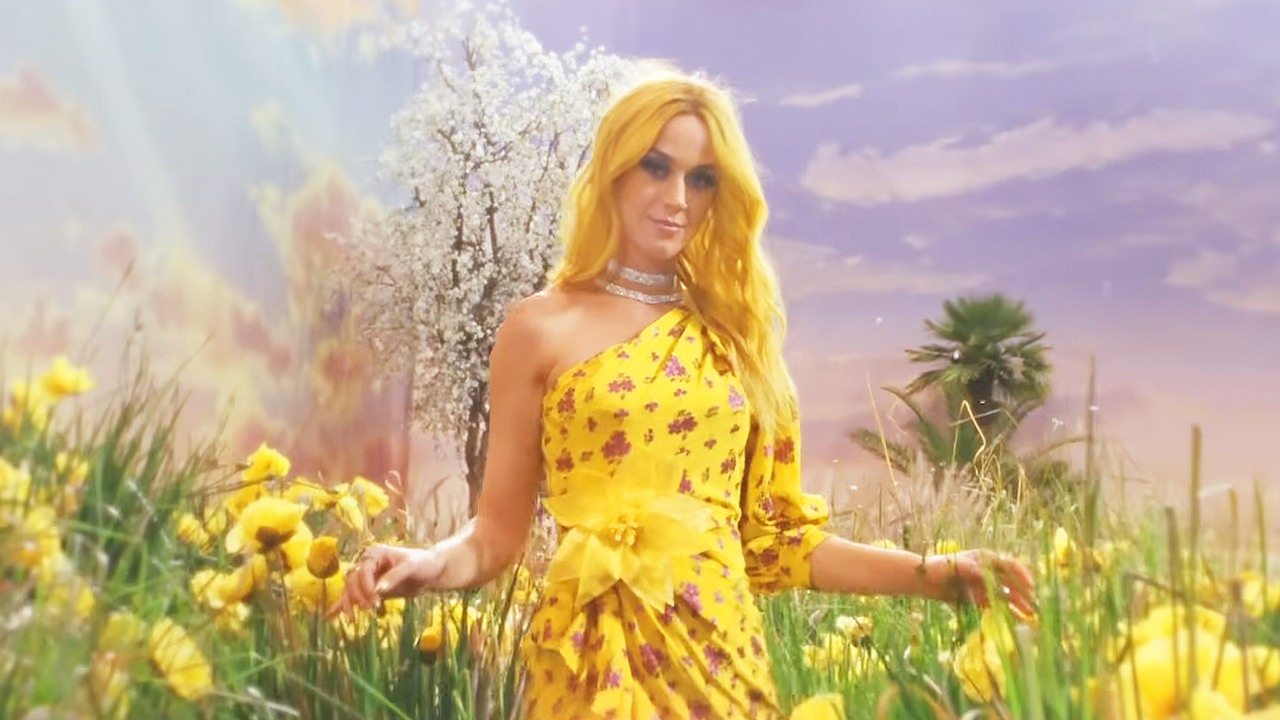
Katy Perry.

It's not unusual for collaborations to take place in dance music - some might say it’s the norm - but 2017's Feels was quite a notable collision of superstars. Essentially performed by a studio supergroup, the track's players consisted of Pharrell Williams, Katy Perry and Big Sean, led by the uber-talented Calvin Harris.

The impressive collective all shared writing credits for the song, along with additional composer Starrah (aka Brittany Hazzard), but Feels started life as a relatively simple demo, which Harris presented to Katy Perry following a fortuitous encounter at the Vanity Fair Oscar Party.
"I saw Calvin actually at [the] Vanity Fair Oscar party,” Perry told Ryan Seacrest Wednesday back in 2017. “We just bumped into each other and he's like, 'Oh, you know, it's so funny, I think I have a song that maybe you should come check out. I was like, 'Cool,' because we'd always meant to work together for years and years and years."

But context is key here. A few years earlier, the two had a relatively public Twitter spat, triggered by Harris pulling out of an appearance on Perry's California Dreams Tour at the last minute, citing set production issues.

"Calvin Harris will NOT be joining in on the fun and has CANCELLED last minute", Perry posted on Twitter back in 2011. Cue a series of back-and-forth bickers in full public view that led most to assume that the pair had burned their respective bridges

Few thought Perry and Harris would reconcile after their public spat (Image credit: Jeff Kravitz/FilmMagic )

Following this long-awaited air-clearing meeting, Calvin played a basic demo of the backing track of Feels to Katy. She was immediately was struck by it.

"It was time to put all that behind us. Then he played me this one part for this new song called Feels and I was like, ‘Oh yeah.' This is like my favourite song off the record. I was just down to do it."

The Feels-wheels then began turning as one of 2017’s biggest summer hits started to be crafted into shape. Built around an Earth, Wind & Fire-recalling bass groove, the tune had a lightweight, danceable energy and a salvo of hooky toplines. These elements eventually made the tune irresistible to millions

Dropped shortly before the release of the parent album Funk Wav Bounces Vol. 1, Feels became an instant international success story, hitting the top of the chart across Europe and the UK and the top 20 of the US.

But, beyond the name recognition of its roster of collaborators - what was it that made the song work so well? Let's dive in to its inner workings…

Feels utilises a two-bar sequence, which provides the backbone for verse, pre-chorus and chorus elements.

There is an opening introduction, which is heavily infused with reverse effects, all based around the single scale of Em pentatonic, before we hear the two-bar chord sequence in a short introduction, and the first vocal part.

The main chord construct is based around Em for 2 beats, A and Em/G for a beat each, then F#m7 is followed by B major, both for 2 beats.

This chord sequence is a relatively common and basic progression, but it offers a strange sense of reassurance and familiarity, particularly given its extensive usage throughout the duration.

The use of Em/G after the A major chord is an interesting device, acting as a passing chord, which breaks up the sequence slightly, although plenty of heavy lifting is done by the arrangement, which we will come onto later.

With three amazing artists working alongside Calvin Harris, each individual adopted clearly defined roles within the song.

Calvin Harris: Architect of bangers (Image credit: Jeff J Mitchell/Getty Images)

The verses are sung by Pharrell Williams; each verse contains two sections, which are clearly defined through the use of different melodic content, alongside the developing lyrical content.

There is therefore an argument to make that the latter part of the verse construct could be presented as a continuation of the verse - although it’s commonly described as the pre-chorus bridge.

Either could be considered correct, with the former carrying more weight, thanks to the continuation of the same chord progression.

Either way, Pharrell's vocal performance is lyrical and soul-like, juxtaposed against the rhythmic and punctuated arrangement. The lyric pertains to being present in the moment, and enjoying the fleeting happiness of a relationship.

Now nothin' ever last forever, no
One minute you're here, and the next you go
So I respect you wanna take it slow
I need a mental receipt to know this moment I owe

Pharrell took the lead vocal on Feels (Image credit: Art Streiber/NBCU Photo Bank/NBCUniversal via Getty Images )

As we reach the chorus section, Katy Perry takes centre stage, with a melodic (and often mis-heard!) line that starts on the note F#.

No, she's not singing 'Don't be afraid to catch fish'. It's actually;

Don't be afraid to catch feels
Ride drop top and chase thrills
I know you ain't afraid to pop pills
Baby, I know you ain't scared to catch feels
Feels with me

Beyond its lyric, which reinforces the 'you only live once' theme, this part adds something quite unexpected musically, as it brings a 9th to the chord of Em. This is only realised in Perry's vocal part, leaving the instrumental components to carry on as before. It's one of the strengthening attributes of the chorus melody.

Having been treated to two rounds of verse and chorus, we reach the formal bridge section. Continuing the strength by definition, Big Sean provides an extensive rap over this new section.

The simplistic progression here begins with a chord of Em7, which is played for 3 beats. The note D, within this chord, is played right at the top of the harmony, allowing the note to drop by a semitone to a C# for the final beat of each bar, thus creating a chord of Em6.

This subtle deviation is kept back for the second part of the bridge section, remaining somewhat muted and elusive during the bridge’s first half.

Big Sean brought a big rap to the song's conclusion (Image credit: Tim Mosenfelder/Getty Images)

The bridge section is a full 16 bars in length, and while the Em7/Em6 groove occupies most of this space, bars 7-8 and 15-16 present a rising figure, employing chords of Am, Bm, C and D, before we head to the chorus outro.

This rising figure is also further embellished by the use of additional chords, which move down and up. This promotes the sense that we are ascending back to the home chord of the key.

As well as being a notable and successful producer of great repute, Calvin Harris is also a little bit of a gear-hound. This might explain why he listed the equipment that was used in the making of the track at the end of the song’s vibrant promotional video.

This provides us with some fantastic clues as to the instrumentation used at various moments.

Beginning with the drums, Harris lists the Linn LM-2 (a misnomer, it's actually officially named the LinnDrum) drum machine as the unit providing the percussive backbone.

It's a basic construct, of kick on 1 & 3, and snare on 2 & 4.

This is further embellished with live claps, which accentuate the fourth beat, alongside the snare.

There are also some 8th note hi-hats in play, but these are often masked by a live tambourine part, which is something of an outlier. This part does not seem to lock in terribly well, which suggests that its presence is more of an instrumental colour than an exacting rhythmic entity. It’s also quite a way to the back of the mix.

Despite the basic drum construct, the underlying feel of the track is supplied by Fender Stratocaster and Gibson SG Custom guitars, bolstered by a Yamaha upright piano.

Feels was built atop a LinnDrum rhythm (Image credit: Roger Linn Design)

These components provide continual offbeats, with the occasional rhythmic embellishment which supplies the lilt and feel of the track, drawing influence from reggae and ska.

There is also an additional Wurly electric piano, which tends to cement the harmony by playing on the beat, although not all of the time.

Between these elements, there is wonderful interplay as they are woven together rhythmically. They also work to flavour-up the chords; sometimes the Wurly plays in a higher inversion, against the piano's lower inversion, for example.

The bass part is played live by Harris, on a Ibanez 1200 Bass, and performs two roles expertly. Firstly, it underpins the harmony, but stylistically it adopts hints of funk, with the occasional octave leap.

Undoubtedly, one of the total strengths of this song is in the simplistic, repetetive feel of the arrangement.

It is a textbook example of what can be done with limited instrumentation - and a hypnotic circular groove, garnished with instrumental colour.

Oh, and a cast list of the music industry's biggest names bringing the song to life certainly does no harm.

As we alluded to earlier, the song's basic groove was consciously derived from Earth, Wind & Fire’s iconic Let’s Groove Tonight, so much so that Maurice White and Wayne Vaughn of the original band were credited as co-writers.

Listen to the two tracks side-by-side and you'll see why…

Sign up to read this article
Read news from 100's of titles, curated specifically for you.
Already a member? Sign in here
Related Stories
Top stories on inkl right now
One subscription that gives you access to news from hundreds of sites
Already a member? Sign in here
Our Picks
Fourteen days free
Download the app
One app. One membership.
100+ trusted global sources.