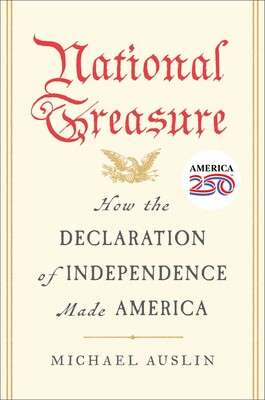
[This post is excerpted from the new book, National Treasure: How the Declaration of Independence Made America (Avid Reader Press/Simon & Schuster).]
That Abraham Lincoln, our most American of presidents, "never had a feeling politically that did not spring from the sentiments embodied in the Declaration of Independence," our most American of documents, seems only appropriate. That Lincoln was both a political philosopher and political genius may be enough to explain why the lanky rail-splitter from Illinois repeatedly invoked the Declaration, even before entering the political arena and when he had no expectations of returning to political office. Like his contemporaries, however, Lincoln grew up surrounded by images of the Declaration, keeping it a living document in the minds of Americans. In this 250th year of Independence, understanding the Declaration's prevalence as a cultural and material object in the first half of the 19th century may help explain how, after decades of relative obscurity, it became the undisputed expression of the American creed that we celebrate today.