
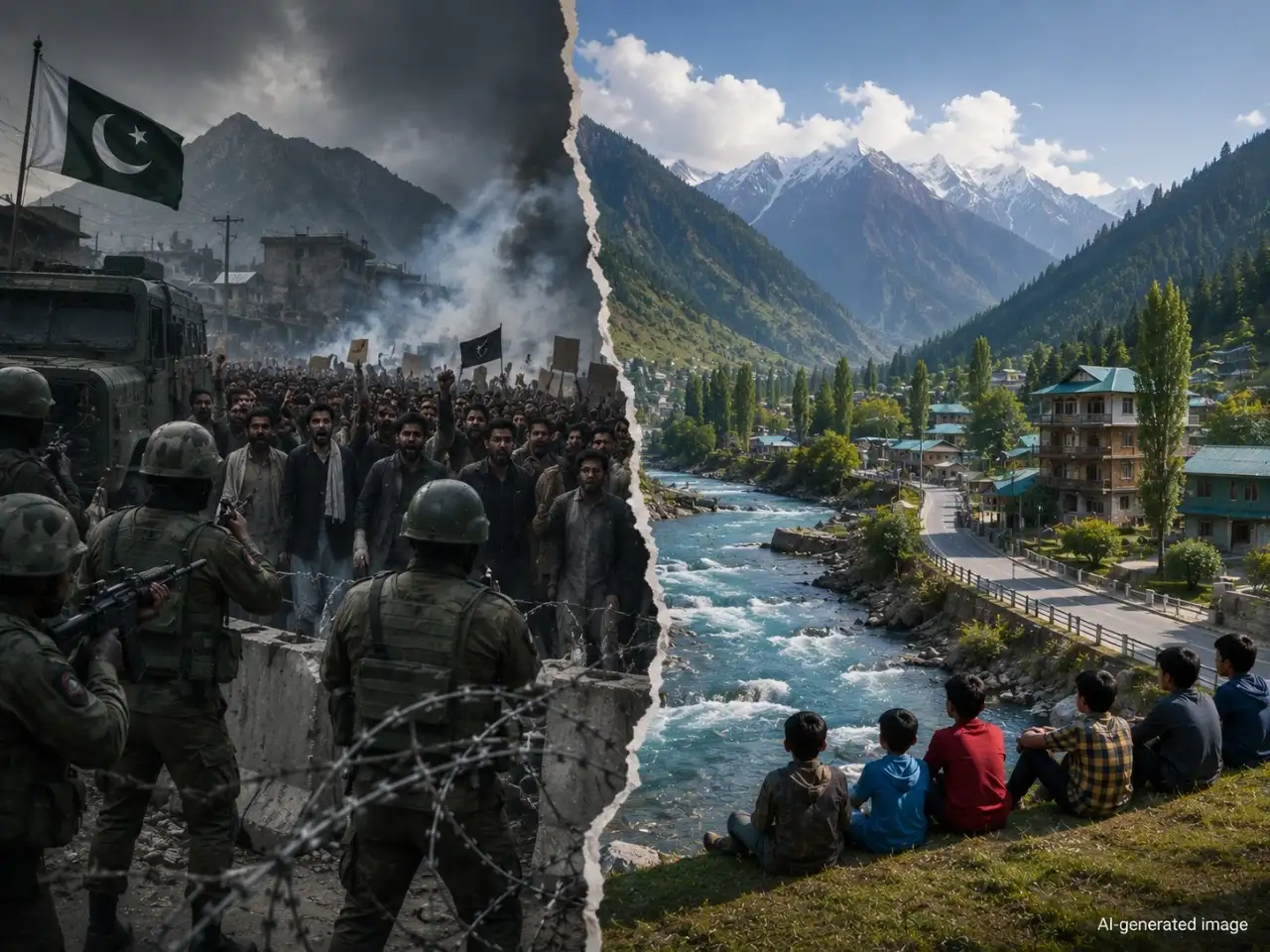
For decades, Pakistan's case on Kashmir rested on a simple proposition. India was the oppressor and Pakistan was the champion of Kashmiris. Every diplomatic campaign, every speech at the United Nations and every attempt to internationalise the dispute drew legitimacy from that claim. But now that narrative has suffered a blow that may prove difficult to recover from. As Pakistani security forces were accused of killing dozens of protesters in Pakistan-occupied Kashmir (PoK), the country's defence minister publicly likened those protesters to "enemies like India". It was a statement that would have been almost unimaginable in the history of Pakistan's Kashmir policy.
Though Pakistan continues to possess the intent and capacity to sponsor terrorism in Jammu and Kashmir, the narrative that sought to morally justify such a policy is showing signs of fraying. The killings in PoK, the growing criticism from within Pakistan itself, scattered expressions of pro-India sentiment in the territory and even protests by sections of the British Kashmiri diaspora together point to something deeper than another cycle of unrest. They suggest that Pakistan's traditional claim to speak for Kashmiris is now being challenged by Kashmiris themselves.









