
Get all your news in one place.
100's of premium titles.
One app.
Start reading
The Conversation
The Conversation
Richard (Rick) Feinberg, Professor Emeritus of Anthropology, Kent State University

Pacific voyagers’ remarkable environmental knowledge allowed for long-distance navigation without Western technology

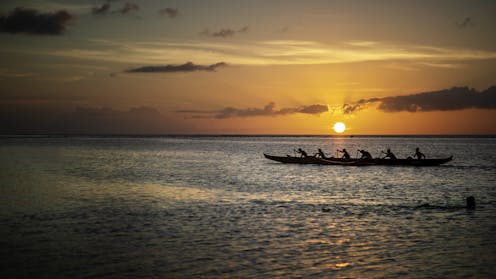
An outrigger canoe would typically have several paddlers and one navigator. AP Photo/David Goldman

Wet and shivering, I rose from the outrigger of a Polynesian voyaging canoe. We’d been at sea all afternoon and most of the night. I’d hoped to get a little rest, but rain, wind and an absence of flat space made sleep impossible. My companions didn’t even try.

It was May 1972, and I was three months into doctoral research on one of the world’s most remote islands. Anuta is the easternmost populated outpost in the Solomon Islands. It is a half-mile in diameter, 75 miles (120 kilometers) from its nearest inhabited neighbor, and remains one of the few communities where inter-island travel in outrigger canoes is regularly practiced.

Sign up to read this article
Read news from 100's of titles, curated specifically for you.
Already a member? Sign in here
Related Stories
Top stories on inkl right now
One subscription that gives you access to news from hundreds of sites
Already a member? Sign in here
Our Picks
Fourteen days free
Download the app
One app. One membership.
100+ trusted global sources.







