
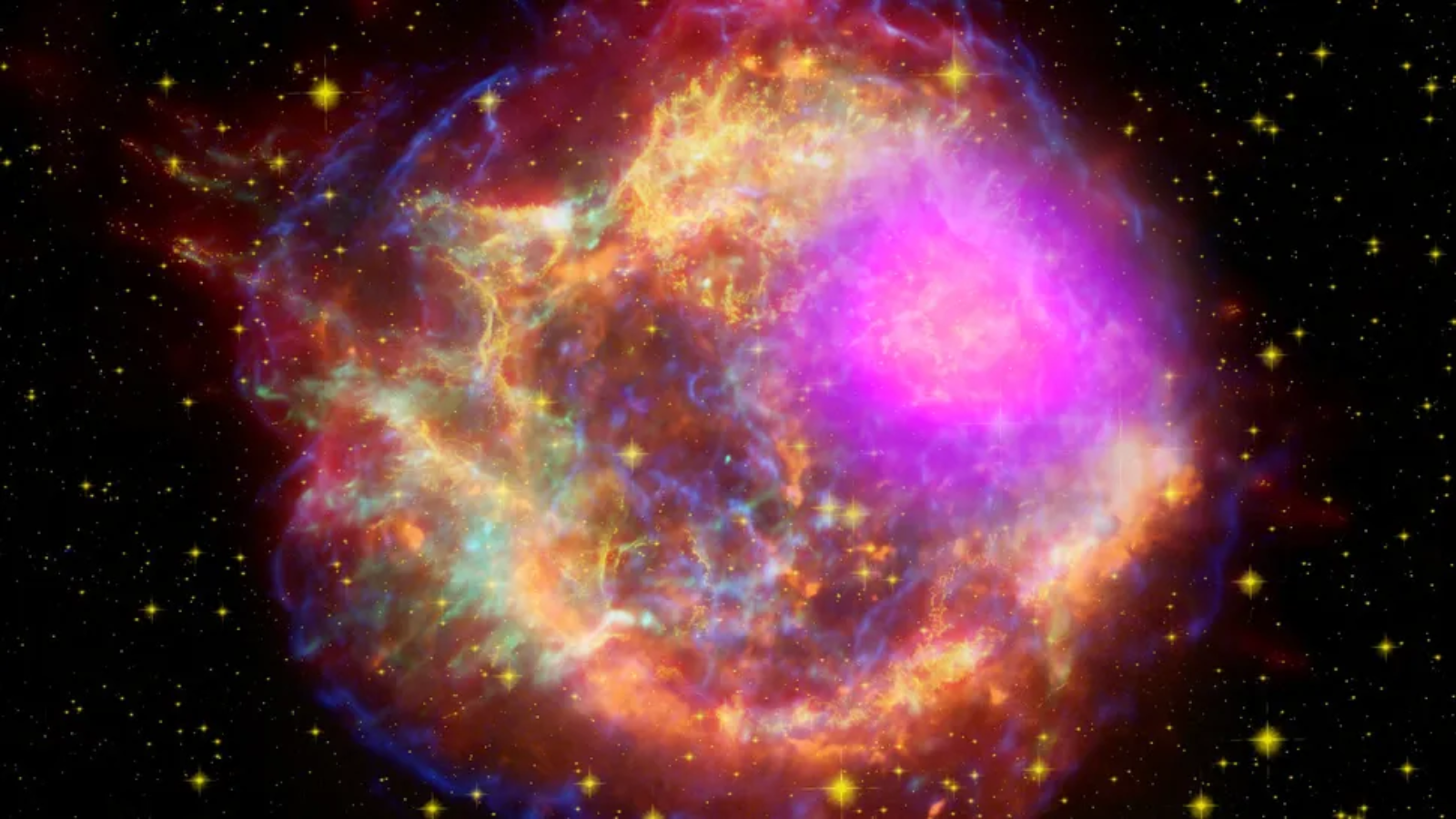
The Zwicky Transient Facility has reached an incredible milestone: It has classified over 10,000 cosmic explosions that mark the deaths of massive stars and the feeding frenzies of vampire stellar remnants. These events, called supernovas, are undoubtedly some of the most fearsome and powerful events in the universe.
Since 2012, humanity has discovered almost 16,000 supernovas. The Zwicky Transient Facility (ZTF), which began operations in 2017 using the 48-inch telescope at Palomar Observatory, is responsible for almost two-thirds of these detections. That makes it the largest and arguably most successful supernova surveyor to date.
"There are trillions of stars in the universe, and about every second, one of them explodes," California Institute of Technology astronomer Christoffer Fremling said in a statement. "Reaching 10,000 classifications is amazing, but what we truly should celebrate is the incredible progress we have made in our ability to browse the universe for transients, or objects that change in the sky, and the science our rich data will enable."











