A peasant girl, a soldier and a slave who lived nearly 2,000 years ago have been given new faces - and imagined stories - in a fascinating new exhibition in Budapest.
At the Aquincum Museum, Roman-era skulls discovered at the ancient city of Aquincum have been transformed into lifelike facial reconstructions, offering visitors a glimpse of the people who once lived on the empire’s distant frontier.
The exhibition, titled “Once we were like you”, utilised archaeology, anthropology, genetics and historical imagination in the hopes of reconnecting modern audiences with those whose remains have survived for almost two millennia.
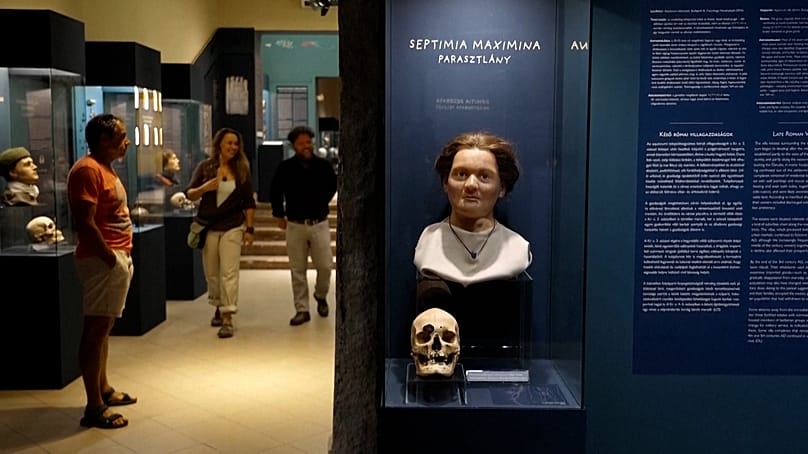
Displayed alongside their original skulls, the reconstructed faces are accompanied by fictional names, occupations and possible life stories - an attempt to make the ancient residents of Aquincum feel less like archaeological objects and more like real people.
"During the excavations we find the skulls, the skeletons, we document them, we roughly can tell whether they belonged to a man or a woman and the findings end up in the appropriate storage room, but that's it. The bodies have no weight, no life, no soul," said Dr. Lóránt Vass, archaeologist and exhibition co-curator.
He continued: "In connection with this exhibition, we thought what happens if we bring these people closer to the visitors by using archaeological findings, information provided by inscriptions, results of anthropological studies and results of archaeogenetics."
How were the ancient faces brought back to life?
Experts analysed the shape and structure of the skulls, alongside archaeological evidence and DNA research, to estimate details such as facial structure, possible ancestry, and even characteristics like hair, skin and eye colour.
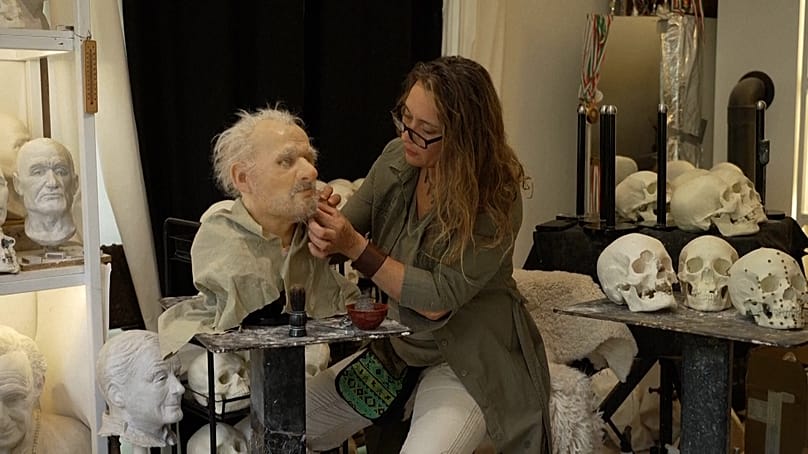
The most realistic reconstructions were created by facial reconstruction artist Emese Gábor, who works from a studio in Budakeszi, near Budapest.
Using 3D-printed replicas of the original skulls, she carefully rebuilt the faces layer by layer, studying the bones before modelling muscles and features.
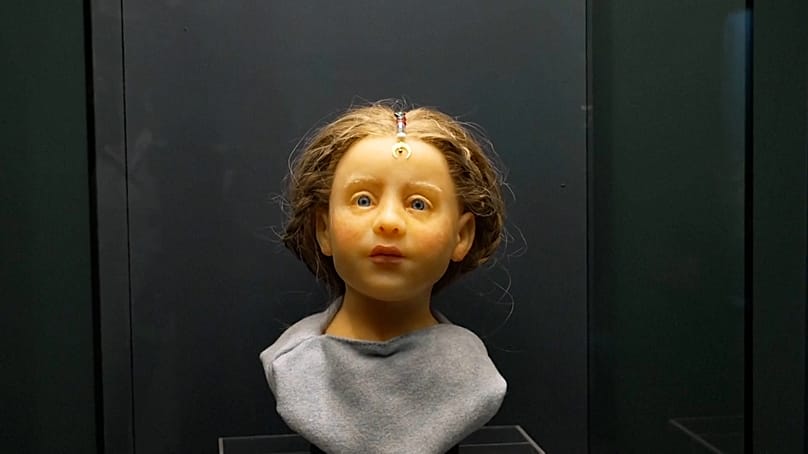
But while the faces are based on scientific evidence, the identities and biographies attached to them are not real. The curators created possible names, jobs and backgrounds based on what researchers know about life in Aquincum.
“It's all fiction. We don't even know the real names of these people, unfortunately. We tried to incorporate into their imagined life stories everything that anthropology and genetic studies have offered. But no matter what, it's still fiction. In fact, we can not say that they lived like that, it happened that way, but they could have been living that way,” said Dr. Péter Vámos, archaeologist and exhibition co-curator.
Researchers used historical naming customs, inscriptions and anthropological studies to create plausible scenarios for the individuals.
Alongside the facial reconstructions, visitors can see a reconstructed burial site and a Roman-era mummy.
“Once we were like you” is on show at the Aquincum Museum in Budapest until 31 October 2027.