Get all your news in one place.
100's of premium titles.
One app.
Start reading
The Economic Times
The Economic Times
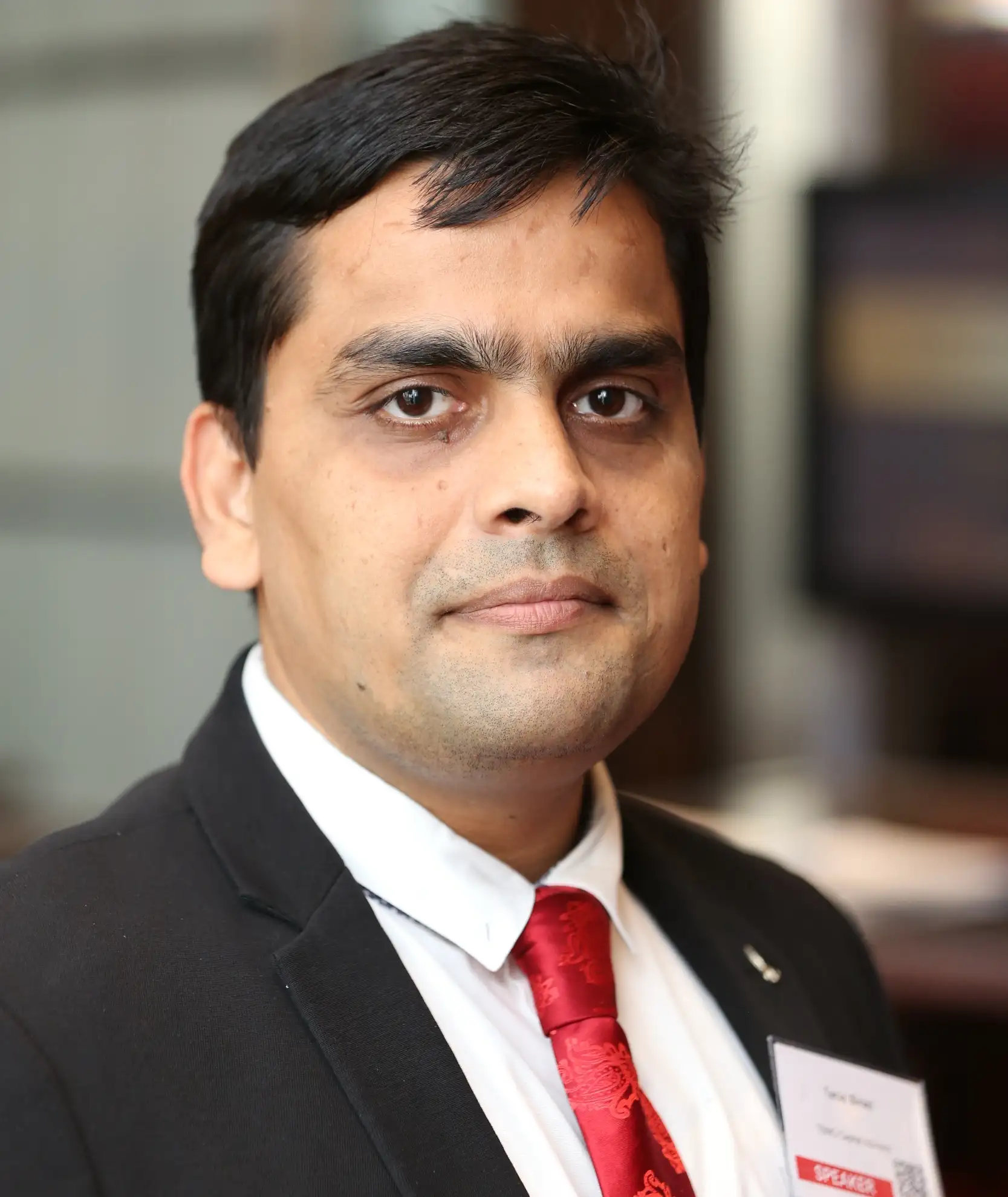
Kshitij Anand

NRI Talk| For a Rs 50 crore NRI portfolio, structure matters as much as stock selection: Tarun Birani

Building wealth is about much more than picking winning stocks—especially for Non-Resident Indians (NRIs) managing large, cross-border portfolios.

According to Tarun Birani, Founder & CEO of TBNG Capital Advisors, the success of a ₹50 crore India-focused portfolio depends as much on the right structure, tax efficiency and asset allocation as it does on investment selection.

In an interaction with Kshitij Anand of ETMarkets, Birani shares how NRIs should approach portfolio construction, navigate currency risks and tax regulations, identify India's long-term growth opportunities, and avoid common mistakes that can erode wealth over time. Edited Excerpts –

Q) How are NRIs looking at India, especially after flattish returns for the past 2 years?

A) Constructive but clear-eyed. That’s the best way to describe it.

The conviction hasn’t broken — but the euphoria is gone, and frankly, that’s healthier. The Nifty has gone sideways near 24,000 since mid-2024, and for dollar-based NRIs it has felt worse because the rupee has slipped roughly 10–11% over the past year to around ₹95 to the dollar. Flat in rupees has meant a quiet loss in dollars.

But when I sit with NRI clients, the conversation I find most reassuring is structural, not cyclical. In March 2026, foreign investors pulled out a record ₹1.18 lakh crore.

In any previous cycle — 2013, 2018 — that scale of selling would have cratered the market 20–25%. This time, the Nifty fell roughly 11%. Why? Domestic institutions absorbed ₹1.16 lakh crore of it.

Domestic institutional ownership has crossed 18.9% and now exceeds FPI ownership — around 14.7%, a 13-year low — for the first time in the modern history of Indian markets. That’s not a coincidence. That’s ₹31,000 crore of SIP money flowing in every single month for 53 consecutive months.

India has quietly become a twin-engine market. For a volatility-wary NRI, that structurally changes the crash profile.

The queries I receive cluster into the same themes: Is this a real entry point or is there more pain ahead? How does rupee depreciation change the picture in dollar terms? What does GIFT City now offer for tax-efficient NRI investing? And increasingly — how do I add India exposure without over-concentrating against a portfolio that’s already heavily developed-market?

The tone is pragmatic. Most serious NRIs are treating this as a normal phase in a long-growth market — a moment to revisit their allocation, not to exit.

Sources: NSDL-AMFI, Economic Survey 2025-26, RBI

Q) What is the biggest reason NRIs should remain invested in India over the next decade?

A) Because you are buying earnings compounding off the cleanest long-term growth runway among large economies — and a decade smooths the noise that quarterly headlines create.

India is growing at roughly 7.4–7.7% in real terms. Banks are well-capitalised — Tier-1 capital adequacy is at 16.4%, Gross NPAs at multi-decade lows. Corporate India has spent the last five years repairing balance sheets: debt-to-equity on the NSE 500 is now at 1.0x, the cleanest it has been since FY11. Government capex has gone from ₹124 billion in FY14 to ₹1,898 billion in FY26. Forex reserves are near $688 billion; services trade surplus has reached 5.6% of GDP.

What I find particularly compelling right now — and this is where I’d push back gently on the bears — is the valuation picture. Nifty’s forward price-to-book has slipped below its long-period average. And crucially, this is not a peak-ROE situation. Corporate ROEs are still in recovery — currently around 15% for the NSE 500 ex-financials, against a peak of 22% in the previous cycle. If ROEs improve as the consumption and capex cycle turns, current entry points could look quite attractive in hindsight.

The deeper reason for a 10-year view is the domestic capital flywheel. Equity and mutual fund participation in household savings has gone from 2% in FY12 to 15.2% in FY25. That wall of systematic money structurally dampens sharp corrections — which is exactly what a longer-horizon NRI investor needs to hear.

For an NRI specifically, India offers something developed markets increasingly cannot: participation in a roughly long-run compounding story that also maps to your rupee-denominated goals — family, property, and eventual return. That’s growth and roots in the same allocation.

Sources: MOSPI, RBI, DAM Capital, Economic Survey 2025-26, Bloomberg, AMFI

Q) Which structural themes offer the most compelling opportunities for NRIs?

A) My honest answer: don’t bet the theme — own the compounding.

These themes are interlocking, not competing. The cleanest way to capture them is broad, high-quality, diversified exposure rather than narrow sector bets that most investors — including sophisticated NRIs — time poorly.

That said, if I’m forced to rank what I find structurally most compelling right now, financialisation leads. Mutual fund assets are ₹80+ lakh crore but still only around 19–20% of GDP. The US sits at 124%, Japan at 43%, even China at 23%. The industry could triple and still only reach where comparable markets are today. The direction of that travel is not in question — only the pace.

Behind it, manufacturing and the China-plus-one shift is real and backed by ₹1.91 lakh crore in PLI incentives. Digitalisation is the productivity layer underneath everything — UPI scaled from 22 billion transactions in FY21 to 186 billion in FY25. Infrastructure capex is running near 30% of gross fixed capital formation.

One area worth watching specifically: the consumption recovery. India’s private consumption has averaged just 10.4% since FY18 — the slowest sustained period on record. But private consumption is cyclical. Writing it off after a near-decade of below-average growth could be the biggest cyclical mistake of this period.

The triggers for a turn — lower rates, income confidence, improving credit availability — are progressively arriving. On portfolio construction: themes are best owned through a well-structured allocation, not chased.

That’s a core part of what I call the FAB framework — making sure Foundations are set, Allocation is diversified across asset classes and geographies, and Behaviour doesn’t let you chase what just worked.

Sources: AMFI-CRISIL, CMIE, RBI, PIB, DPIIT

Q) If an NRI were building a fresh India-focused portfolio today for ₹50 crore, how would you allocate?

A) There is no universal right answer here — and anyone who gives you one without first understanding your Investment Policy Statement, goals, residency, tax position across both countries, and existing global portfolio, is not doing their job. What follows is an illustration for a long-horizon, moderately aggressive NRI. Not advice.

One overlay before the numbers: with Nifty’s forward price-to-book at or just below its long-period average, the valuation signal today is to increase equity allocation within your guardrails — not a signal to time the bottom. I would still phase ₹50 crore in over 12–18 months rather than deploy it in a lump.

Rupee cost averaging has decades of evidence behind it. As Benjamin Graham put it: “No one has yet discovered any other formula for investing which can be used with so much confidence of ultimate success, regardless of what may happen to security prices, as dollar cost averaging.” That principle doesn’t age.

An illustrative frame for a 70:30 equity-debt risk profile:

India equity — 60-70% A low-cost diversified core of large-cap index and flexicap exposure, deployed systematically. A smaller mid and small-cap satellite — but sized with clear eyes on valuation. Mid and small-cap valuations remain stretched relative to their own history and relative to large-caps. On most measures, large-caps look more attractively positioned right now and form the stronger foundation.

Debt and fixed income — 15–20% NRE and FCNR deposits form the anchor here — tax-free, freely repatriable, rupee-stable. For the global fixed income component, short-duration instruments given that global inflation remains elevated after the West Asia-driven energy shock. Duration risk deserves caution right now across developed markets. This is where the Foundations bucket in FAB sits — non-negotiable, funded first.

Alternatives — AIF and PMS Only for investors who genuinely qualify — both financially and temperamentally. GIFT City structures offer significant tax efficiency for NRIs in this category. A satellite, never the core. Illiquidity must be pre-planned, not discovered mid-cycle.

REITs and InvITs — 5% For most NRIs, this replaces or supplements the real estate impulse. Liquid, professionally managed, regulated. Most NRIs I meet are already over-exposed to physical property — REITs give the sector exposure without the concentration, legal complexity, and repatriation headaches.

Commodities — 5% The commodity super-cycle of the last 18 months has seen sharp corrections — which is a typical behavioural trait of such cycles. A modest allocation earns its place through diversification and currency hedging, not through prediction.

The wrapper does the real work: a written IPS with defined rebalancing bands, thoughtful tax location — debt in NRE/FCNR, global and alternatives via GIFT City — systematic deployment, and a coordinated cross-border advisory approach. At ₹50 crore, the structure around the portfolio matters as much as the portfolio itself.

Sources: NSE Indices, Bloomberg, RBI, GIFT City IFSCA regulations, TBNG internal IPS framework. Views are personal and illustrative; not investment advice. Please consult your advisor and tax professional before acting.

Sign up to read this article
Read news from 100's of titles, curated specifically for you.
Already a member? Sign in here
Related Stories
Top stories on inkl right now
One subscription that gives you access to news from hundreds of sites
Already a member? Sign in here
Our Picks
Fourteen days free
Download the app
One app. One membership.
100+ trusted global sources.