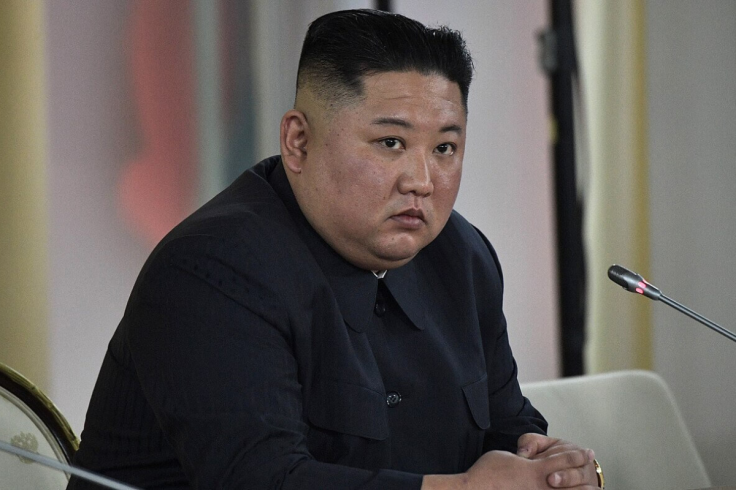
Inside North Korea, South Korean dramas can be as dangerous as they are irresistible. People secretly watch shows smuggled across the border, while Kim Jong Un's regime tightens the laws, surveillance and punishments designed to keep foreign culture out.
'Everyone knows everyone watches,' one North Korean escapee told Amnesty International, describing a country where workers, party officials, security agents and police can all consume South Korean entertainment despite the crackdown.

That battle over information is unfolding alongside a dramatic collapse in defections. Just 63 North Koreans reached South Korea for resettlement in the first half of 2026, down nearly 35 per cent from 96 during the same period last year, according to Seoul's Ministry of Unification.
Kim Jong Un's K-Drama Crackdown
The North Korean K-drama ban is part of a much broader campaign against foreign information.
Amnesty International's 2026 investigation found that escapees described people being punished for watching South Korean television, with reported penalties ranging from forced labour and public humiliation to execution. The organisation interviewed 25 North Korean escapees in 2025, most of whom had left the country between 2019 and 2020.
🇰🇵🇰🇷 Escaping North Korea has become almost IMPOSSIBLE, with defections to the South at a fraction of what they used to be
— Mario Nawfal (@MarioNawfal) September 28, 2026
Defections peaked at more than 2,900 in 2009, but only 63 North Koreans made it to the South in the first half of this year.
Kim Jong Un has sealed the… pic.twitter.com/V0eoPXjHFm
Under North Korea's 2020 Anti-Reactionary Thought and Culture Act, watching or possessing South Korean dramas, films or music carries a five-to-15-year forced labour sentence, according to Amnesty. Harsher penalties, including the death penalty, apply to certain forms of large-scale distribution and organised viewing.
Yet the content keeps getting through.
Escapees told Amnesty that South Korean programmes are smuggled into North Korea on USB drives, often from China, and watched on 'notetels', notebook computers equipped with television functions. Popular titles mentioned in testimonies include Crash Landing on You, Descendants of the Sun and Squid Game.
'Everyone Knows Everyone Watches'
The striking part is how widespread the practice appears to be despite the danger.
The escapee who gave the 'everyone watches' testimony used the pseudonym Kim Gayoung. Amnesty said 15 interviewees from different regions mentioned the 109 Group, a specialised enforcement unit that searches homes, bags and mobile phones for foreign media.
The accounts also describe a system in which wealth and connections can influence what happens after someone is caught. For those without either, the consequences can be far harsher, according to Amnesty's interviewees.
Amnesty said it could not independently verify the extent of North Korea's use of the death penalty because access to the country is so restricted. The execution accounts in its investigation come from escapees describing events they witnessed or learned about before leaving North Korea.
Escape Route Becomes a Fortress
The same drive to isolate North Koreans from outside influence has made physical escape increasingly difficult.
The roughly 1,415-kilometre border with China was once the main route for many defectors. Under Kim Jong Un, North Korea has strengthened that frontier with fences, cameras and strips of sand designed to expose footprints, according to AFP reporting. Andrei Lankov of Kookmin University described the transformation as a 'Soviet-style border security system'.
China's side of the frontier has also become more heavily monitored. Rachel Minyoung Lee of the Stimson Center's 38 North has pointed to facial-recognition cameras, additional patrol boats and new or planned deportation facilities in northeastern China.
For Chae Yoon-seo, who escaped in 2019 by crossing into China before travelling through Laos, Vietnam and Thailand, the new reality is stark.
'As I understand it, bringing family members directly from North Korea is currently impossible,' she told AFP.
From 2,900 to 63
The numbers show just how far the escape route has contracted.
More than 2,900 North Koreans reached South Korea in 2009. Arrivals then remained above 1,000 a year for much of the following decade, before plunging during the COVID-19 pandemic as Pyongyang tightened its borders.
There was some recovery after the pandemic, with 196 arrivals in 2023, 236 in 2024 and 223 in 2025. But the first half of 2026 produced just 63 arrivals, with South Korea's Ministry of Unification citing tighter North Korea-China border controls and restricted movement through third countries.
Fyodor Tertitsky of Korea University has described defectors as a major source of information about conditions inside North Korea.
That makes the shrinking flow significant beyond the statistics. As Kim's government works to keep people in and foreign information out, fewer North Koreans are getting through the borders, while the dramas they risk everything to watch continue to offer a glimpse of life beyond them.
Gyuri Kang, who escaped by boat with her mother and aunt in 2023, described her journey as a 'miracle'.
For those still inside, the struggle is happening on two fronts: getting information in, and getting people out.