The nation's top military officer has assured Congress that no soldiers are headed to polling places this November. For Latino families across Chicago, Houston, South Florida and beyond, that assurance covers only part of what has them worried heading into Election Day.
What Caine actually promised
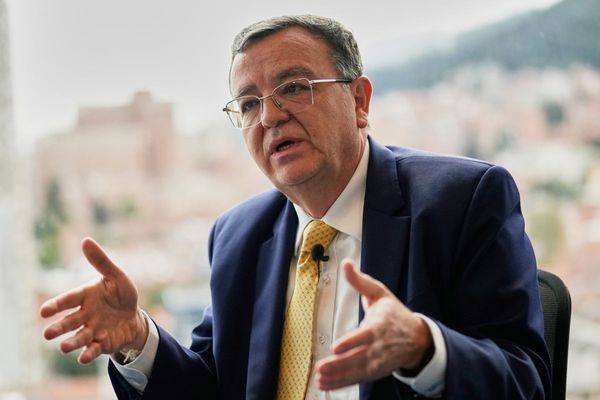
In a letter obtained Monday by wire services, Joint Chiefs of Staff Chairman Gen. Dan Caine told Sen. Elissa Slotkin that "the Joint Force has no plans to send Federal military personnel" or federalized National Guard units to polling sites this cycle. Caine also ruled out any plan to confiscate ballot boxes, tabulation equipment or the paperwork tied to how a vote is counted, and he reminded the Michigan Democrat that running elections falls to state and local officials, not to the Pentagon.
Caine went further, telling Slotkin he has neither received nor expects to receive any unlawful order tied to the military's role in the vote. The commitment echoes one made in 2020, when then-Joint Chiefs Chairman Mark Milley responded to a similar inquiry from Slotkin, who at the time was still a member of the House, by pledging that the armed forces would stay out of any election dispute and leave those fights to courts and Congress.
The letter answers a request Slotkin sent Aug. 18 to Caine and, separately, to Defense Secretary Hegseth, seeking written confirmation that federal forces would stay away from ballots and polling places. As of this week, Hegseth still had not replied, according to Slotkin's office.
A promise with a shelf life
Caine's letter describes the military's current intentions, not a binding, permanent guarantee, and it doesn't change anything on paper: federal law has barred armed troops from polling sites for more than 150 years, with a narrow carve-out for repelling an actual armed attack. What has shifted is the political backdrop. Slotkin pushed for the written commitment after President Trump told a reporter he'd "do anything necessary to make sure we have honest elections," declining to rule out sending the National Guard or immigration agents to voting sites. Trump has also said he wishes he had ordered the seizure of ballots and voting equipment after his 2020 loss, and in February he argued Republicans ought to "take over the voting" — naming roughly 15 places nationwide where he wants a federal role — as part of a broader push to nationalize the midterms.
Caine's assurance covers uniformed troops and the Guard. It says nothing about Immigration and Customs Enforcement, the agency driving the sharpest anxiety in Latino communities. Nor is the Los Angeles deployment last year an isolated episode Democrats fear repeating elsewhere: Sen. Elizabeth Warren asked Hegseth point-blank whether comparable forces could land next in two other Democratic-run cities, New York and Chicago, and the defense secretary declined to answer, saying only that the Pentagon has "contingencies and plans" ready for a range of scenarios.
The DHS secretary's carve-out
The ICE question sits with Homeland Security Secretary Markwayne Mullin, the former Oklahoma senator whom the Senate narrowly confirmed to the post this spring by a 54-45 margin. During his confirmation hearing, Mullin told Slotkin he would only send agents to a polling place over "a specific threat," not for purposes of intimidation — a caveat that leaves plenty of room for interpretation about what counts as a threat serious enough to trigger a response.
That distinction hasn't done much to settle nerves. Former Trump strategist Steve Bannon told his War Room podcast audience back in February that agents would "surround the polls" this fall, and the White House has since declined to rule that out. A DHS official separately told state election officials on a call earlier this year that the agency has no operations planned at polling sites — an assurance one participant on that call said they'd believe only once they saw it play out. Families who have already lived through a year of enforcement activity have reason for that skepticism.
A year of enforcement still fresh in memory
In June 2025, the administration sent roughly 4,700 combined National Guard and Marine personnel into the Los Angeles area during immigration raids, several hundred of them trained to accompany ICE agents on operations — landing in a metro area home to one of the country's largest Latino populations. A survey of registered Latino voters cited by KQED found that roughly two-thirds carried real worry federal agents could turn up near their polling place, and California's governor has pointed to a separate episode as proof the fear isn't hypothetical: the Justice Department sent poll monitors to five California counties, three of them majority Latino, during last year's special election on redistricting.
The stakes across Latino-heavy states
The concern isn't confined to California. The voter-outreach group Mi Familia Vota is running education campaigns in eight states with sizable Latino electorates — Texas, Florida, Arizona, Nevada, North Carolina, Colorado, Georgia and California — and steering voters toward early and mail ballots to sidestep any Election Day confrontation altogether.
In South Florida, immigration enforcement has become a defining issue for younger voters casting their first ballots this cycle. Trump's disapproval numbers among Latino voters topped 66% in a nationwide poll released this spring by FIU's Latino Public Opinion Forum — but Florida itself was the clear exception in that survey, with the state's heavily Cuban-American Latino electorate holding a far friendlier view of the president than Latino voters elsewhere in the country. Texas, home to one of the country's largest Latino electorates and several of this year's most competitive midterm races, is another state where Mi Familia Vota is concentrating its outreach, betting that a strong early-voting push will matter more than usual this cycle.
What Congress could still do
Slotkin has moved past letter-writing. In June she introduced the Protect Our Polls Act, which would close the loophole Caine's letter still leaves open: rather than simply requiring a notice period, the measure would force any president to win Congress's affirmative sign-off, through a resolution both chambers must pass, before invoking the armed-enemies exception to send troops or armed federal agents — including the FBI or ICE — to a polling site, and would separately require at least 48 hours' advance notice with supporting intelligence and legal justification. The bill has not moved out of the Senate Judiciary Committee, where it has sat since its introduction.
For now, voters in Latino communities from Chicago to Houston to Miami are left weighing a promise that covers soldiers but says nothing about the federal agents many of them fear most, with Election Day roughly nine weeks away.