
Get all your news in one place.
100's of premium titles.
One app.
Start reading
LiveScience
LiveScience
Brandon Specktor

No, the James Webb Space Telescope probably didn't detect signs of alien life — but it soon could

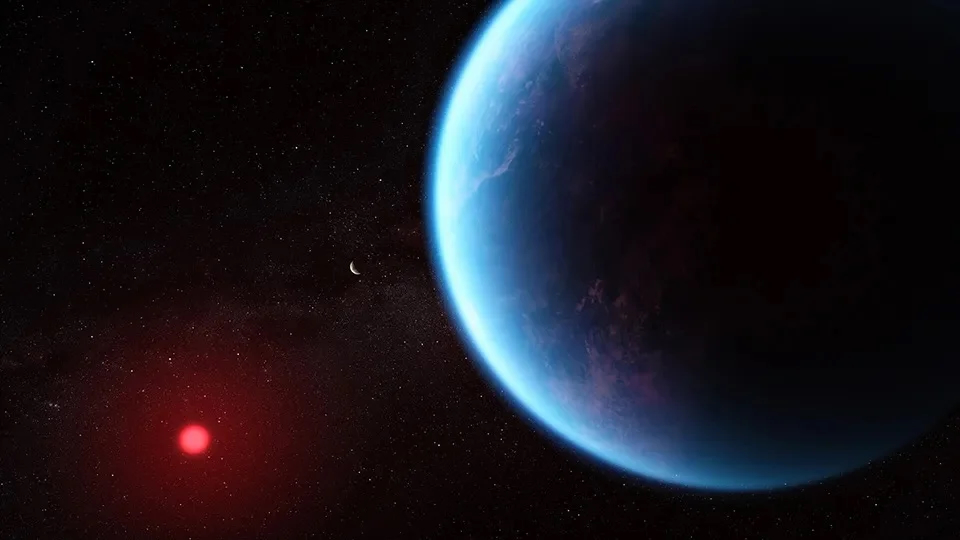
An illustration of a large blue planet in the foreground and a small red one in the background.

Were those "alien farts" that the James Webb Space Telescope (JWST) detected in an Earth-like planet's atmosphere last year, or were they just clouds of methane? A new study makes the case for the latter, potentially dampening hopes that life has already been discovered beyond our solar system.

The contentious exoplanet, called K2-18b, is a warm, watery world with a hydrogen-based atmosphere. Located about 120 light-years from Earth, it sits in the habitable zone around its home star, where liquid water (and, therefore, potentially life) is possible. 

Sign up to read this article
Read news from 100's of titles, curated specifically for you.
Already a member? Sign in here
Related Stories
Top stories on inkl right now
One subscription that gives you access to news from hundreds of sites
Already a member? Sign in here
Our Picks
Fourteen days free
Download the app
One app. One membership.
100+ trusted global sources.




