Get all your news in one place.
100's of premium titles.
One app.
Start reading
The Economic Times
The Economic Times
Debaroti Adhikary

Nithin Kamath says new UPI charges on investing, broking don’t make sense: 'I don't see how we can absorb this indefinitely'

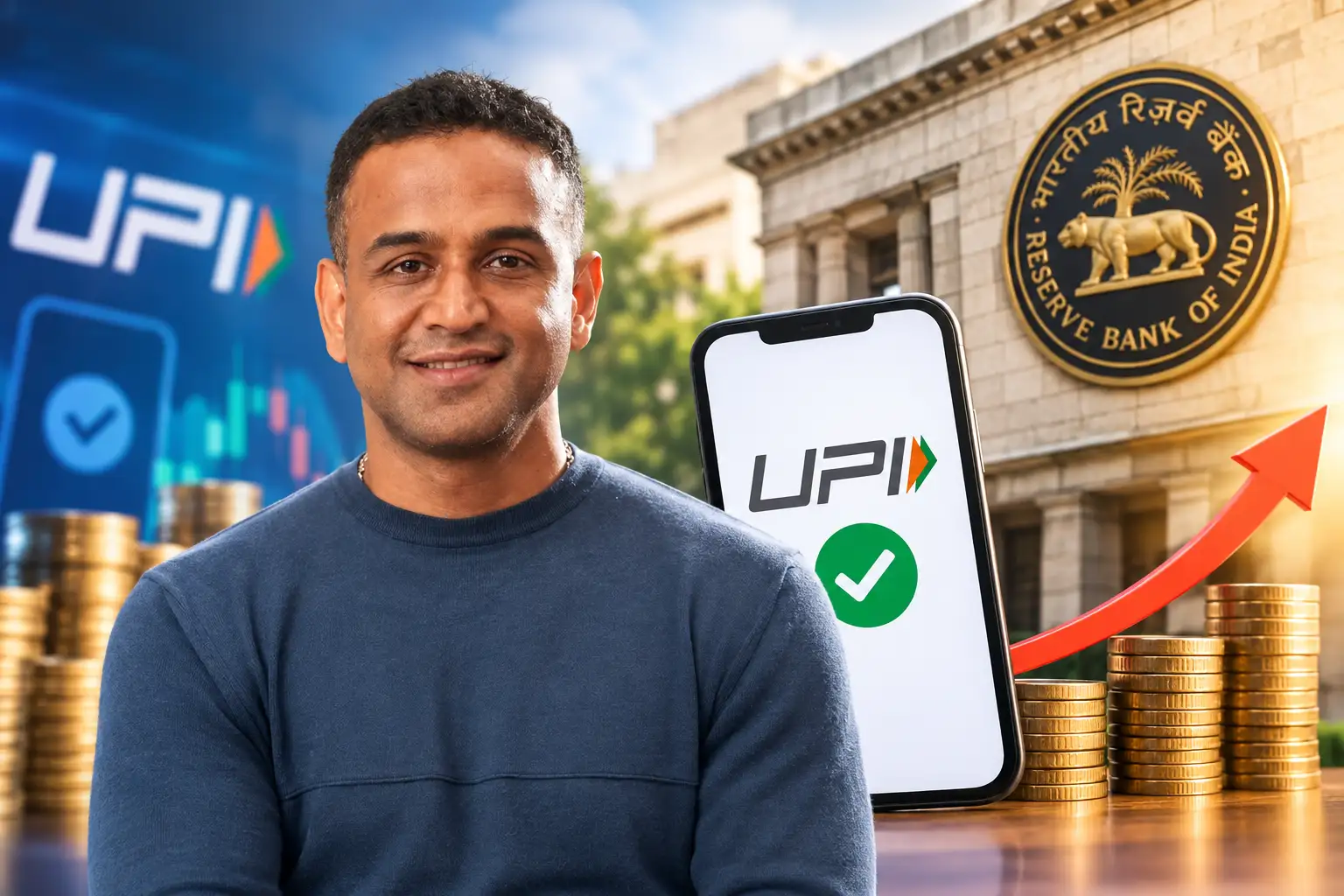
Zerodha CEO Nithin Kamath reacted to the government’s newly announced Merchant Discount Rate (MDR) on select UPI transactions above Rs 2,000, saying that while it was inevitable at some point, it does not make sense for certain use cases, such as investing and broking.

The National Payments Corporation of India (NPCI) announced that the government will introduce MDR on some Person-to-Merchant (P2M) UPI transactions from October 15 onwards, with merchants paying 0.4% on transactions above Rs 2,000. Speaking to X, Kamath said the introduction of MDR was inevitable especially given how widespread UPI adoption has become.
It could also lead to more competition, instead of just three apps accounting for more than 95% of the market, he wrote. “That being said, there are some use cases, like investing and broking, where the proposed MDR structure doesn’t really make sense,” he added.

Also read | Paytm, Mobikwik, Pine Labs shares rally up to 6% after govt announces UPI fees above Rs 2,000. Why brokerages are bullish

The Zerodha CEO said the problem with broking is that there is no guarantee that money transferred to a broker will actually result in a transaction. “As brokers, we can’t force a customer to trade after transferring money. And if we can’t pass the UPI charge on to the customer, there is essentially no limit to the cost a customer can impose on a broker without generating any revenue,” he wrote.

Kamath explained this with an example. Around 10,000 customers could each make 50 UPI transfers of Rs 2 lakh in a month without executing a single trade. At the proposed MDR, this could potentially cost the broker around Rs 2 crore, without generating any business.

“What makes this even more challenging is quarterly settlement (QS). This is a SEBI regulation that requires brokers to send unused funds back to clients every month or quarter,” the Zerodha CEO wrote, adding that most customers then transfer these funds back to their broking accounts, with more than 50% of these transfers happening through UPI.

So regulation essentially forces this movement of money every month or quarter, and the broker could end up bearing the cost when the money comes back, without any incremental benefit or revenue, he said.

Also read | Yes Bank shares jump 4% as Citi, Morgan Stanley see lender as key beneficiary of new UPI charges. Earnings boost ahead?

Can Zerodha continue zero brokerage charges after new UPI fees?

Nithin Kamath highlighted that Zerodha currently doesn't charge brokerage on equity delivery trades because the economics allow them to offer them for free. “But if every UPI transfer starts carrying an additional cost, irrespective of whether the customer actually trades, I don’t see how we can absorb this indefinitely,” he wrote.

While Kamath believes having an MDR is okay, he feel it still doesn’t solve the problem of customers transferring money without transacting, but something like 0.02% with a cap of Rs 5 or Rs 10 per transaction seems much more reasonable for broking, instead of a cap as high as Rs 300.

Sign up to read this article
Read news from 100's of titles, curated specifically for you.
Already a member? Sign in here
Related Stories
Top stories on inkl right now
One subscription that gives you access to news from hundreds of sites
Already a member? Sign in here
Our Picks
Fourteen days free
Download the app
One app. One membership.
100+ trusted global sources.