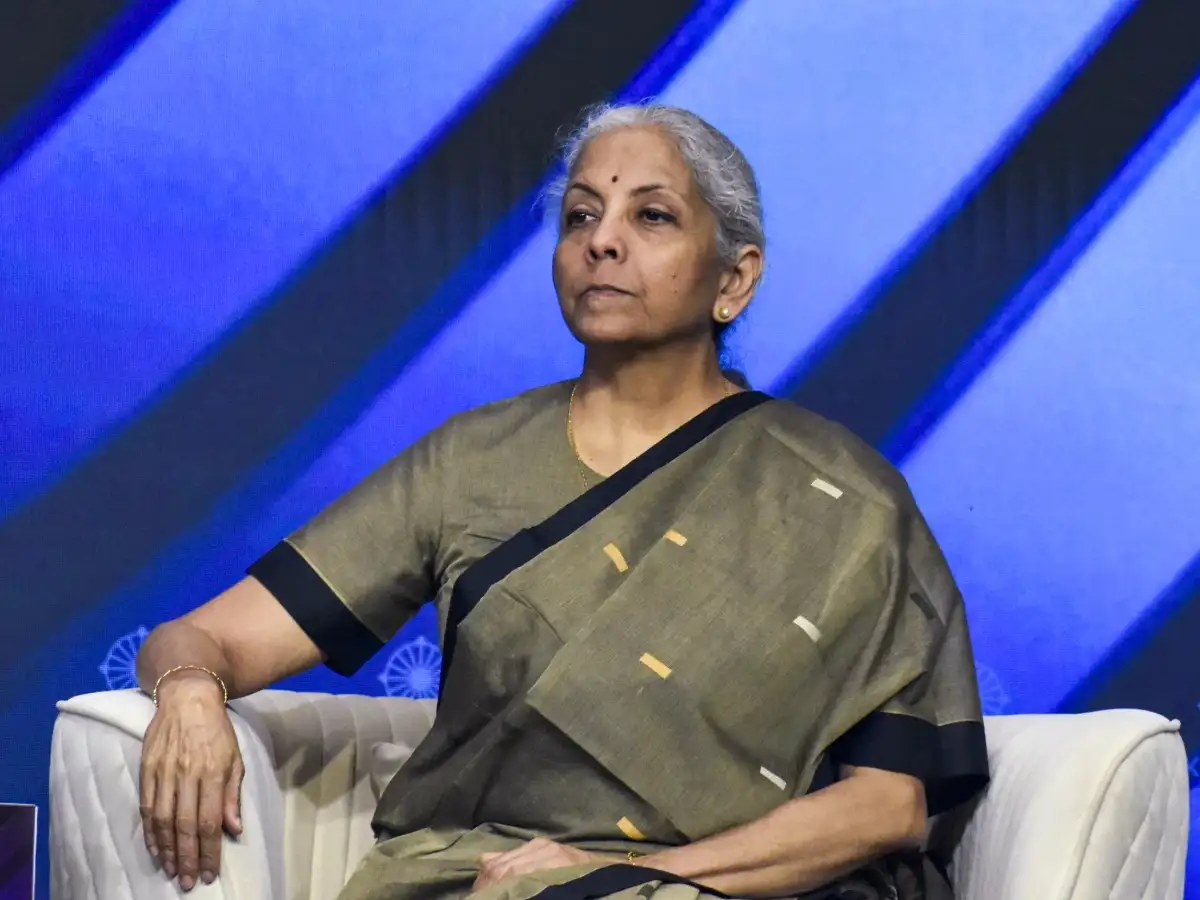
Finance Minister Nirmala Sitharaman on Saturday called for global economic relationships to remain open, predictable and rules-based, saying geopolitical differences should not be allowed to turn into barriers to trade and investment at a time when conflicts and disruptions to energy supplies are adding to uncertainty in the world economy.
Speaking at the Kautilya Economic Conclave in New Delhi, Sitharaman said countries should resolve differences through dialogue and negotiated agreements while ensuring greater certainty for businesses and respecting national development priorities.
"So the global economic relationship, we must remain open, predictable and rules-based. Nations should engage with one another through dialogue and negotiated agreements rather than allowing geopolitical differences to become barriers to trade and investment," Sitharaman said.
Her remarks come against the backdrop of disruptions to global trade and energy markets from conflicts involving Russia, Ukraine and Iran, as well as uncertainty around the Strait of Hormuz.
Sitharaman said the disruption around the key energy transit route had introduced risks extending beyond higher prices to the physical availability and movement of energy supplies.
"The conflicts involving Russia, Ukraine and Iran and the disruption around the Strait of Hormuz added a new kind of shock, one that threatened the physical movement of oil and gas as well as their prices," she said, adding, "A price shock can be cushioned with monetary and fiscal tools. But a quantity shock tests buffer stocks and the reach of delivery systems and therefore the capacity of the state itself."
Against this backdrop, the finance minister stressed the need for countries to diversify their economic partnerships, keep markets open and honour commitments to ensure that the movement of goods, services, energy and capital remains stable and predictable.
She said uncertainty had become a persistent feature of the global economy, requiring governments to continuously strengthen their ability to withstand shocks rather than treating resilience as a one-off exercise.
"We need to keep building resilience as we go along. It's not a one-time exercise," she said, adding that the coming years call for preparation and India approaches them from strength.
Sitharaman also highlighted the need for greater autonomy in strategic sectors as countries seek to reduce their exposure to concentrated global supply chains.
"Few priorities, of course, stand out. The first, national security requires structural autonomy in strategic inputs," Sitharaman said.
She pointed to the National Critical Minerals Mission, Rare Earth Corridors and India Semiconductor Mission 2.0 as measures aimed at reducing fragile single-source dependencies and building domestic capabilities in strategically important inputs.
The finance minister's remarks come at a time when the global economy is navigating trade restrictions, geopolitical conflicts and disruptions to energy supplies, which have increased uncertainty for international trade and investment.