Newark passengers faced average delays of up to two hours as the Federal Aviation Administration halted some flights into Newark, Philadelphia and Teterboro on Monday after communication problems hit the Philadelphia Terminal Radar Approach Control (TRACON) facility.
Newark saw the worst disruption. Some Newark‑bound flights ran about 150 minutes late, while average departure delays topped two hours.

Frequency Problems Trigger Three-Airport Ground Stops
The FAA said problems with several frequencies at Philadelphia TRACON prompted the restrictions. The facility manages aircraft approaching and departing airports across the region. The FAA imposed ground stops at Newark and Philadelphia. Teterboro traffic also faced disruption.
Newark's ground stop began at about 10:00am. The FAA extended it several times as the communication problems continued. The FAA issued Philadelphia's ground stop at 9:48am. By 12:53pm, Newark's restriction had been extended until at least 1:45pm.
FAA data showed Newark departure delays averaging 105 minutes by late morning. The delays continued to rise while the ground stop remained in place. By noon, departing flights faced average delays of two hours and four minutes, or 124 minutes. Arrivals averaged delays of 49 minutes.
Later flight‑tracking data put Newark's average delay at 112 minutes. Controllers also diverted several aircraft while traffic restrictions continued. More than 600 flights at Newark and Philadelphia faced delays during the disruption. The affected flights represented over 20% of scheduled traffic at the two airports.
Newark and Philadelphia Face the Heaviest Disruption
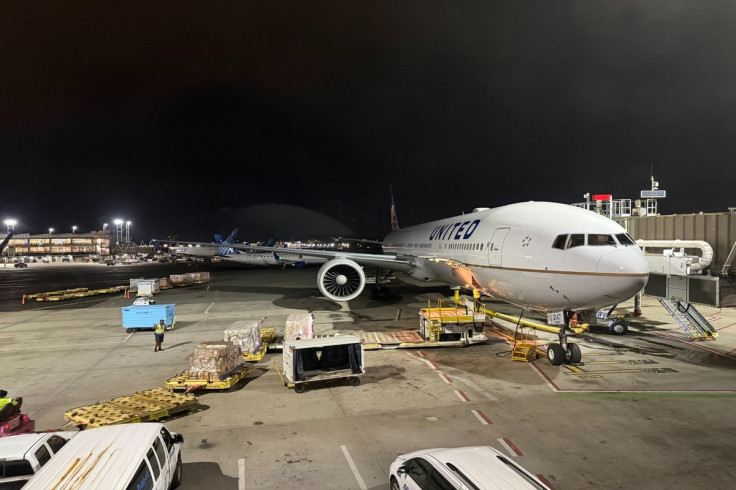
The problems hit two major airline hubs. Newark serves as a key United Airlines hub, while Philadelphia is a major hub for American Airlines. Philadelphia International recorded more than 240 delayed flights after the disruption began. Aircraft also waited to depart as the ground stop restricted movements.
Teterboro Airport in New Jersey became the third airport affected. It mainly serves private and corporate aviation, along with other general aviation traffic. Newark officials advised passengers to check directly with their airlines for flight updates. The FAA also directed travellers to its National Airspace System status service.
The FAA did not immediately identify the underlying cause of the equipment failure. The agency said the problem involved communication frequencies at Philadelphia TRACON. The outage therefore affected a wider regional system rather than Newark alone. Problems at the facility disrupted operations at all three airports.
Newark Operating Limits Run Through October 2027
The latest disruption follows technology problems that affected Newark's airspace in 2025. Philadelphia TRACON suffered telecommunications failures in May that year. Those failures disrupted communication between controllers and aircraft. They also affected radar displays used to manage Newark traffic.
The FAA later replaced telecommunications links between New York and Philadelphia TRACON. The agency installed new fibre‑optic connections to strengthen the system. It also added backup equipment. The FAA began work on a local Standard Terminal Automation Replacement System hub to reduce reliance on New York data feeds.
The FAA extended Newark's operating limits in a Federal Register notice published on 23 June 2026. The new period starts on 25 October 2026 and runs through 30 October 2027. Newark may schedule up to 72 operations per hour during that period. The order allows no more than 36 arrivals and 36 departures each hour.
The FAA cited continuing staffing constraints at Philadelphia TRACON Area C, which manages Newark traffic. The agency expects those pressures to continue into the Summer 2027 scheduling season.
Officials advised passengers using Newark, Philadelphia or Teterboro to keep checking their flight status. Airlines may continue adjusting schedules after ground stops end because aircraft and crews can remain out of position.