Get all your news in one place.
100's of premium titles.
One app.
Start reading
The Times of India
The Times of India
World
TOI World Desk

New Zealand is throwing away 1.22 million tonnes of food a year, and the first national tally shows farms and homes are the biggest leaks

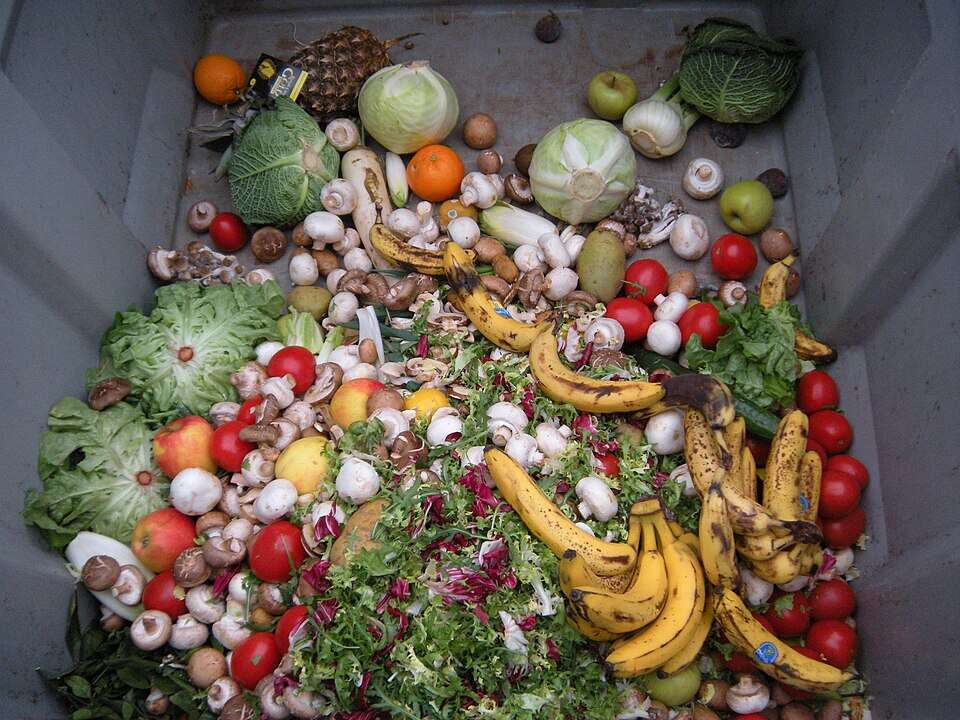
From crops left behind on farms to food forgotten in household fridges, New Zealand is losing or wasting more than a million tonnes of food every year. The country's first nationwide assessment has now revealed where the biggest losses occur, exposing major gaps at both the beginning and end of the food supply chain. According to the Ministry for the Environment , every year, about 1.22 million tonnes of food is lost or wasted, equivalent to roughly 237kg per person, with primary production and households accounting for the largest shares.

Get breaking news anytime, anywhere. Download the TOI app now!

New Zealand had previously lacked a comprehensive national estimate covering the entire food supply chain. The new baseline, developed by researchers at the University of Otago for the Ministry for the Environment, examines what happens to food from primary production and processing through to households, hospitality and institutions.

The biggest losses occur before food reaches the shops

According to the above research, primary production accounted for approximately 457,580 tonnes, or 37%, of the food lost or wasted each year. Households were responsible for another 366,096 tonnes, or 30%, while processing contributed 331,517 tonnes, or 27%. Together, these three stages account for nearly all of the measured food loss and waste in the country. The findings challenge the familiar image of food waste as mainly a household problem. Although kitchens and dining tables are responsible for a substantial share, the largest single source is the beginning of the supply chain.

There are several ways food can be wasted in agricultural production. Food may not meet market standards, there may be more produce available than needed, it may be damaged during harvesting or storage, or it may never be collected at all. In export-oriented agriculture, strict standards for appearance and quality can make some edible food unsuitable for sale. But it’s not just fruit and vegetables that are wasted; the baseline report says food waste occurs across different types of agriculture and varies by product. One of the major problems in assessing food waste is that not everything that doesn’t end up on people’s plates is food waste.

Households remain a major source of waste

Food waste in homes is the second-largest contributor of food waste. Baseline studies estimate that in New Zealand, household waste of food comes up to about 366,000 tonnes per year. This means the food was bought, taken home, and then wasted before it was eaten. Most of the waste is considered edible, which means all the efforts put into the production, transportation and storage of that food are wasted along with the food itself.

There are some reasons why food waste happens at home: food gets forgotten in refrigerators, portion sizes are big enough to be wasted, food leftovers are not consumed, and food gets thrown away because of confusion with date labels. At a national level, it is a major waste of the resources used to produce food. This issue also carries economic costs: when food is thrown away, households lose the money spent on buying it. From the point of view of a country, it is a huge waste of resources used in the process of food production.

A study published in Agriculture estimated that New Zealand's food waste embodied around 4.2 million tonnes of carbon dioxide equivalent, along with billions of cubic metres of water and large amounts of energy used to produce the food that was ultimately wasted. The study predates the new national baseline and used a different method, but it demonstrated why the environmental impact of food waste extends far beyond the rubbish bin.

The first national tally exposes a data problem too

The new estimate is not the last word on New Zealand's food waste. Researchers and government officials have stressed that important data gaps remain, particularly in parts of the food supply chain where reliable measurements are limited. The baseline was compiled using data from different years, ranging from 2015 to 2022, rather than a single 12-month period. That means the estimate should be viewed as a national baseline rather than a perfectly precise annual measurement.

Even so, the findings provide a clearer picture of where intervention could have the greatest impact. Reducing household waste alone would not solve the problem. Nor would focusing exclusively on farms. The biggest reductions are likely to require changes across the entire chain, from production and harvesting to processing, retail and consumption.

New Zealand produces far more food than its population consumes, yet large quantities are lost before they reach people or are discarded after purchase. The country therefore faces an efficiency problem as much as a scarcity problem. The new tally offers a starting point for addressing that problem. By identifying primary production, processing and households as the largest sources of loss and waste, it gives policymakers and the food industry a clearer target. The challenge now is to turn the measurement into a reduction.

Sign up to read this article
Read news from 100's of titles, curated specifically for you.
Already a member? Sign in here
Related Stories
Top stories on inkl right now
One subscription that gives you access to news from hundreds of sites
Already a member? Sign in here
Our Picks
Fourteen days free
Download the app
One app. One membership.
100+ trusted global sources.