Get all your news in one place.
100's of premium titles.
One app.
Start reading
AAP
AAP
Health
Annabelle Banfield

New cancer treatment gives lifeline to stranded women

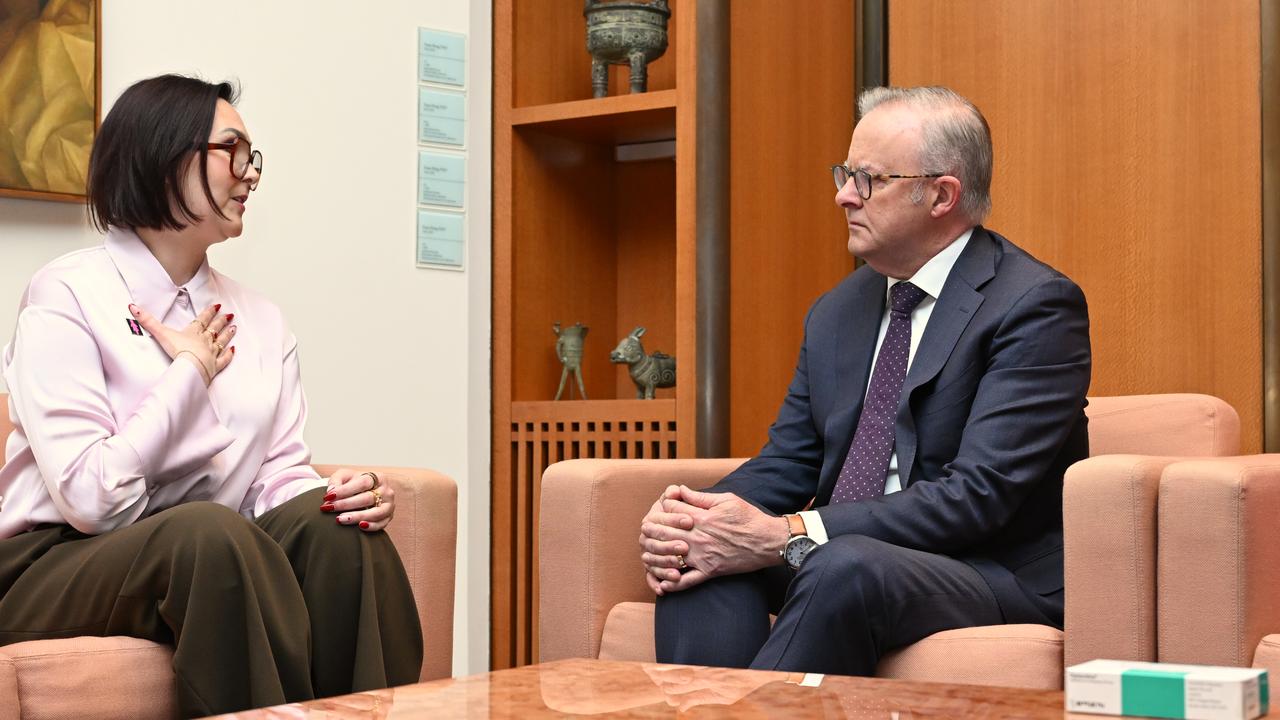
Prime Minister Anthony Albanese speaks with breast cancer patient Katie-Marie Thorpe in Canberra. (Lukas Coch/AAP PHOTOS)

When the drug keeping her breast cancer at bay was taken off the Pharmaceutical Benefits Scheme in July, Katie-Marie Thorpe made the heart-breaking decision to remove her ovaries.

For the 34-year-old, that choice meant invasive surgery, weeks of recovery, and permanently entering surgical menopause.

"It also meant having to confront, finally and irreversibly, that I would never carry a child," Ms Thorpe said.

She is one of thousands of young Australian women who need ovarian suppression to combat a range of women's health conditions including endometriosis, uterine fibrosis or cancer.

cancer
Australian Health Minister Mark Butler announces Triptorelin will be added to the PBS. (Lukas Coch/AAP PHOTOS)

Pharmaceutical manufacturer AstraZeneca's sudden announcement it would be removing the drug, known as Zoladex, from the PBS left the more than 13,500 women who used the drug last year alone in limbo.

"We simply woke up to a headline, read the news, and if you were like me, thought, 'hang on, that's my medication keeping me alive'," Ms Thorpe said.

"Women right around Australia were sitting in specialist rooms discussing permanent surgery options because there was no certainty about what ovarian suppressing treatment would be available to them in the months ahead."

On Thursday, the federal government announced it will add the alternative Ipsen-produced drug Triptorelin, sold under the name Diphereline, to the PBS, providing certainty for many patients.

The drug is an equivalent treatment to Zoladex that has been used internationally for many years.

Without the subsidy, patients could pay more than $1370 per script. Now the monthly supply will cost no more than $25.

Ms Thorpe was grateful that the arrival of Triptorelin means other women won't face the same agonising decision she faced.

"Nobody should be making irreversible decisions about their body because they are afraid a medicine might disappear," she said.

"A metastatic diagnosis guarantees a life full of hard uncertainties, but whether I can access the treatment that my oncologist prescribes should never be one of them."

PBS
Thousands of young Australian women need ovarian suppression to combat health conditions. (James Ross/AAP PHOTOS)

Astrazeneca's Zoladex removal is not the only recent example of a life-saving drug removed from the PBS by pharmaceutical companies to better their bottom line.

Health Minister Mark Butler said agility was needed to ensure the future viability of the subsidy scheme, as US administration policy changes have ''up-ended'' the global pharmaceutical industry.

"We're going to have to respond to these commercial decisions being taken by sponsors, not here in Australia, but frankly in the global headquarters in Europe or Japan or the US," Mr Butler told reporters in Canberra.

The government is still progressing with plans to implement recommendations from a 2024 health technology assessment report, which proposes major reforms to modernise how medicines are assessed and listed on the PBS.

Sign up to read this article
Read news from 100's of titles, curated specifically for you.
Already a member? Sign in here
Related Stories
Top stories on inkl right now
One subscription that gives you access to news from hundreds of sites
Already a member? Sign in here
Our Picks
Fourteen days free
Download the app
One app. One membership.
100+ trusted global sources.