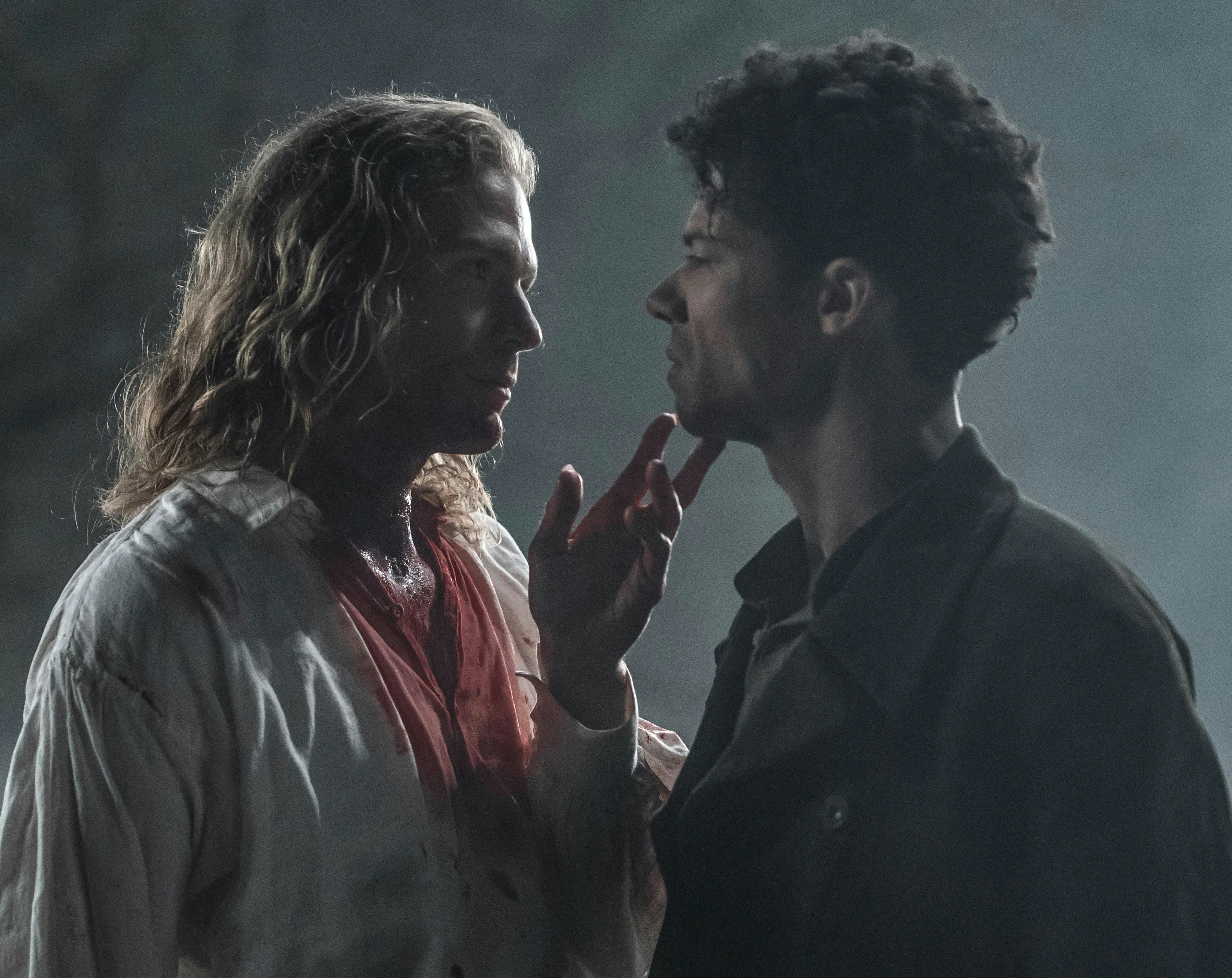
For fans of Anne Rice’s Vampire Chronicles, the prospect of a TV adaptation of her legendary series was the stuff of fantasy. Despite being a multi-million bestselling saga and one of the most influential vampire stories in modern culture, Hollywood seemed unsure of what to do with this sprawling, internal, and highly erotic historical paranormal drama. The 1994 film Interview with the Vampire was an excellent and faithful interpretation of the first book but the delayed follow-up Queen of the Damned was lazy and trend-chasing (and we all just overlook the boring and cringe-inducing Broadway musical by Elton John.) AMC’s long-awaited TV series, which premiered in 2022, did the unthinkable: it cracked the code, bringing to life Rice’s baroque sensuality with impeccable detail and a deep respect for the source material. But it also did something that might shock hardcore fans: it improved on the books in some fascinating ways.
Interview with the Vampire is a strange book full of truly unadaptable qualities. It’s a conversation between the vampire Louis de Point du Lac and the unnamed interviewer (later revealed to be Daniel Malloy) that goes into minute detail of decades of drama. Its hero is a slave-owner, the vampire Claudia is only five when she’s turned, and a lot of her scenes tangle with the discomfiting nature of being a sexual adult in the body of a child. The film, directed by Neil Jordan, largely avoided these issues, fixing the latter by aging the character to her pre-teens. But it also downplayed the story’s innate queerness, with the torrid romance between Louis and the infamous Lestat de Lioncourt being reduced to some longing gazes (in Queen of the Damned, Lestat is almost no-homo in his straightness.) There was room for improvement.