
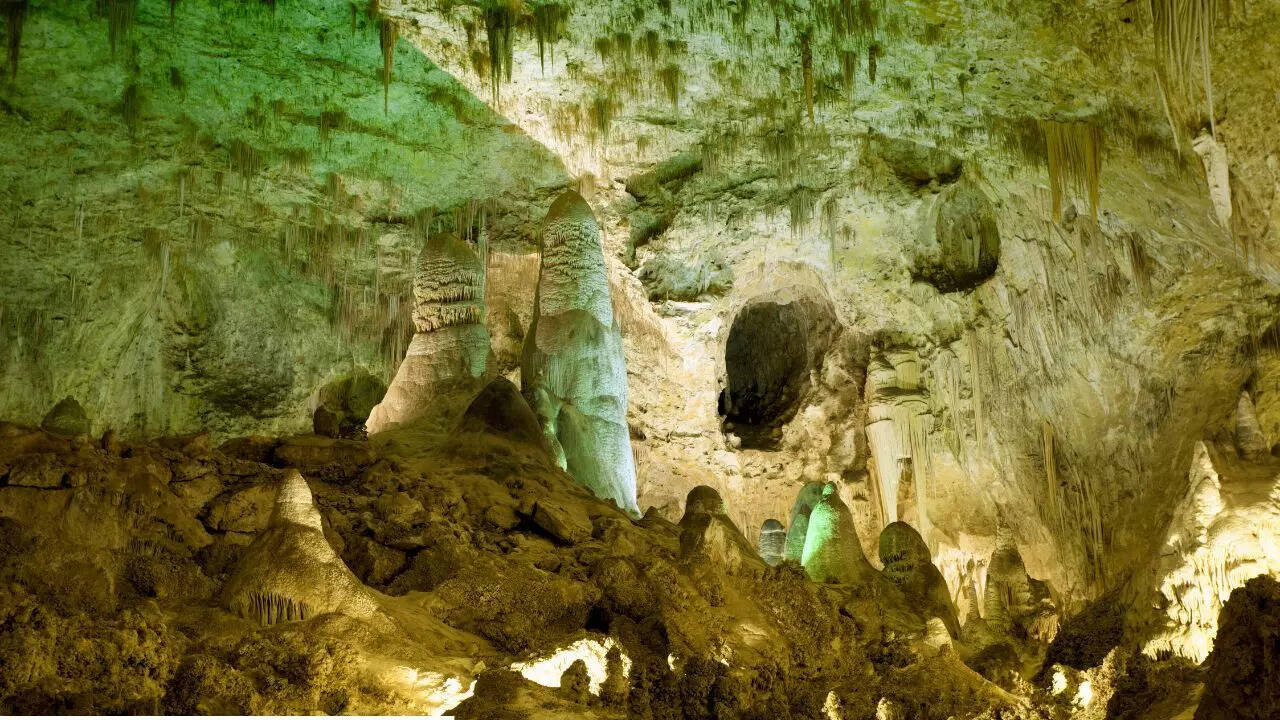
Microbial communities hidden deep inside the caves of New Mexico have fascinated scientists who study extreme environments and search for extraterrestrial life. In 2018, the team of scientists at Carlsbad Caverns came across strange green colonies on the limestone walls, which were very far away from the natural light. Later, these microbes were confirmed to be cyanobacteria, which have the ability to conduct photosynthesis using near-infrared light. According to the study, these bacteria have existed in their present form for the last 4 to 9 million years. This discovery indicates that life is able to exist even under conditions that had been regarded as too dark to support life.
The research, which was done by Hazel Barton of the University of Alabama and Lars Behrendt of Uppsala University, has a potential impact on biology and astrobiology. Besides that, it reveals how organisms modify themselves to survive with very low energy supplies in enclosed and low-light environments.












