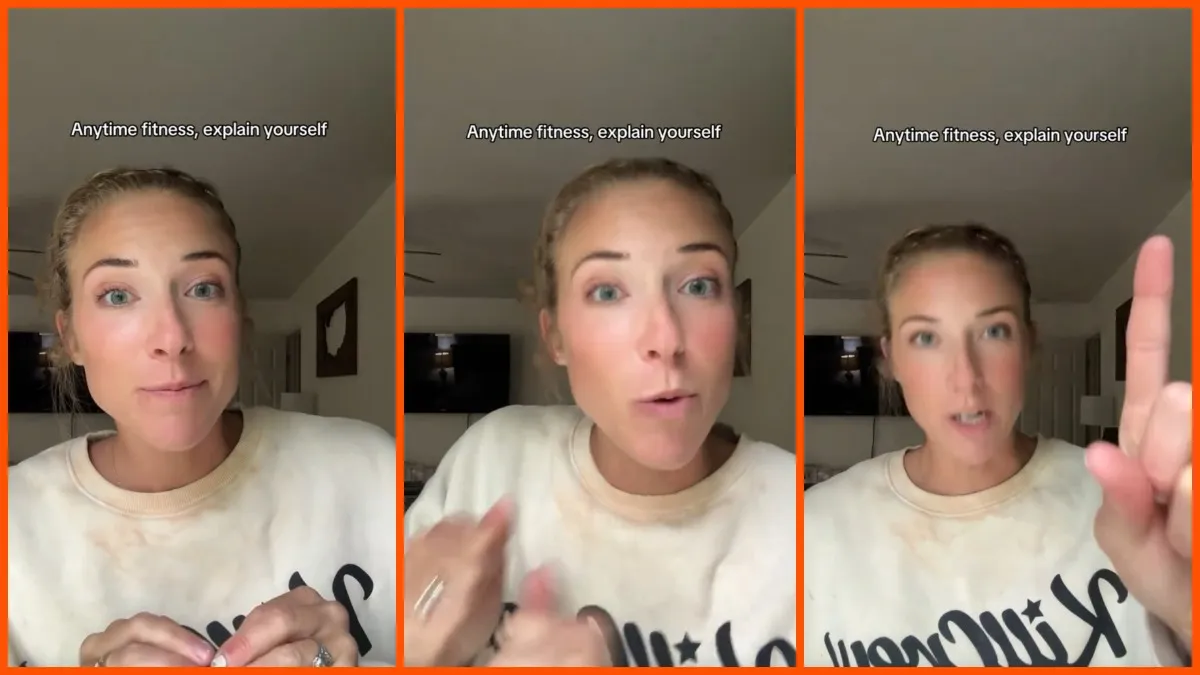
A Virginia-based TikToker and marathon runner named Aimee Elizabeth recently shared a headache-inducing experience with Anytime Fitness. Aimee, who posts under the handle aimee.elizabeth47, took to TikTok to vent about her struggle to cancel her membership. Her video then sparked comments that indicated a deep dissatisfaction with how gyms structure their business models.
According to her post, Aimee was training for a marathon. During the winter, she needed access to treadmills, when outdoor running was off the table. She approached the closest gym near her house, an Anytime Fitness location in Stafford. Aimee claimed that she told the staff, “Look, I just need to basically use your treadmills for the winter. What’s like the cheapest plan I can get? The most basic plan I can get? That I literally just need for the wintertime.”

Aimee said that the staff member she spoke with was friendly. He allegedly assured her that even though they didn’t have a specific short-term plan, a regular membership would work. Hindsight is 20/20, and she admitted, “So, hindsight, yes, I should have read the terms and conditions very intently, but I was hoping that this really nice guy would let me know how hard it is to cancel an Anytime Fitness membership.”
With the warmer weather, the membership wasn’t used
Aimee noted that come June, she hadn’t used the gym in months. Also, she told TikTok that she and her husband had plans to move soon. So, she decided it was time to cancel the membership to save some money. That’s when the process became horrible. She couldn’t find any information on cancellation online, so she visited the gym during what were supposed to be staffed hours. Aimee claimed that the office was empty.
She eventually saw the manager allegedly leaving despite it being 11:15 in the morning. So she sent him an email and was told to contact a customer service line. Customer service allegedly instructed her to send a written notice. Aimee claimed to follow the instruction, but she never got a response. With July came a new credit card charge.
@aimee.elizabeth47 @Anytime Fitness yall need a better business model, because wth is up with your cancellation policy. Absolutely ridiculous. #anytimefitnessscam #gymmembership #worstgymever
♬ original sound – Aimee Elizabeth
When she followed up, the company purportedly told her she could only cancel if she moved more than 25 miles away from any Anytime Fitness location or if she had a medical condition preventing her from working out. Aimee was stunned. She responded to them, saying, “I’m sorry, excuse me? Respond, no, I do not use your facility. I do not wish to continue using your facility. I will not be paying for a membership for which I do not use your facility. Cancel it”
The company’s response, she claims, was, “Well, your signature, like in all caps, your signature is on said contract. And they like attached a link to the contract.” Aimee’s reaction to the situation was blunt: “Okay, look, I get it. We’re running a business. We’re trying to make money, but is this not slimy, sleazy, like bad way to run a business?” In another case, a woman found her Anytime Fitness membership extended when she tried to cancel it, and was told to pay for it.
The comments section on her video flooded with support and similar horror stories. One user commiserated, “Oh I literally discontinued my credit card to get them to stop charging me.”
Another user shared a particularly painful experience: “I’m in Minnesota and very similar experience. I paid for 4.25 years of a membership without knowing because the gym nearby me said they “paused” my membership and the fine print said it wasn’t a payment pause.” While Aimee said she was considering forging papers to cancel her membership, one LA man considered faking his death.
This is actually an issue that the government has been trying to tackle for years. According to the law firm Jones Day, the Federal Trade Commission has been working hard to fight these kinds of deceptive subscription traps. While a 2024 rule known as the Click-to-Cancel Rule was vacated by a court in 2025 on procedural grounds, the FTC hasn’t backed down.
They continue to use Section 5 of the FTC Act and the Restore Online Shoppers’ Confidence Act to go after companies that make it nearly impossible to cancel services. The FTC’s core mission here is to ensure “clear and conspicuous disclosure,” “express informed consent,” and “simple cancellation,” meaning that getting out of a service should be as easy as signing up for it.
Jones Day notes that the FTC is actively working to revive these rules. They have reportedly already secured massive settlements against companies like Amazon and Care.com for making cancellation processes intentionally difficult. Additionally, about 30 states have passed their own laws to protect consumers from these automatic-renewal traps.