
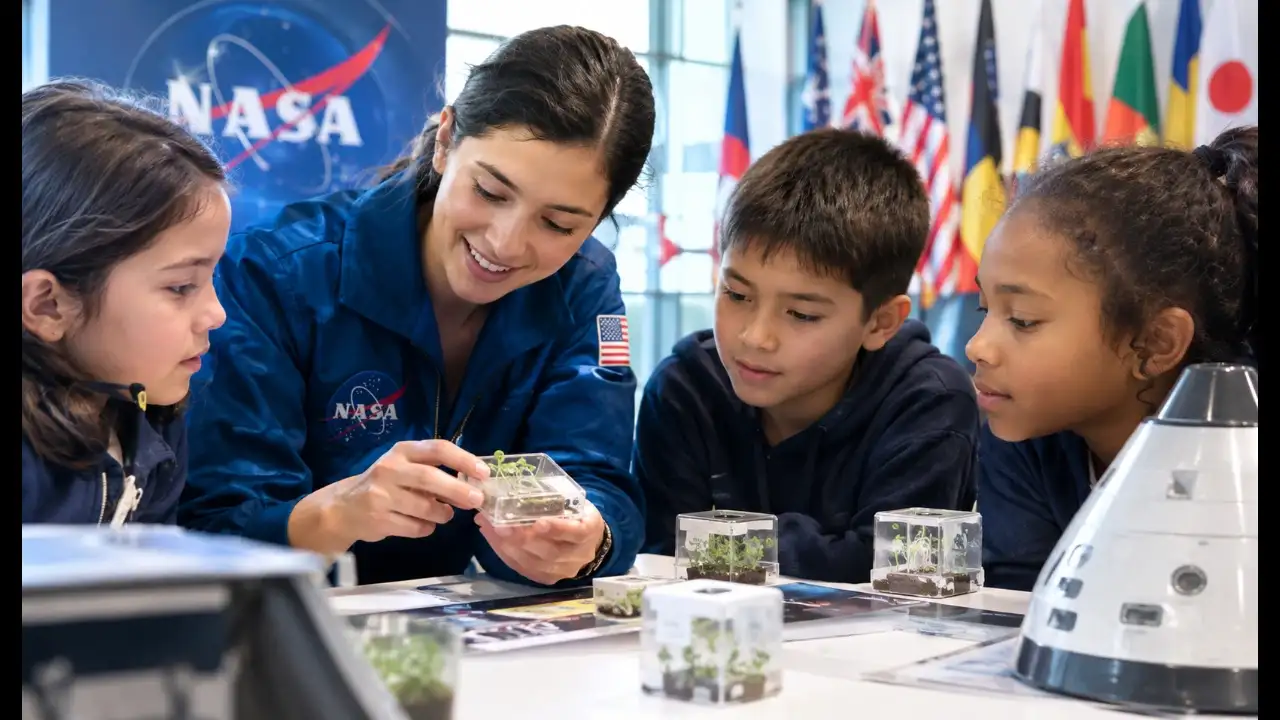
By the end of March 1990, about 132,000 experiment kits had gone out to 64,000 teachers in roughly 40,000 classrooms. They reached 3.3 million students, from kindergarten through university, in every U.S. state and 30 foreign countries. Each kit held tomato seeds from two sources: some that had circled Earth on a NASA satellite for almost six years, and some that had spent the same stretch in a climate-controlled warehouse. Students planted both, measured what came up, and mailed their results to NASA as part of SEEDS, short for Space Exposed Experiment Developed for Students.
NASA started the project out of concern that fewer young people were choosing careers in science and engineering. It believed that attitudes toward those subjects form well before secondary school. The agency wanted a project big enough to involve a great many students and hands-on enough to let them work with material that had actually flown in space. The outcome was also genuinely open, since the seeds might have died, mutated or come home untouched.













