
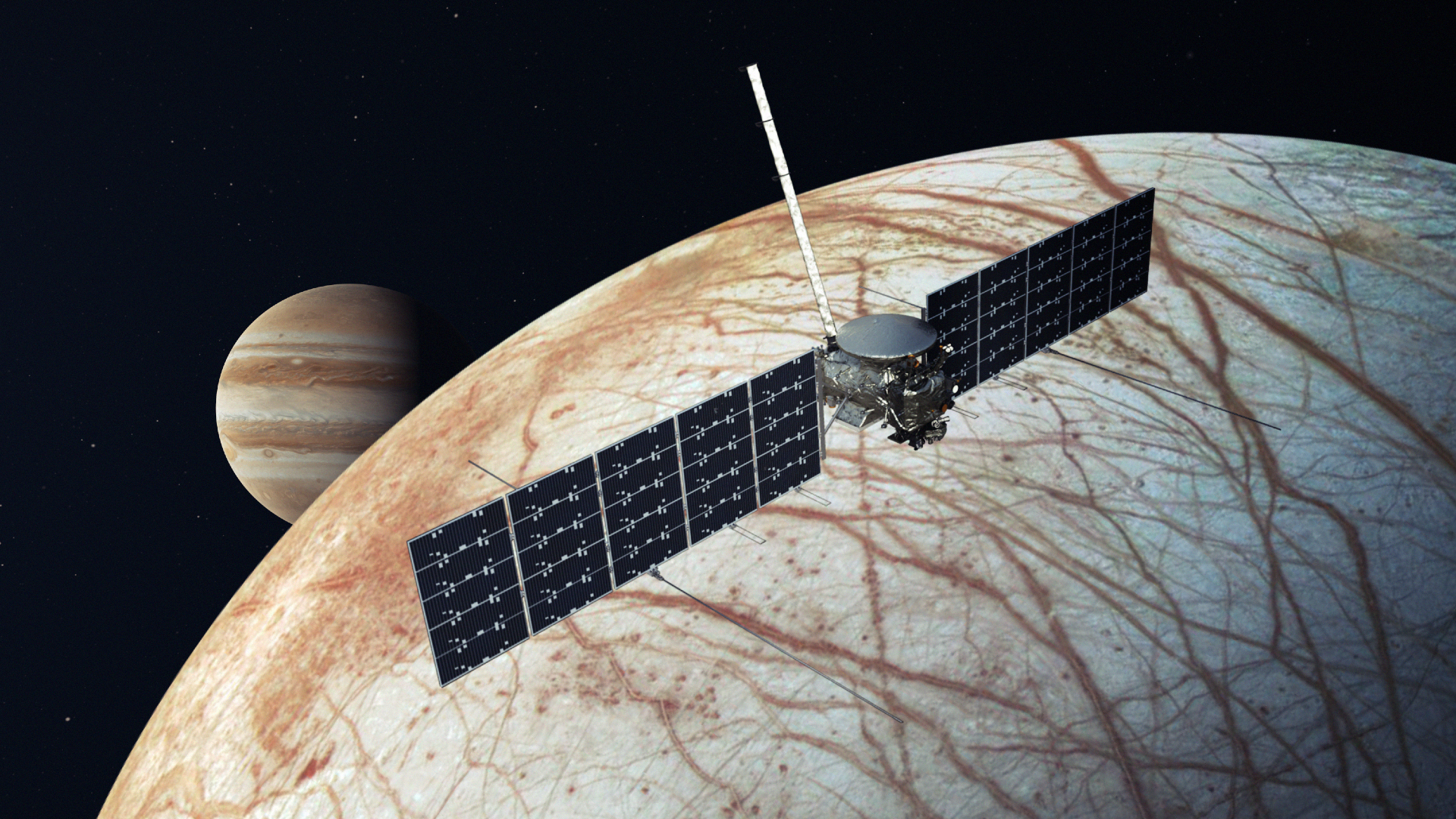
Three weeks from now, NASA's Europa Clipper probe will lift off and embark on a long-awaited mission to study Jupiter's icy moon Europa, which scientists think is one of the most promising places to look for life beyond Earth. The launch appears to still be on track for Oct. 10, as per the agency’s original schedule, which comes as a relief to scientists after the team discovered a few possibly defective transistors just months prior that threatened to imperil the mission.
Any signs of life on Europa would likely be hidden in the vast, sunless ocean that scientists suspect sloshes beneath the moon's icy crust, which is roughly 10 miles (16 kilometers) thick. The $5-billion Europa Clipper will not be searching for life itself, however. Rather, scientists will seek to determine whether Europa has the necessary conditions for life (as we know it, at least).