
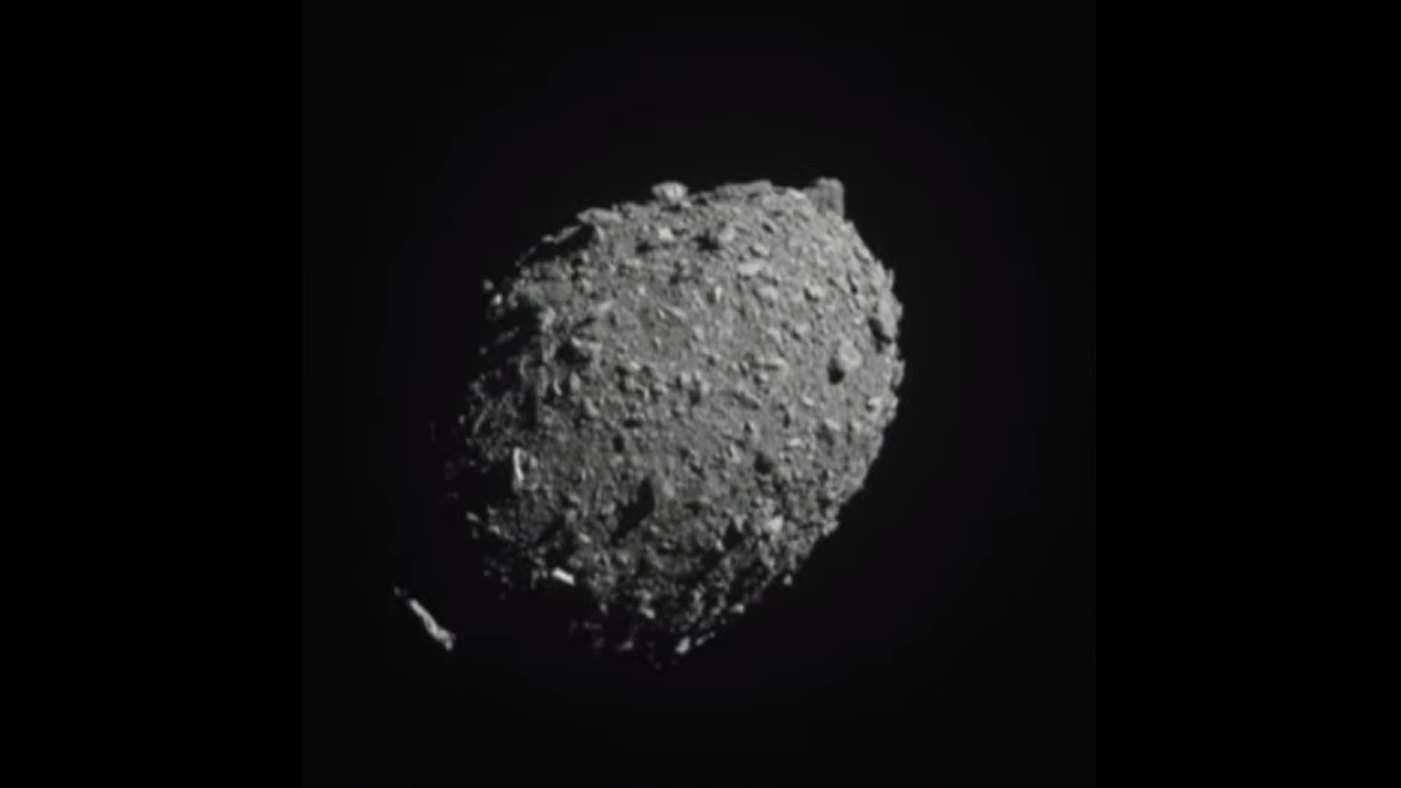
Rogue asteroids, to put it simply, pose a threat to Earth. Though there hasn't been a cataclysmic event in about 65 million years, that's not to say there haven't been nail-biting moments during space rock flybys — in 2013, for instance, the Chelyabinsk asteroid slammed into Earth's atmosphere "blazing like a second sun" and sending shockwaves through the surrounding area.
Space agencies around the world understandably want to be prepared. To this end, NASA launched the Double Asteroid Redirection Test (DART) spacecraft in 2022, its first mission dedicated to demonstrating asteroid deflection through kinetic impact. DART successfully collided with a near-Earth asteroid called Dimorphos, which is part of a binary system as it orbits a larger asteroid named Didymos. Lots of incredible information has been gleaned from this impact already, and we just got a little more. According to a paper published this year about the event, DART created a large crater in Dimorphos, in fact reshaping the rock so dramatically it derailed from its original progression.