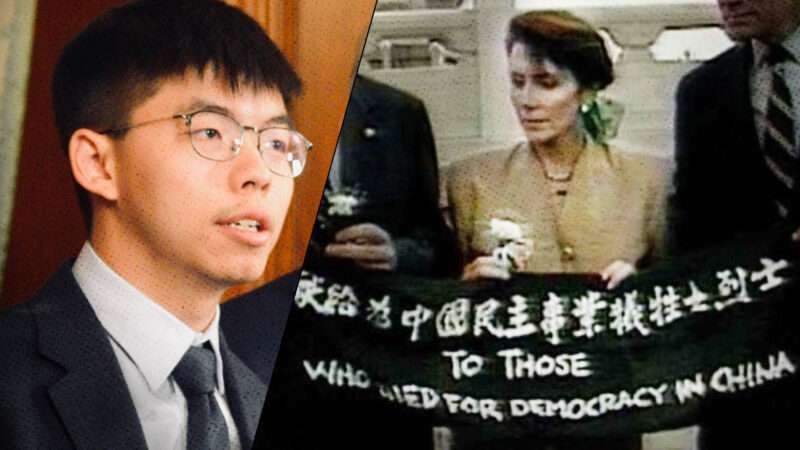
In one of the final speeches of her congressional career, Rep. Nancy Pelosi (D–Calif.) rose last month "to call attention to what is happening in Hong Kong." She was condemning the Chinese government for its prosecution of protester Joshua Wong. Yet it was exactly that attention from Congress that had helped doom Wong in the first place. Like Hmong militias and Kurdish resistance fighters in years past, leaders in the Hong Kong protest movement had a one-sided partnership with U.S. politicians that would not (and could not) be reciprocated, and that ultimately put a target on their backs.
At the center of this history, culminating with Wong's prosecution, is Pelosi herself. Pelosi has planted herself at the center of every major China debate since the end of the Cold War and, early on in her career, took risks to defend her hawkish positions toward Beijing. But brazenness does not necessarily mean bravery. Pelosi squandered political capital over the decades on inconsequential adventures, achieving no serious victories, while the price paid by people caught between Beijing and Washington may prove far more exorbitant than anything Pelosi risked.