
I’ve owned a few houseplants over the years. Even before they became fashionable home accessories, I was always spotting a new plant at my local nursery. And I know from experience that some houseplants are far easier to look after than others, while others can leave you wondering why you’ve only looked at it and it’s wilted.
If you’re new to looking after houseplants or just want an easy life, there are numerous low-maintenance houseplants that are easy to care for. You may have heard houseplant experts suggest spider plants, snakes plant and succulents among the top list of houseplants that you can’t destroy.

However, throughout my houseplant journey, there’s been one that has stood out among all others. I think it’s a striking plant, which drew me to it initially, but it’s also been the easiest plant that I’ve ever looked after. With minimal care, nothing seems to stop it from thriving.
Chinese money plant

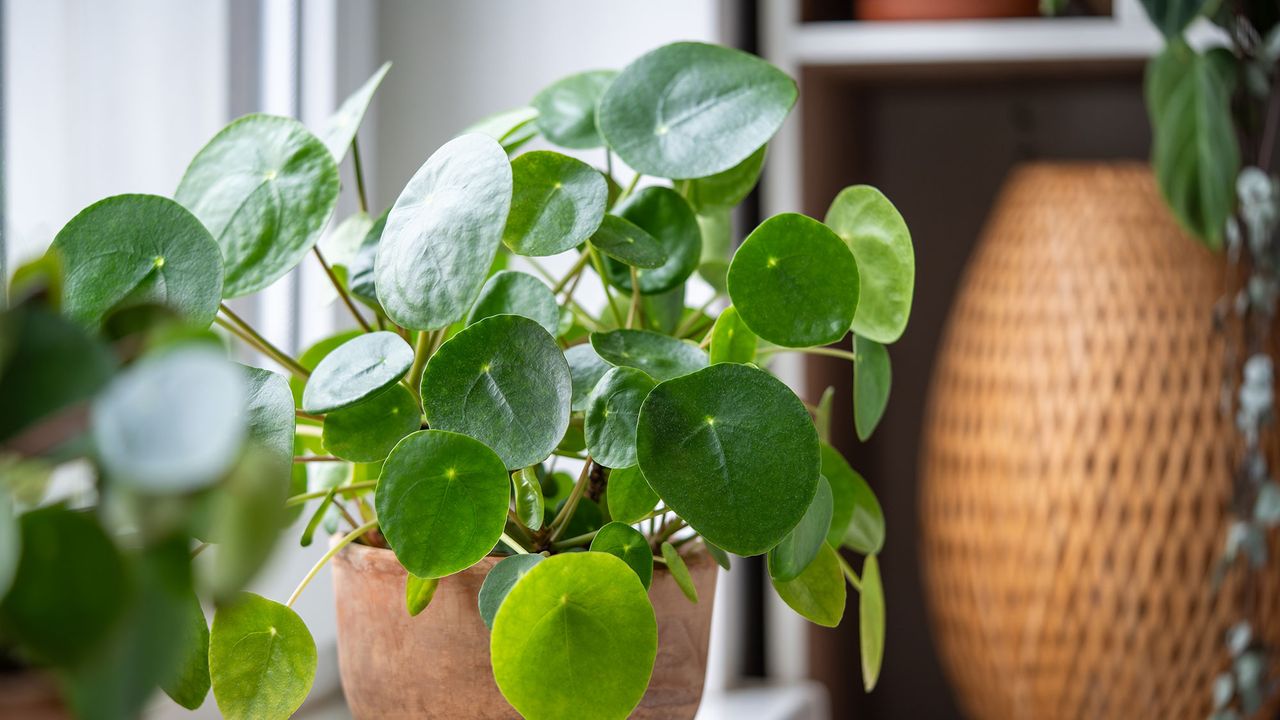
My favorite houseplant of all — for its aesthetics and ease of care — is the Chinese money plant. This plant has coin-shaped leaves and is also known as Pilea Peperomioides, the UFO plant and the pancake plant.
When I look at my Chinese money plants, they instantly boost my mood, and I enjoy the vibrant green of their leaves.
But why do I always recommend it as the easiest houseplant to care for? Apart from placing it in the right position and watering it once a week, I pretty much leave it alone to do its thing. And without much intervention it’s a prolific plant that produces a number of baby pups that can be repotted and given as gifts. And because it's easy to propagate, it’s also known as the friendship plant, because each new plant can be passed on.
Top tips when growing a Chinese money plant

Think drainage
I recommend placing your plant in a pot with drainage holes to allow excess water to drain out. This will ensure the roots don't become soaked, and the plant is not overwatered.
Janae Hardy at A Beautiful Mess, prefers to use a terracotta pot, rather than a plastic version. I’ve always found a plastic pot just fine, but she says, “The terracotta is excellent because it is natural clay and will let the soil breathe a bit (unlike a plastic pot).
And if you have overwatered your plant, a terracotta pot will dry out a bit faster.
How much water does it need?

A Chinese money plant likes a moderate amount of water, but not too much. And it’s best to let it dry out between waterings. To check whether it needs a top-up, place a finger about 1 inch deep into the soil; if it feels dry, it’s time to water.
I water my Chinese money plants once a week, and I rarely need to water them again.
If you notice the leaves are falling off, you’re probably overwatering. You might also spot yellowing leaves, soft, mushy stems and mold on the soil’s surface.
Get the light right
I’ve placed Chinese money plants in various positions within my home, but I’ve discovered they don’t like direct sunlight. They prefer indirect sunlight, but don’t like being in the dark.
Currently, I’ve got a couple placed on a windowsill, and now that the season is changing and there’s more sunlight, they need to be moved to a slightly shadier spot. If I leave them in direct sunlight, the leaves will start to burn.
It also helps to give your Chinese money plant a twirl every few days to encourage even growth.
If your plant is deprived of light you might notice elongated steam, smaller leaves and slower growth, and Healthy Houseplants says it may become “leggy” as it stretches towards the light.
Does it need feeding?
During the growing season — spring and summer — your plant will appreciate a monthly feed with a houseplant fertilizer, to encourage healthy leaf production and offsets.
Healthy Houseplants suggests a 10-10-10 NPK (Nitrogen-Phosphorous-Potassium) balanced fertilizer, and recommends diluting it to half the recommended strength to avoid over-fertilization.
You can spot if your plant needs a boost if you notice pale or yellowing leaves, slow growth of smaller new leaves.
How to create new plants

If you’ve never propagated a houseplant before, you can’t go wrong with propagating a Chinese money plant. And now is a good time to get started, as between spring and summer is the ideal time. The easiest way to propagate this plant is to remove a pup (a small section of leaves growing up from the plant’s base) and make a clean cut through the rhizome, then place it in a new pot with potting mix.

If you’ve read all of the above, you might be starting to think that growing a Chinese money plant sounds quite tricky, but I can assure you, it really isn’t. With correct placement, a regular light water, and a monthly feed during the spring and summer, you should be able to enjoy the full glory of this beautiful houseplant.