The Briefing:
- Chicago Public Schools shed 11,537 students in 2026-27, dropping to 304,687 enrolled — the lowest total in more than two decades — with the sharpest losses concentrated in predominantly Latino neighborhoods on the city's South and West Sides.
- Some of Chicago's most established immigrant community hubs — Pilsen, Little Village, Avondale, Brighton Park, Gage Park, and McKinley Park — have recorded enrollment collapses as steep as 53% over the past decade, a rate now accelerating under the chilling effect of federal immigration enforcement.
- Houston ISD has lost 21,000 students since its state takeover began, translating to $190 million in reduced state funding — and its experience offers a stark preview of where Chicago's trajectory leads if families continue keeping children out of school.
Fear travels faster than any school bus. Across Chicago's Latino neighborhoods, it is emptying classrooms at a rate that district officials are struggling to reverse — and the consequences extend well beyond attendance rosters. Under enrollment-based funding formulas, every desk left vacant translates directly into dollars stripped from the schools that serve the city's most economically precarious families.
Chicago Public Schools announced Thursday that its official 20th-day count for 2026-27 stands at 304,687 students — a loss of 11,537 from the same point last year, and the lowest enrollment figure the district has recorded in more than twenty years.
A Two-Decade Slide Reaches a New Low
The district's enrollment trajectory has been downward for two decades, falling from a peak of nearly 439,000 students in the 2002-2003 school year. A brief interruption came in 2023 and 2024, when thousands of newly arrived migrant families enrolled their children across the South and West Sides, temporarily stabilizing — even slightly reversing — the long decline. That window has closed. The enrollment freefall has resumed, and this year's drop is one of the steepest single-year losses in more than a decade.
CPS officials point to several reinforcing pressures: falling birth rates locally, nationally, and globally; outmigration of working-class families to the outer suburbs; and a contraction in immigrant enrollment driven by the Trump administration's sustained deportation campaign. Chicago's birth count declined by 37% between 2010 and 2023, a structural drag that has steadily compressed the district's incoming kindergarten cohort year after year.
Latino Neighborhoods Are Bearing the Brunt
Not all of Chicago is losing students equally. The heaviest damage is falling on neighborhoods where immigrant families have long formed the bedrock of school enrollment. According to CPS data, a cluster of predominantly Latino communities — Pilsen, Little Village, Avondale, Brighton Park, Gage Park, and McKinley Park — have recorded enrollment losses as dramatic as 53% over the past decade. The pace appears to be accelerating.
At Thomas Kelly College Preparatory High School in Brighton Park — a school that sits at the center of Chicago's Mexican-American Southwest Side — enrollment fell by 229 students this year alone, bringing the school to 1,273 students, according to preliminary district data reported by the Chicago Sun-Times.
Annise Lewis, CPS's deputy chief education officer, identified rapid gentrification as a core structural force: the conversion of multigenerational family homes into single-family properties has steadily eliminated affordable housing options in these neighborhoods, pushing working-class families further from the city. "There has been an exodus of working class families who are moving to the outer suburbs for single family homes and perceived safety," Lewis told the Board of Education Thursday. Compounding that pressure is a reversal in the immigration patterns that temporarily sustained enrollment during 2023-24. "Fewer people are coming into the U.S. and more are leaving," Lewis said.
Despite the overall contraction, Latino students still represent approximately 46% of the total CPS student body — meaning continued attrition from that community disproportionately erodes the district's enrollment base and, by extension, its funding.
The Fear Factor: U.S.-Born Children Staying Home
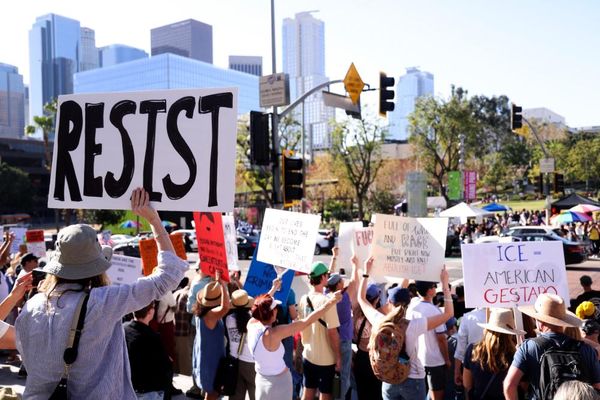
The structural forces of gentrification and demographic change are being amplified by something harder to quantify: fear. Community liaisons working in immigrant neighborhoods across Chicago report that even families with U.S.-born children have been keeping them out of school, convinced that immigration enforcement activity near campuses puts them at risk. Spikes in absenteeism among English language learner students were recorded during federal enforcement operations last fall, and some families considered leaving Chicago altogether to distance themselves from the threat.
The result is a district now carrying more than 135,000 empty seats — buildings constructed for a city whose school-age population has fundamentally contracted. That physical excess is now a political pressure point: a moratorium on school closures expires at the end of the 2026-27 school year, and three of the four candidates for the school board presidency have indicated openness to revisiting closures.
Houston's Warning: What Happens When This Goes Unchecked
Chicago is not navigating this crisis alone. Houston ISD — another majority-Latino urban district — has been living a version of this future for longer, and the numbers are severe. According to a Texas Tribune investigation published September 21, HISD has lost 21,000 students since the start of its state takeover in 2023 — a pace faster than comparable urban districts — amounting to $190 million in lost state funding calculated over the first three years of state control.
The immigrant community has carried a disproportionate share of those departures. HISD's immigrant student population, which exceeded 17,500 in 2024-25, shrank by nearly 4,000 students — a 22% drop — in 2025-26 alone, with Hispanic enrollment district-wide falling 6% in the same period. As Eileen Hairel, a Houston parent and community advisory council member, put it bluntly to Texas Tribune reporters: "enrollment is money."
The human cost of that math materialized in one of Houston's most emblematic institutions. Las Americas Newcomer School, a Gulfton-area campus dedicated to recent immigrants and refugees with limited English-language proficiency, had already seen enrollment plunge from 213 students in 2023-24 to 111 the following year. Then came the final collapse: by fall 2025, only 21 students remained, prompting the district to absorb the student body into adjacent Jane Long Academy. The school's buildings were later demolished. The district's communications director attributed the collapse, at least in part, to "what's happening in our country on a federal level."
The Funding Spiral and What Comes Next
Both cities operate under enrollment-based school finance systems in which per-pupil allocations flow directly to individual campuses. When a school loses 200 students in a single year, it does not merely operate with fewer children — it loses the funding that pays for teachers, counselors, bilingual support staff, and the wraparound services that immigrant families most depend on. HISD has already directed campuses to cut staff and slash spending just a month into the 2026-27 school year, a direct consequence of enrollment losses that outpaced even revised projections.
The parallel trajectories of Chicago and Houston — two of the nation's largest and most Latino school systems — point toward a structural crisis that cannot be solved by improvement plans or motivational messaging. CPS CEO and Superintendent Macquline King, addressing the Board of Education on Thursday, acknowledged the enrollment data while pivoting to what the district can control: "Here's the bottom line: What we control is the quality of education and experience that we provide our students. That's what our families care about, and that has been my focus as superintendent/CEO." For families who fear leaving home more than missing school, that quality is not yet the question being asked.