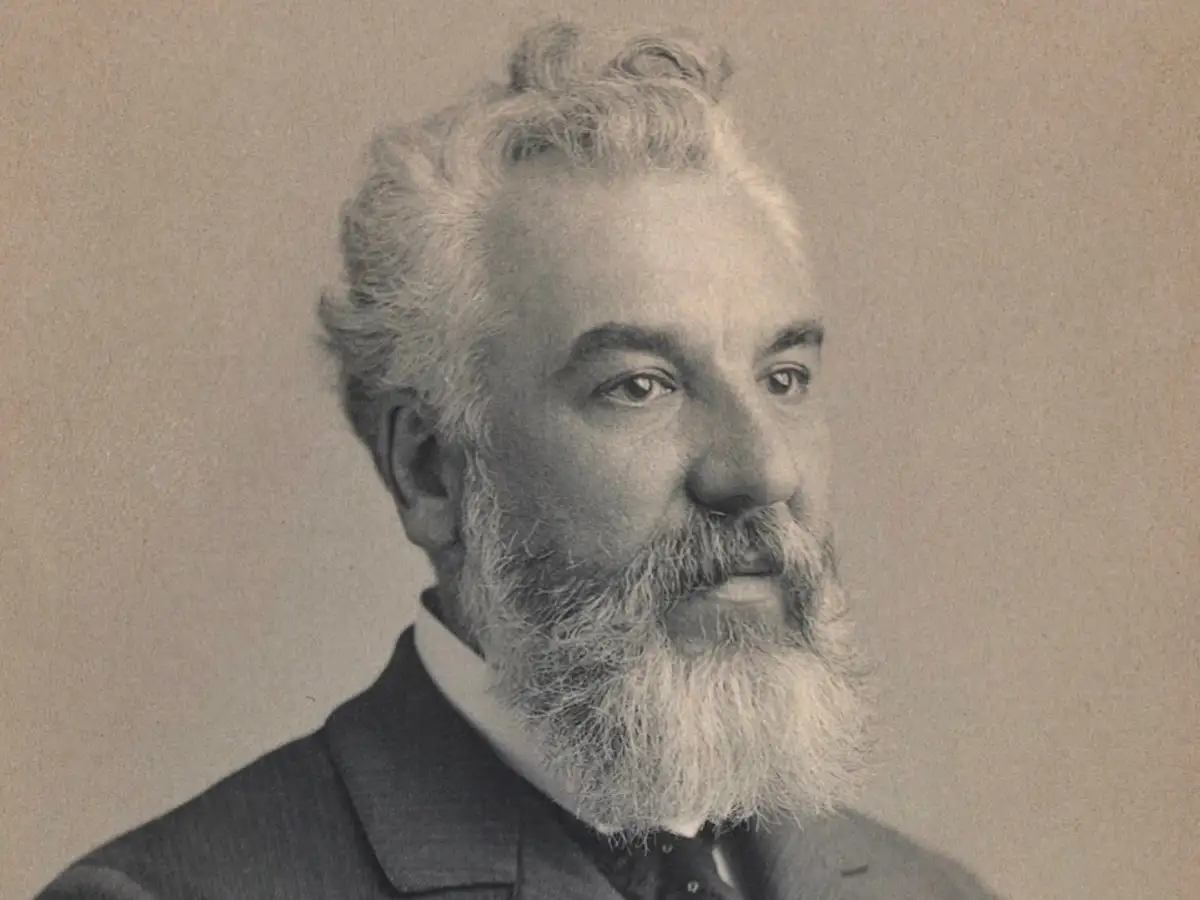
Quote of the Day: Monday marks a universal reset, a chance to turn the page on yesterday's setbacks and step into a fresh week of possibilities. To ground this weekly fresh start, the Monday Quote of the Day by Alexander Graham Bell serves as a timeless compass for anyone navigating change: "When one door closes, another opens; but we often look so long and so regretfully upon the closed door that we do not see the one which has opened for us."

This profound insight cuts straight to the heart of human nature, reminding us that while endings are an inevitable part of life, they are also the absolute prerequisite for new beginnings.
Monday Quote of the Day
"When one door closes, another opens; but we often look so long and so regretfully upon the closed door that we do not see the one which has opened for us."
Meaning of the Quote
At its core, Bell’s observation addresses the psychological trap of hyper-focusing on loss. The "closed door" represents any ending—a failed project, a missed promotion, a broken relationship, or a sudden change in circumstances. The "open door" symbolizes the latent opportunities, fresh perspectives, and alternative paths that naturally emerge in the wake of an ending.
When we experience a setback, human nature pulls our gaze backward. Bell is pointing out a critical truth about our limited emotional bandwidth:
Fixed Attention: We have a finite amount of focus; keeping it locked on past regrets leaves zero room to scan our present surroundings.
The Illusion of Permanence : A closed door feels incredibly final, making it easy to forget that the wall surrounding it contains other entryways.
Active Choice : Seeing a new opportunity isn't just about luck; it requires a conscious decision to look away from what we lost.
Why It Is Relevant Today
In our modern, fast-paced world, this quote is more vital than ever. The job market, technology, and global landscapes change at a dizzying speed, meaning we encounter closed doors much more frequently than generations past. Responding to disruption with agility has become a necessary survival skill.
Staring regretfully at the past is a luxury today's fast-moving environment simply doesn't allow. Bell's wisdom remains incredibly relevant for several modern reasons:
Rapid Career Shifts: Industries evolve overnight, rendering certain roles obsolete while simultaneously creating entirely new career paths.
The Comparison Trap: Social media constantly bombards us with other people's "open doors," compounding our regret when our own paths hit a dead end.
Mental Resilience: Developing the psychological flexibility to quickly pivot after a disappointment is the ultimate defense against burnout and chronic stress.
How to Use It in Daily Life
Applying this philosophy to your daily routine requires moving from passive agreement to active practice. It is about building a mental reflex that automatically kicks in whenever you face a rejection or a sudden pivot.
You can begin integrating this mindset into your life by focusing on a few core habits:
Set a Disappointment Deadline: Allow yourself a specific, structured window to grieve a loss or vent about a setback, but commit to shifting your focus once that time is up.
Audit Your Daily Focus: Notice where your thoughts drift during idle moments. If you catch yourself replaying a past failure, intentionally redirect your mind to a current project or goal.
Practice "Opportunity Scanning": Force yourself to identify three small, positive micro-opportunities that resulted from a recent cancellation or change in plans.
Reframe Your Language: Replace phrases like "I lost my chance" with "That path is no longer viable, so it's time to explore the next option."
Innovation is Born from Endings
As an inventor, Alexander Graham Bell understood the mechanics of failure and adaptation better than most. His journey to creating the telephone was paved with countless dead ends, failed experiments, and literal closed doors. Had he stopped to mourn every hypothesis that proved incorrect, the world might look vastly different today.
History shows us that the greatest leaps in human innovation and personal growth almost always occur directly after a massive disruption. When your primary plan fails, you are forced to think creatively, stretch your capabilities, and explore avenues you never would have considered under comfortable circumstances. In this light, a closed door is not a punishment or a sign of personal failure. Instead, it is a course correction, nudging you away from a path that has served its purpose and pushing you toward a space where you can truly grow.
Frequently Asked Questions
What is the main point of Bell's quote?
It warns that obsessing over past failures and losses blinds us to the new opportunities currently available right in front of us.
Why is it so hard to look away from a "closed door"?
Human brains are wired to fear uncertainty. We naturally fixate on familiar past comfort zones rather than facing the unknown of a new path.
How can I quickly spot an "open door"?
Acknowledge the disappointment, set a strict limit on your grieving time, and actively ask yourself what new options this change has unexpectedly created.
Can a closed door be beneficial?
Yes. Major life disruptions often act as essential catalysts, forcing us out of stagnant routines and pushing us toward much more fulfilling journeys.