
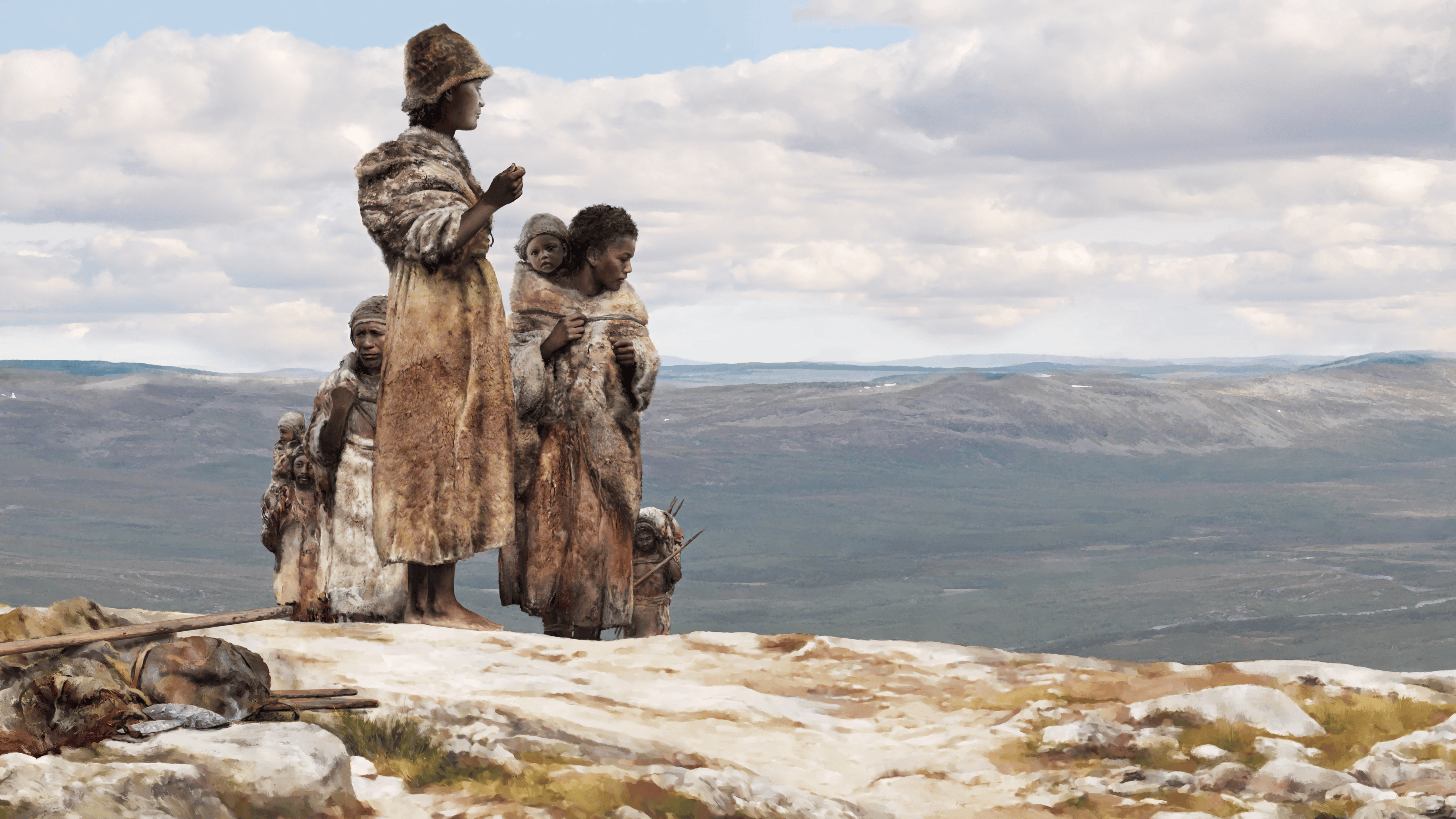
Neanderthals and modern humans interbred for several millennia, shortly after the ancestors of all non-Africans moved into Eurasia, according to two new studies. Although these Homo sapiens populations got an evolutionary advantage from the new Neanderthal genes, not everyone who mingled with Neanderthals made it, and some modern human lineages went extinct.
"The human story — human history — is not just a story of success," Johannes Krause, a paleogeneticist at the Max Planck Institute for Evolutionary Anthropology in Leipzig, Germany, said at a news conference Wednesday (Dec. 11). Different human groups in Europe "actually went extinct several times — including Neanderthals going extinct around that time, 40,000 to 45,000 years ago," he said.