
Get all your news in one place.
100’s of premium titles.
One app.
Start reading
Creative Bloq
Creative Bloq
Technology
Ian Dean

MIO: Memories In Orbit review: a painterly Metroidvania that rewards patience and curiosity
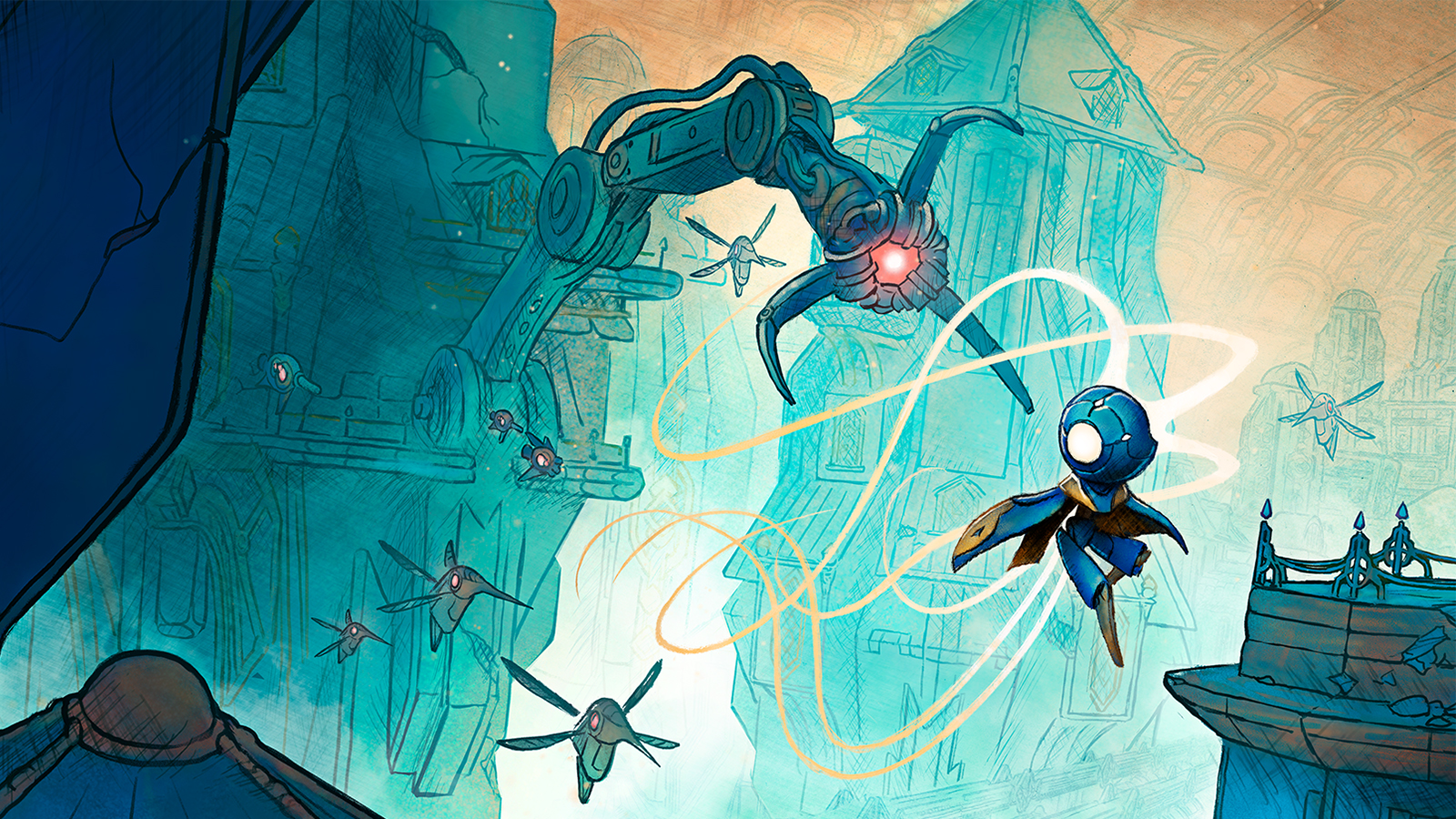
Illustrated watercolour art for the indie game MIO: Memories in Orbit.
MIO: Memories In Orbit
(Image credit: Douze Dixièmes)

Publisher Focus Entertainment

Developer Douze Dixiemes

Release date 20 January 2026

Format PS5 (reviewed), Switch, Switch 2, Xbox Series X/S, PC

Platform Proprietary

MIO: Memories In Orbit has been on my radar for some time now. I love a good Metroidvania and appreciate a game with a unique and consistent design. For Douze Dixièmes’ sci-fi game that art direction offers a remarkable painterly look built from the ground up, a hybrid of comic-book sensibilities and watercolour textures layered over 3D space, that has been crafted over years of careful iteration on the team’s proprietary engine.

In a recent interview with the art team, I learned how MIO: Memories in Orbit’s stunning hand-drawn art direction is created, but playing it for this PS5 review confirmed that the art isn’t just pretty, it’s the central reason MIO exists. Each area of the Vessel carries its own mood and palette, the way a printed comic page does, and wandering from one zone to the next feels like turning a new page in an illustrated story rather than ticking off another digital biome. (A little like the equally Moibus-inspired Ultros.)

This is where MIO delivers most of its charm. Exploration wears its influences proudly, familiar Metroidvania landmarks like hidden alcoves, branching routes, and lore fragments pepper the map, but the world feels genuinely authored. When I unlocked a new section of the Vessel, it didn’t just expand the play space; it changed the tone. I found myself lingering, taking in tiny details, using the right stick to shuffling the camera to seek every inked line and detail, piecing together the environment’s backstory in the way you might linger over a gorgeous graphic novel panel.

Every new biome makes you stop and stare, MIO: Memories In Orbit has a beautifully released art style. (Image credit: Douze Dixiemes)

Familiar ideas elevated by art

Underneath this visual design, though, lies a very traditional Metroidvania rhythm: explore, fight, iterate, improve. Small, lost droids pepper your journey, offering bits of story, gear, or simply a reason to poke around an off-path cavern. Gear and new abilities let you zip, grapple, climb walls, and better survive environmental hazards. It’s all comfortable territory, but it’s executed with polish and the occasional unexpected twist that will make you smile, whether it's a vast illustrated sleepy machine or a small unassuming snowman that shakes loose its snow to reveal a new boss mech.

That said, MIO isn’t afraid to demand precision, and sometimes it demands a lot of it. There were plenty of times I scrunched the DualSense, grumbled at my screen, and watched my tiny robot get sent back to a checkpoint because I misjudged a jump. These tough moments can feel punitive, but the payoff when you finally clear a tricky sequence – droid-eating mazes that need to be grappled and glided are a real pain, or a platform-puzzle room made from wind machines, really lands. That spike of satisfaction, of cracking a section that once felt unfair, is exactly why I keep coming back to games like this.

MIO is the tiny little dot in the middle of this screen, revealing the epic scale of some of the environments. (Image credit: Douze Dixiemes)

Boss fights built on memory and mood

Combat follows a similar pattern. Boss fights in MIO are characterful and varied: from speed-focused skirmishes to slower projectile duels, each feels like its own little test of memory and strategy. I especially appreciated how the loadout system lets you switch MIO’s setup depending on whether you’re heading into a boss room or just exploring. Tune for extra shields and resource drops for a long wander, or swap in damage boosts when a big fight looms. The setup is smart and means you have some room to approach the game how you wish and in an order that suits.

That flexibility is also what keeps things from feeling too frustrating, because not every encounter is perfectly pitched. I hit at least one boss whose weakness basically boiled down to hiding in a safe spot until its gimmicks fizzled out. Clever? Sure. Thrilling? Less so. And for seasoned players who love peak difficulty, some of these fights might feel a shade too lenient once you’ve learned their tricks.

It took an age to navigate insta-death vine coated passages to get here, but the journey was worthwhile. (Image credit: Douze Dixiemes)

But this is a small stumble in an otherwise beautifully and carefully crafted indie game. MIO: Memories In Orbit is the rare indie Metroidvania that looks as good as it feels, and the world built by Douze Dixièmes rewards thorough players; every nook brims with character, every secret corner carries a little narrative weight, and every progression feels earned.

While MIO: Memories In Orbit doesn’t reinvent the genre it's built around, it does offer an approachable and visually arresting new way to explore. This game stitches together some great ideas with an aesthetic so confidently crafted that it transforms familiar gameplay beats into something genuinely delightful and original.

Sign up to read this article
Read news from 100’s of titles, curated specifically for you.
Already a member? Sign in here
Related Stories
Top stories on inkl right now
One subscription that gives you access to news from hundreds of sites
Already a member? Sign in here
Our Picks
Fourteen days free
Download the app
One app. One membership.
100+ trusted global sources.