Get all your news in one place.
100’s of premium titles.
One app.
Start reading
LiveScience
LiveScience
Kristina Killgrove

Miniature Skeleton: A ghostly 2,000-year-old party favor from a Roman banquet

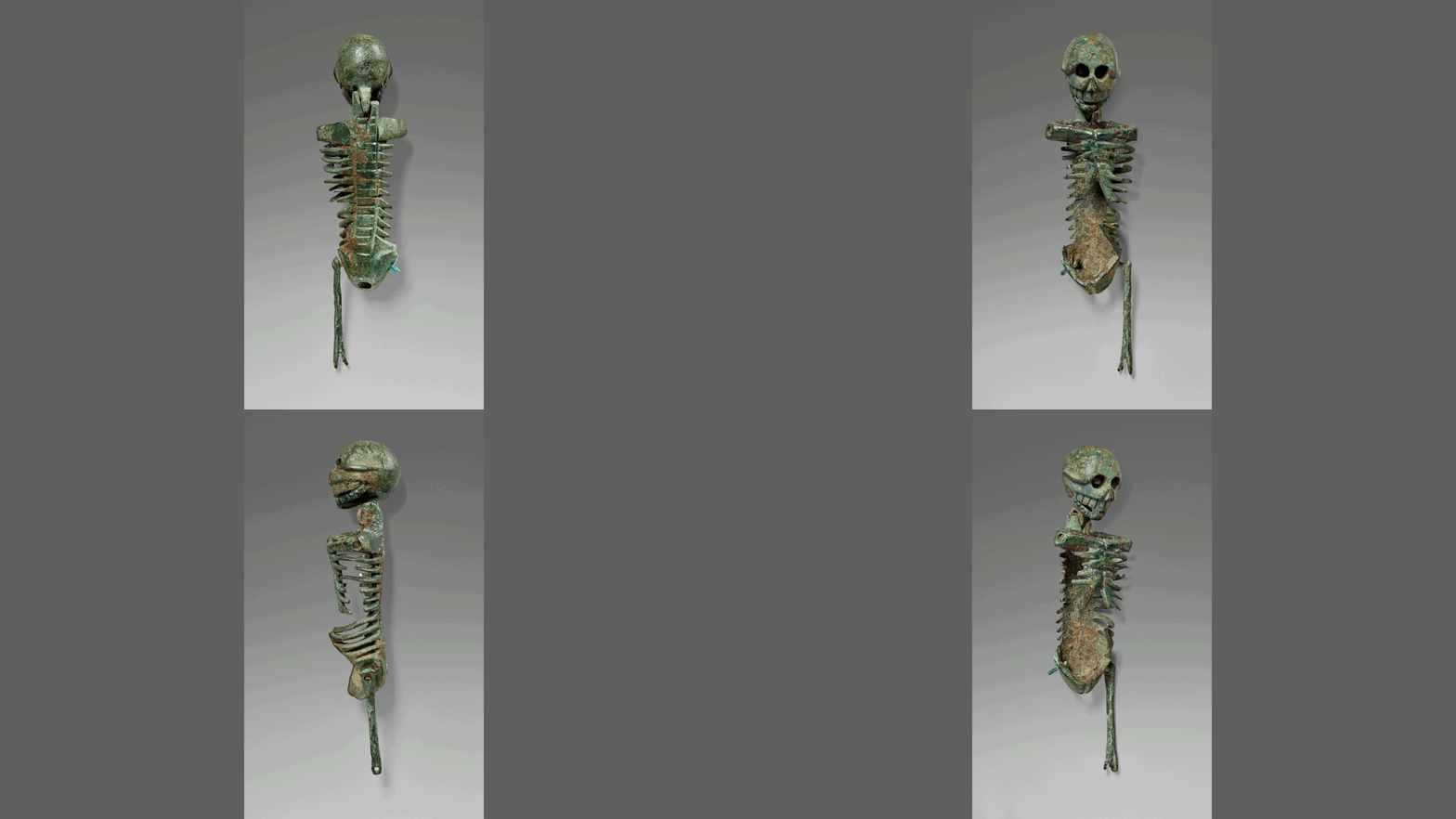
A bronze human skeleton that rotates to show four sides.
QUICK FACTS

Name: Miniature Skeleton

What it is: A bronze skeleton with moving joints

Where it is from: The Roman Empire

When it was made: Circa 25 B.C. to A.D. 100

This small, bronze skeleton is one of only a dozen known examples of an ancient Roman "larva convivalis" — a "banquet ghost" figurine given out as a party favor 2,000 years ago.

The skeleton originally had jointed arms and legs, but only a portion of its left leg remains today. Its skull features large, round eye sockets and a toothy grin. The bronze figurine measures roughly 2.6 inches (6.6 centimeters) tall and is in the collection of the Getty Villa in Los Angeles, California.

According to a 1980 study by then-Getty curator Faya Causey Frel, the skeleton was a kind of "memento mori" — a symbol of the brevity of life and the inevitability of death. The spooky skeletons were probably handed out at dinner parties in a nod to Epicureanism, the philosophical system that considered that because death is humans' main fear, we should take pleasure in what life has to offer.

Banqueting and death were often linked in Roman art and literature, according to the Getty.

In the novel "The Satyricon," written in the late first century A.D. by Petronius, a man named Trimalchio was hosting a dinner party. The narrator tells of "a slave brought in a silver skeleton, so contrived that the joints and movable vertebra could be turned in any direction. He threw it down upon the table a time or two, and its mobile articulation caused it to assume grotesque attitudes."

Trimalchio, the host, then exclaims that "this skeleton before us here is as important as we ever were! Let's live then while we may and life is dear."

The Getty example of the banquet ghost lacks scientific accuracy. "It was perhaps more important that the bony specters were lively," Causey Frel wrote.

For more stunning archaeological discoveries, check out our Astonishing Artifacts archives.

Sign up to read this article
Read news from 100’s of titles, curated specifically for you.
Already a member? Sign in here
Related Stories
Top stories on inkl right now
Our Picks
Fourteen days free
Download the app
One app. One membership.
100+ trusted global sources.