
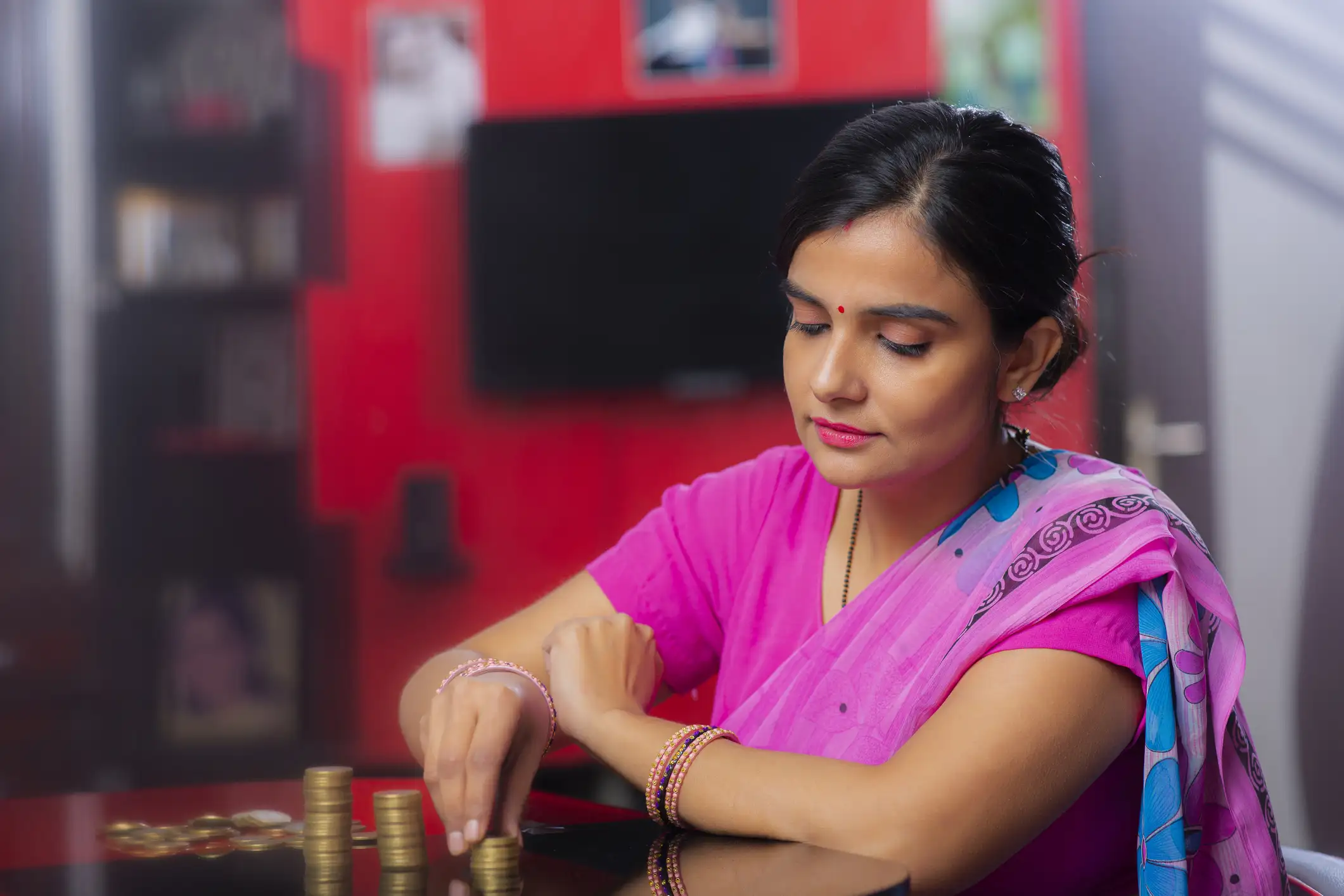
When Sunita began selling her home-made spice blends from her home in Ujjain, Madhya Pradesh, it was not a leap of entrepreneurial ambition but an act of necessity. With her husband’s income uncertain, her enterprise became the household’s spine. She negotiates orders on WhatsApp, accepts payments from customers on Unified Payments Interface (UPI), and keeps a careful mental account of costs and margins. Yet when she thinks about savings, insurance, or retirement, the answers thin out quickly. Sunita has a bank account. But when she tried to take a loan from her bank, she didn’t have the creditworthiness to qualify for a loan, despite several government schemes available for her. She has a smartphone and transacts digitally. By conventional metrics, she is financially included. And yet, finance in her life remains fragmented—useful in parts, but never whole. Her experience reflects a deeper truth about women’s financial wellbeing in India: access has expanded, but agency remains elusive.
Women continue to face challenges to access loans and government schemes. Lack of ownership of registered assets in their names and limited or no credit history make it difficult for financial institutions to assess their creditworthiness. The socio-cultural norms that necessitate the need for a male family member’s permission for financial transactions, and the primary burden of household duties limit the time and opportunity for women to engage with formal banking channels. The algorithms of digital lending platforms, too, can have embedded biasness which can penalise factors common among women entrepreneurs, such as home-based businesses. Furthermore, many women are not aware of government schemes, their eligibility criteria, or the ways to navigate the complex application processes despite awareness initiatives by the government and the fintech ecosystem.














