
Get all your news in one place.
100's of premium titles.
One app.
Start reading
The Conversation
The Conversation
Eric Warrant, Professor of Zoology at the University of Lund, Visiting Fellow at the Australian National University, and Adjunct Professor, University of South Australia

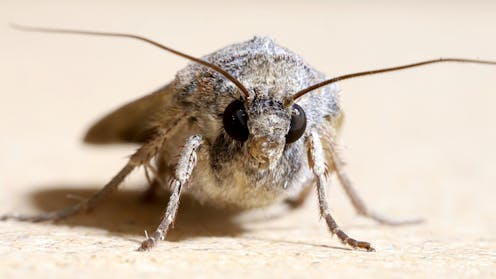
Migrating bogong moths use the stars and Earth’s magnetic field to find ancestral summer caves each year

Vik Dunis/iNaturalist, CC BY-NC

It’s a warm January summer afternoon, and as I traverse the flower-strewn western slopes of Australia’s highest mountain, Mount Kosciuszko, I am on the lookout for a tell-tale river of boulders that winds its way down into the alpine valleys below.

Here, hidden in cave-like hollows and crevices formed deep within the river of boulders, is one of the most spectacular natural phenomena in the insect world – the summer mass gathering of an iconic Australian insect, the bogong moth (Agrotis infusa).

Sign up to read this article
Read news from 100's of titles, curated specifically for you.
Already a member? Sign in here
Related Stories
Top stories on inkl right now
One subscription that gives you access to news from hundreds of sites
Already a member? Sign in here
Our Picks
Fourteen days free
Download the app
One app. One membership.
100+ trusted global sources.







